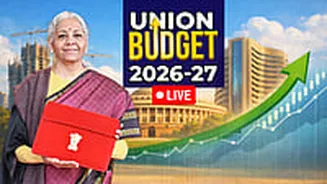






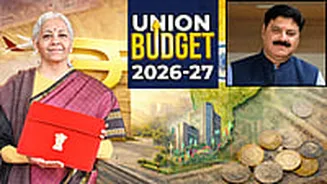
Union Finance Minister Nirmala Sitharaman on Sunday made history as she presented a record ninth consecutive Budget. Highlighting that it is the first
budget prepared at the Kartavya Bhavan, Sitharaman said, "We are inspired by three kartavyas."
Three Kartavyas Listed by Nirmala Sitharaman
1. Our first kartavya is to accelerate and sustain economic growth by enhancing productivity and competitiveness and building resilience to volatile global dynamics.
2. Our second kartavya is to fulfil the aspirations of our people and build their capacity, making them strong partners in India's path to prosperity.
3. The third kartavya, aligned with the vision of Sabka Saath Sabka Vikas, is to ensure that every family, community, region and sector has access to resources, amenities and opportunities for meaningful participation.
"Since we assumed office 12 years ago, the country's economic trajectory has been marked by stability, fiscal discipline, sustained growth and moderate inflation. This is the result of conscious choices we have made even in times of uncertainty and disruptions," Sitharaman said while presenting the Union Budget 2026-27.
"Keeping Aatmanirbharta as a lodestar, we have built domestic manufacturing capacity, energy security and reduced critical import dependencies. Simultaneously, we have ensured that citizens benefit from every action of the Government, undertaking reforms to support employment generation, agricultural productivity, household purchasing power and universal services to people. These measures have delivered a high growth rate of around 7% and helped us make susbstantial strides in poverty reduction and improvement in the lives of our people," she added.
Nirmala Sitharaman was in 2019 appointed as India's first full-time woman finance minister when Prime Minister Narendra Modi won a decisive second term. After PM Modi came back to power in 2024 for the third time, Sitharaman continued to retain her finance portfolio.
Sitharaman took charge of the Finance Ministry on May 31, 2019, and has steered the economy through the Covid-19 pandemic and geopolitical turmoil, making India the fastest-growing major economy in the world.
Sitharaman completed six years and eight months in office on January 31, 2026. On February 1, she will present a record ninth budget in a row.
Ahead of the Budget session, Prime Minister Narendra Modi had said Sitharaman presenting the Union Budget for the ninth consecutive time "will be recorded as a matter of pride in India's parliamentary history".
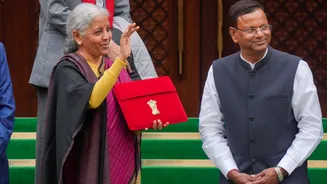
She posed with her Budget team in front of her office at Kartavya Bhavan before heading to the Parliament. Wearing a magenta-coloured Tamil Nadu's Kanchivaram saree, she was holding a tablet in a red pouch with the national emblem, along with the Minister of State and all six secretaries in her ministry.
She also met President Murmu, who offered her 'dahi-chini' (curd-sugar), considered auspicious, before she left for Parliament to present the Union Budget.
This year's budget came under a complex backdrop. While domestic demand has held up and inflation has moderated from recent highs, global uncertainties – including geopolitical tensions, volatile commodity prices and uneven monetary easing by major central banks – continue to cloud the outlook. At home, the government faces pressure to boost consumption, accelerate job creation and step up capital spending, while keeping the fiscal deficit on a downward path.