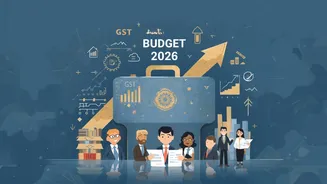










Finance Minister Nirmala Sitharaman will unveil the Union Budget 2026 on February 1, 2026, amidst uncertain geopolitical dynamics, volatile capital markets,
fluctuating oil prices, INR-USD exchange rate stir, and other uncertainties. What’s certain is the taxpayers’ expectations of a promise for a higher net disposable income in their hands.
As India prepares to implement the new Income-tax Act from April 1, 2026, individual taxpayers hope to be addressed in the following areas, according to the views of Parizad Sirwalla, expressed through Times of India.
Higher Standard Deduction
The enhancement of the standard deduction, which currently stands at Rs. 50,000 under the old tax regime and at Rs. 75,000 under the new tax regime, is one of the most frequently raised expectations. With the increasing cost of living, salaried taxpayers are hopeful that the deduction limit would be raised to at least Rs. 1,00,000
Perquisite valuation rules for Electric Vehicles
As Electric Vehicles (EVs) are increasingly seen as the future of mobility, many employers are encouraging employees to opt for an EV under their company car lease policies, as it aligns with their broader ESG commitments. However, the current perquisite valuation rules continue to rely solely on cubic capacity of the car, an approach that does not account for the distinct nature of EVs, which lack an engine in the conventional sense.
Employers are hoping for the introduction of a separate valuation mechanism specifically for EVs to ensure a suitable tax treatment and further promote the adoption of EVs.
Relief on Housing loan interest under the new tax regime
Home loan borrowers have long relied on interest-related tax deductions to reduce their repayment burden. However, individuals cannot offset housing loan interest against salary income, even in the case of self occupied property.
As the government aims to promote home ownership at affordable rates, there is an expectation that the government might allow such interest deductions, at least for self-occupied properties, in the upcoming budget.
Timelines for revised or belated returns
Under current provisions, taxpayers can file a revised or belated return for a financial year only up to 31 December, following the end of that financial year. This timeline poses challenges, particularly for individuals with cross-border income or investments, as tax filings in their home or host countries may not be finalised by then. This mismatch can lead to underreporting or overreporting of income in India.
As the Indian government prepares for the landmark shift to the new Income Tax Act in April 2026, the Union budget presents an opportunity to address a few longstanding demands of individual taxpayers.
Though sweeping changes may be unlikely in a year of transition, targeted reforms, either through higher deductions or more flexible timelines, could significantly improve the taxpayer experience. Ultimately, the hope is that the budget will strike the right balance between fiscal prudence and the genuine needs of India’s growing salaried class.
Also Read: India Budget 2026: Why Modi Government Has Little Room to Spend More This Year