
India's financial journey began during the colonial era with the presentation of the first budget by British economist and Finance Member of the Viceroy's
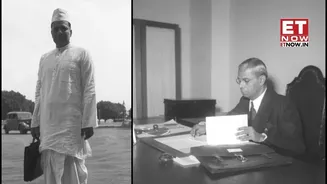
Council, James Wilson, on April 7, 1860. While Independent India's first budget was presented on November 26, 1947, by the country's first Finance Minister, R.K. Shanmukham Chetty.
First budget of India before independence
The first budget in India was presented on April 7, 1860, during the British Raj. This was a time when India was still recovering from the wounds of independence. The budget was presented by James Wilson, India's then Finance Minister. Unlike today's budgets, which focus on the welfare of ordinary Indians, the first budget was designed to meet the economic needs of the colonial administration.
First budget of India after independence
India's first budget post-independence was presented on 26 November 1947 by Finance Minister R.K. Shanmukham Chetty, roughly four months after freedom on 15 August 1947. This budget came just three months after India gained independence from British rule. It was an interim budget, covering the seven and a half months until March 31, 1948. R.K. Shanmukham Chetty served as the first Finance Minister of independent India from 1947 to 1949.
Budget estimate details
According to the Constitution of India's website, the total estimated expenditure was Rs 197.29 crore, and the revenue target was Rs 171.15 crore. Significantly, approximately Rs 92.74 crore, or about 46 per cent, was allocated for the defence services, reflecting the country's immediate priorities after independence.
Who was R. K. Shanmukham Chetty?
R. K. Shanmukham Chetty was born on October 17, 1892, in Coimbatore, Tamil Nadu, into a wealthy family of mill owners. He attended Madras Christian College, where he studied economics, and later enrolled at Madras Law College to pursue a law degree. His early exposure to nationalist leaders influenced his political views and aspirations.
Chetty began his political career as a councilor in the Coimbatore Municipality in 1917. Initially affiliated with the Indian National Congress, he later joined the Justice Party and was elected to the Madras Legislative Assembly in 1920. His notable achievements include introducing a bill to end discrimination against the untouchable community in 1931. He served as Diwan of the Cochin Princely State from 1935 to 1941, implementing major administrative reforms.
Chetty became the first Finance Minister of independent India and presented the first budget on November 26, 1947. The budget was intended to meet the essential economic needs of the newly independent country. In addition to politics, Chetty contributed to several trade organizations and supported Tamil language initiatives. He founded institutions such as the Tamil College in Perur and served as vice-chancellor of Annamalai University for a year. R.K. Shanmukham Chetty died on May 5, 1953.