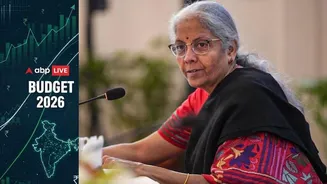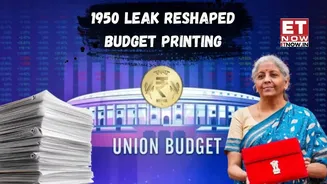







Finance Minister Nirmala Sitharaman is set to present the Union Budget for 2026-27 in Parliament on February 1. Notably, this marks the first time in at
least a decade that the Union Budget is being presented on a Sunday. Here’s everything you need to know about the India Budget 2026.
On January 28, Budget session of the Parliament begin, with President Droupadi Murmu addressing a joint sitting of both Houses on the opening day of Parliament’s Budget Session. The session will be conducted in two phases. The first phase begins on Wednesday and runs until February 13. The second phase, featuring Budget discussions, will start on March 9 and conclude on April 2.
1950 Budget leak
Ahead of the 1950 Budget, details of the government’s financial proposals were reportedly leaked before being formally presented in Parliament. While the exact source was never officially identified, the incident sparked serious concerns over confidentiality during a formative phase of India’s economic policy.
John Mathai, the finance minister at the time who had presented two Union Budgets in independent India, faced allegations that the leak had favoured influential interests. After presenting the Budget, he resigned in protest against the Planning Commission.
Relocation of Budget printing
The Budget leak incident permanently transformed the way the Union Budget is printed and secured. In 1950, just three years after Independence, a leak sparked government alarm, prompting a major change in protocol -- Budget printing was shifted to Minto Road in New Delhi, where it continues to be carried out today. Previously, the Union Budget was printed at the Rashtrapati Bhavan Press, a facility regarded as sufficiently secure for handling sensitive government documents.
The government decided to move the printing of the Budget to a more controlled and isolated location -- the Government of India Press at Minto Road to prevent future leaks. The move also brought in tighter security measures, such as restricted access, sealed premises, and the well-known "lock-in" tradition, where officials handling Budget printing are isolated from the outside world until Budget Day.
In 1980, the government further strengthened confidentiality by moving Budget printing from Minto Road to the basement of the North Block in New Delhi’s Secretariat complex, ensuring tighter control and greater efficiency. The confidential Budget documents continues to be printed at the press located in the North Block on Raisina Hill, which is the old seat of the government.
The Budget leak incident marked a watershed moment in India's approach to budget secrecy, leading to the implementation of stringent protocols that made the Union Budget one of the country's most closely guarded documents. Although these measures have undergone changes over time, the fundamental principles of confidentiality, physical isolation and controlled communication have remained unchanged.
Other major changes in Budget
Until 1999, the Union Budget was traditionally presented at 5 pm on the last working day of February. In 1999, the presentation time was shifted to 11 am. Later, in 2017, then Finance Minister Arun Jaitley advanced the Budget presentation to February 1.
Moreover, the Railway Budget was presented separately, until 2016, usually a few days ahead of the Union Budget. From 2017 onward, the government merged the Railway Budget with the Union Budget. The last standalone Railway Budget was presented by then Railway Minister Suresh Prabhu on February 25, 2016.
Women who presented Union Budget in India
Only two women have presented India’s Union Budget. The first was former Prime Minister Indira Gandhi, who assumed charge of the Finance Ministry in July 1969, following the resignation of Morarji Desai. The second women who has ever presented India's Budget is current Finance Minister Nirmala Sitharaman.