



What's Happening?
The U.S. Army has awarded Kraus Hamdani Aerospace (KHA) a firm-fixed-price contract valued at $14.95 million for its K1000ULE unmanned aerial system. This contract, announced on November 13, 2026, follows
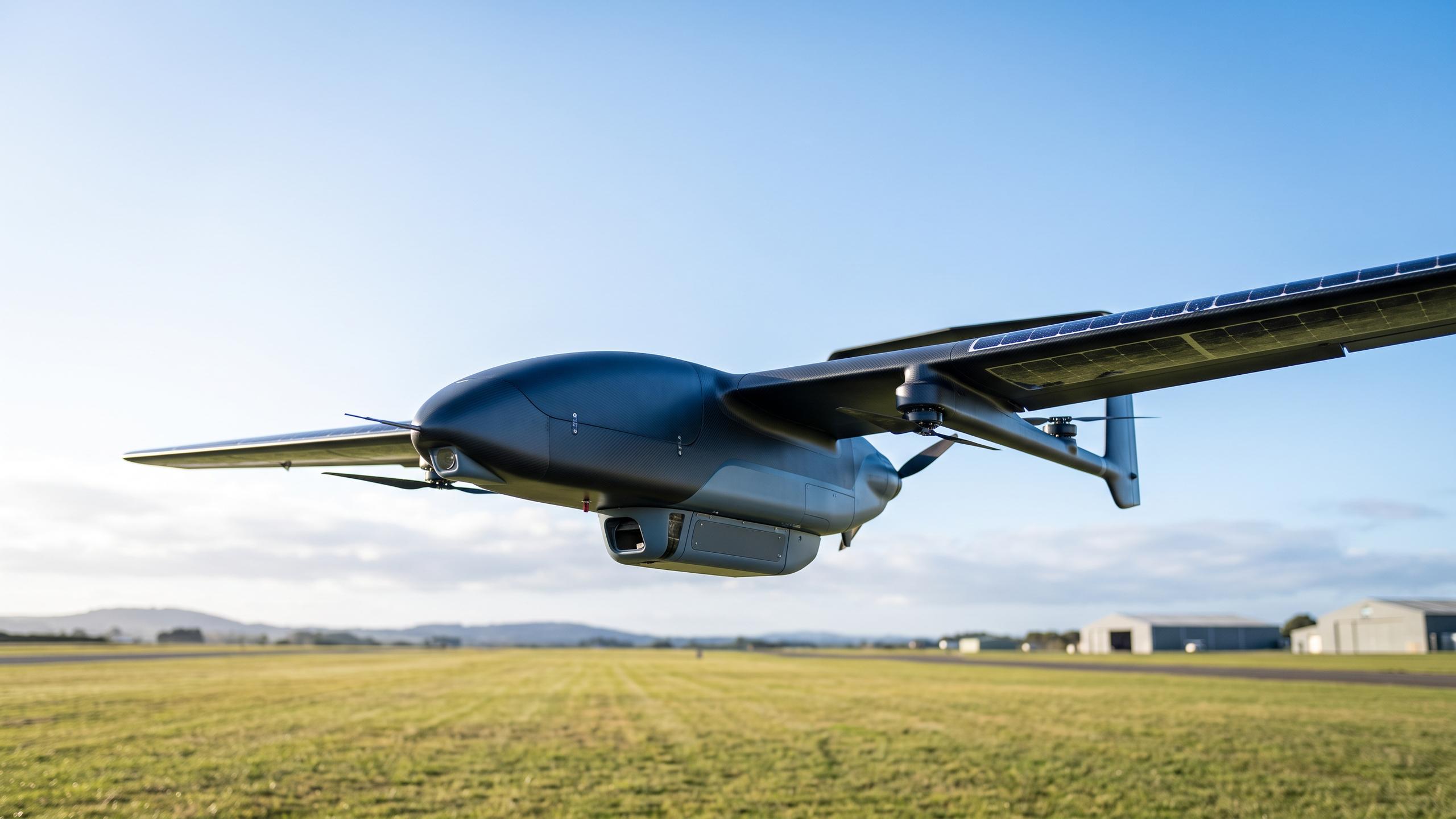
a competitive procurement process that saw 11 bids. The K1000ULE drones are Group 2, fully electric, multi-mission aircraft featuring vertical take-off and landing (VTOL) capabilities. They are intended to enhance the Army's Reconnaissance, Surveillance, and Target Acquisition (RSTA) integration. The K1000ULE is designed for persistent airborne intelligence, surveillance, and communications (ISR), offering extended endurance through solar-assisted energy management with photovoltaic wing cells for in-flight battery recharging. The contract is scheduled for completion by December 30, 2026. This award builds on KHA's existing defense footprint, which includes an earlier Indefinite-Delivery/Indefinite-Quantity (IDIQ) contract with U.S. Air Forces Central (AFCENT) with a $270 million ceiling, and inclusion on the Defense Innovation Unit’s Blue UAS Cleared and Select Lists, facilitating procurement by U.S. military and government agencies.
Why It's Important?
This contract signifies the U.S. Army's increasing reliance on advanced autonomous aircraft for critical military operations. The K1000ULE's capabilities, such as persistent ISR and airborne communications relay, address key operational requirements for modern warfare, particularly in remote or poorly connected environments. By utilizing solar-powered, electric drones, the Army aims to reduce logistical burdens associated with traditional fuel supply lines and heavy ground support, leading to more agile and cost-effective deployments. The emphasis on multi-mission versatility, including surveillance, search and rescue, electronic intelligence, and electronic warfare, highlights a strategic shift towards adaptable and scalable autonomous solutions. This investment also positions the U.S. at the forefront of drone technology development, amidst growing international competition from countries like China and South Korea in both tactical and stratospheric solar-powered platforms. The adoption of such technology can significantly enhance the safety and effectiveness of military personnel by providing continuous monitoring and communication capabilities.
What's Next?
The immediate next step involves the completion of the contract by December 30, 2026, which will see the delivery of the K1000ULE unmanned aerial systems to the U.S. Army. Following delivery, these drones are expected to be integrated into the Army's RSTA operations, potentially leading to enhanced capabilities in intelligence gathering and target acquisition. The success of this deployment could pave the way for further contracts and broader adoption of solar-powered, long-endurance drones across various branches of the U.S. military. Additionally, the ongoing collaboration between Kraus Hamdani Aerospace and U.S. Air Forces Central under the existing IDIQ contract suggests a continued expansion of KHA's role in defense technology. The competitive landscape in solar-powered UAVs indicates that other nations will likely continue to develop their own advanced drone systems, potentially driving further innovation and competition in this sector.
Beyond the Headlines
The U.S. Army's investment in solar-powered drones like the K1000ULE reflects a broader strategic shift towards sustainable and autonomous defense technologies. This move not only addresses immediate operational needs but also aligns with long-term goals of reducing environmental impact and operational costs associated with traditional military hardware. The ethical implications of increased autonomous capabilities in warfare, particularly concerning surveillance and target acquisition, will likely become a more prominent discussion point. Furthermore, the development of such advanced drones could have dual-use applications, potentially benefiting civilian sectors such as disaster response, environmental monitoring, and infrastructure inspection. The emphasis on reduced logistical requirements also points to a future where military operations are less dependent on vulnerable supply chains, enhancing strategic resilience. This technological advancement could also influence international defense policies and alliances as countries seek to acquire or develop similar capabilities.