



What's Happening?
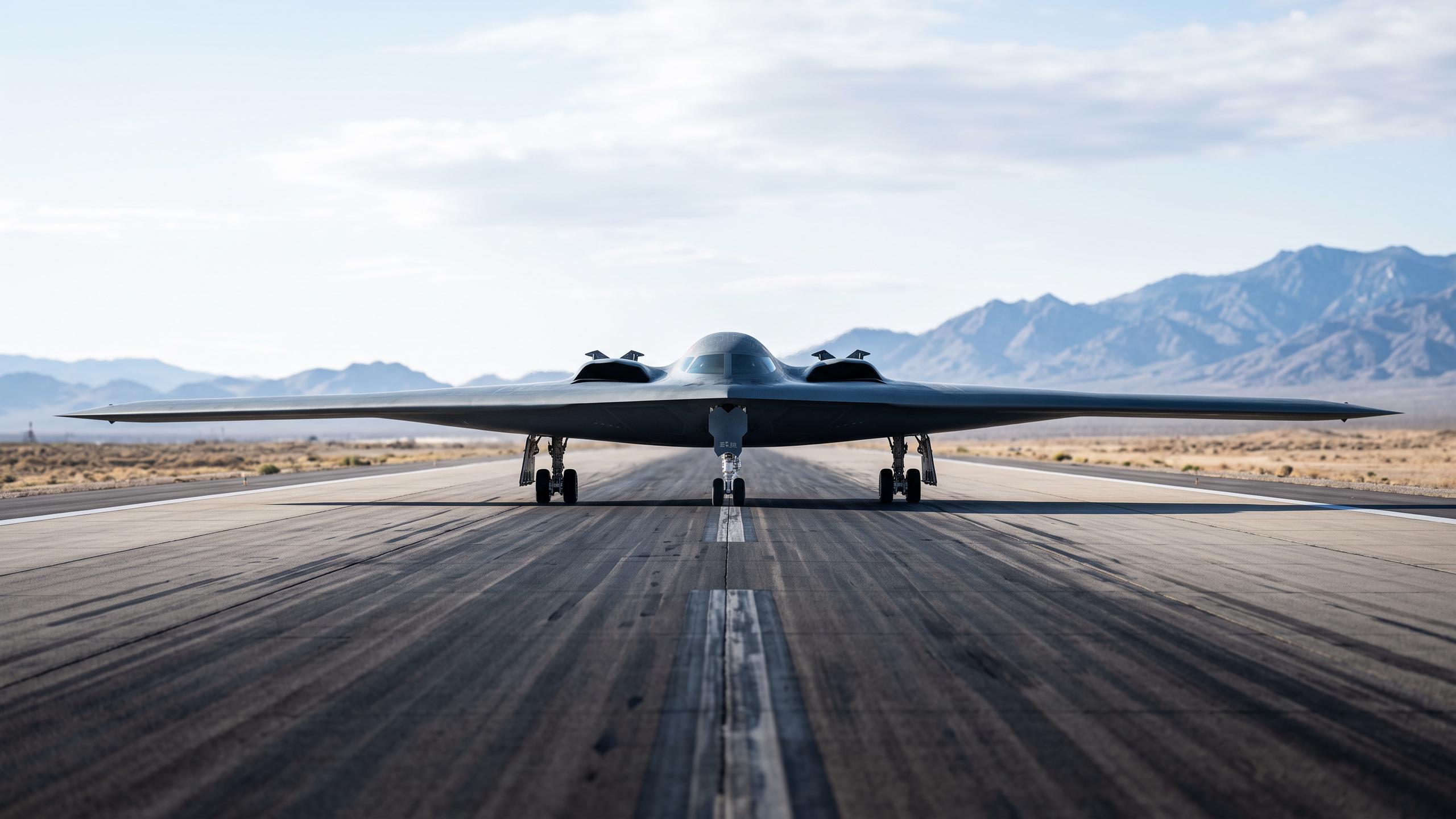
The U.S. Air Force announced that its B-21 Raider stealth bomber has successfully completed a weapons-release test, marking a significant transition from a flying prototype to a functional weapons platform.
This test validates the aircraft's digital models and its open systems architecture. Air Force Chief of Staff Gen. Ken Wilsbach stated that this test proves the B-21 program is 'excelling' and is ahead of schedule. Northrop Grumman, the prime contractor, confirmed the B-21 has demonstrated weapons release capability. The first B-21, nicknamed Cerberus, made its initial flight on November 10, 2023. A second test aircraft arrived at Edwards Air Force Base on September 11, 2025, allowing for simultaneous performance and mission-systems testing. Recent flight tests in 2026 included aerial refueling, enabling longer sorties. The Air Force is also integrating operational pilots earlier into the testing process to compress the hand-off between engineers and operators.
Why It's Important?
This successful weapons-release test is a critical milestone for the B-21 Raider program, signaling its readiness to fulfill its intended role as a next-generation bomber capable of delivering both conventional and nuclear munitions. The ability to release weapons moves the program beyond basic flight testing and closer to operational deployment. The Air Force's confidence in the program, highlighted by Gen. Wilsbach's remarks and the program being ahead of schedule, underscores its strategic importance for national defense. The B-21 is designed to penetrate advanced integrated air defenses, providing the U.S. with a crucial long-range strike capability in contested environments. The use of two test aircraft and early integration of operational pilots aims to accelerate development and deployment, potentially reducing overall program risks and costs while enhancing the bomber's operational effectiveness sooner than anticipated.
What's Next?
The B-21 program is on track to have aircraft stationed at Ellsworth Air Force Base, South Dakota, by 2027. The Air Force plans to continue rigorous testing, focusing on weapons integration and critical mission systems. The use of two test aircraft will allow for parallel testing paths, further accelerating the development process. While the Air Force's stated procurement goal is 'at least 100' bombers, commanders like Gen. Thomas A. Bussiere and Gen. Anthony J. Cotton have indicated that 145 B-21s would be optimal for potential operational tempos, particularly in an Indo-Pacific conflict scenario. Future steps will involve further validation of the aircraft's capabilities, including specific munition integration and operational readiness exercises, as it moves towards full operational capability.
Beyond the Headlines
The B-21 Raider's progress signifies a broader shift in U.S. air power strategy, emphasizing stealth, long-range strike capabilities, and adaptability to modern threats. The bomber's open systems architecture is a key element, designed to allow for easier upgrades and integration of new technologies throughout its lifespan, potentially reducing future modernization costs and ensuring its relevance for decades. This approach also fosters greater competition among defense contractors for future system upgrades. The program's success could influence future defense procurement decisions and strategic planning, particularly concerning the balance between manned and unmanned platforms. Furthermore, the B-21's role in both conventional and nuclear deterrence reinforces its position as a cornerstone of U.S. national security policy, projecting power and maintaining strategic stability in an evolving global landscape.