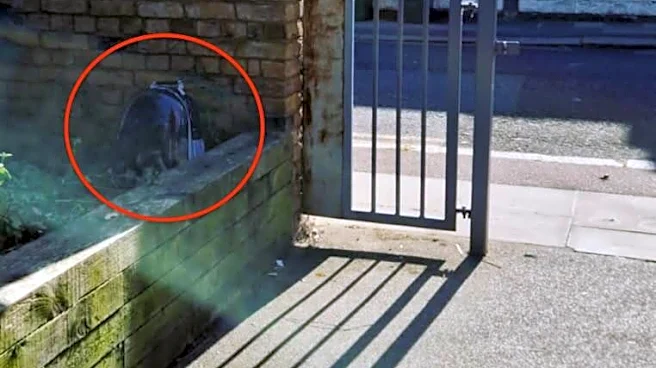








Late one afternoon in May, the rescue team at Celia Hammond Animal Trust in the UK was suddenly flooded with calls and messages. People passing through a housing estate in East London had spotted a domed plastic backpack tucked away off the road.
It was
an unexpectedly hot day — far too hot to be outside, let alone be trapped inside a plastic cat carrier. There was no way of knowing how long the carrier had sat hidden from view. But for the three little lives inside, it was clear that every minute mattered.
Amanda Stevens, a volunteer rescue worker for Celia Hammond Animal Trust, dropped everything and rushed to help.
“This was obviously an emergency because they would have died from the heat in very little time,” Stevens told The Dodo. “So it was just a case of getting there as quickly as I could.”
When Stevens arrived, she could immediately tell the kittens were struggling: “They were all squashed in together, and the heat was coming through this plastic dome … and it was an absolute heatwave,” Stevens said. “They were in a really bad way.”
Stevens opened the carrier just enough to give them air, while making sure the kittens didn’t escape.
Then Stevens rushed them into her air-conditioned car and drove them to the veterinary clinic run by Celia Hammond Animal Trust.
Once they arrived, the veterinary team worked quickly to cool the kittens down and treat their heat exhaustion.
Amazingly, all three kittens — who were later revealed to be boys — made a full recovery. The rescue group named them Napoleon, Prince and Tom.
“These three boys are around three months old, full of character, and completely devoted to one another,” the rescue group wrote in a Facebook post following their rescue. “They eat together, sleep together, play together and seek comfort in one another's company.”
After everything they’ve been through, their rescuers knew the kittens needed to find a home together.
“We wanted them to go as a trio because they're very bonded and they really love each other,” Stevens said. “It's difficult to find homes for trios, but we have managed to find one.”
For Stevens, the most rewarding part of the rescue was knowing she’d arrived in time.
“I was just pleased that I wasn't too far away and I was able to get there straightaway, because they wouldn't have survived very much longer,” she said. “But I sorted it out and they were fine.”