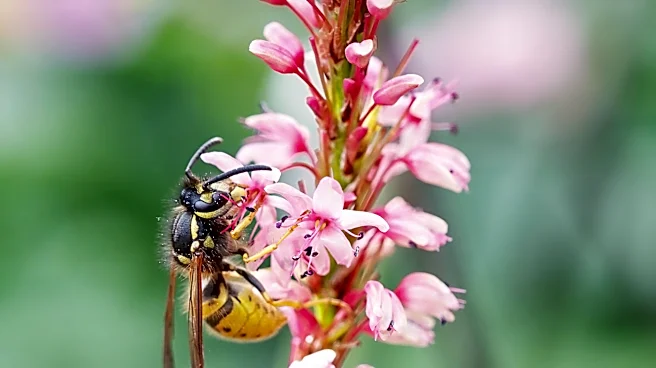






Even among the most ardent animal lovers, there are some creatures for whom goodwill can seem in short supply. Few fit that description better than wasps, which are widely considered unwelcome guests.
But there’s more to these little winged insects than
meets the eye.
Homeowner Leslie B. has several wasps living near her front porch, where a large flame acanthus plant attracts bees, hummingbirds and other local wildlife. Leslie enjoys watching the little ecosystem flourish — and she has no intention of disturbing it.
Pest control salespeople, however, keep showing up at her door offering to do just that.
So she posted a sign explaining exactly why the wasps were staying:
Leslie has never had a negative interaction with any of the wasps on her property. To her, people’s common aversion to them is based on the misconception that wasps are looking for a fight. But like bees, wasps generally only sting when they or their homes are threatened.
“Bees have a much better PR team than wasps, unfortunately,” Leslie told The Dodo. “I think we’re all clear that we NEED our pollinators, but maybe a little less clear on who is doing all that work. Yes, bees are cute and fuzzy and don’t generally want to sting, because that will end their lives, but they are far from the only pollinators we need. Wasps do not sting out of spite simply because you exist.”
Leslie is a member of the online community Entomemeology and its Wasps Advocates Caucus, which was founded by an insect lover who goes by Wolfie.
“I have always noticed the double standard that exists in the way people treat bees versus wasps, despite them being extremely similar,” Wolfie told The Dodo. “I often saw people, even those who claimed to love insects, talk about wasps as nothing but pests.”
The Wasp Advocates Caucus hopes to change that perception.
“Fear can be eased with knowledge, whether it’s wasps, spiders, beetles, roaches, whatever,” Leslie said. “They are all a part of the ecosystem, even if they aren’t cute and fluffy. We have to learn to fit in too, and live alongside nature as best we can, without destroying it more than we already have.”