
The specialists at FreeMe Wildlife, an animal rehabilitation center in South Africa, are trained to expect the unexpected. Every day, they open their doors to all kinds of patients — from tortoises to owls
to wild cats.
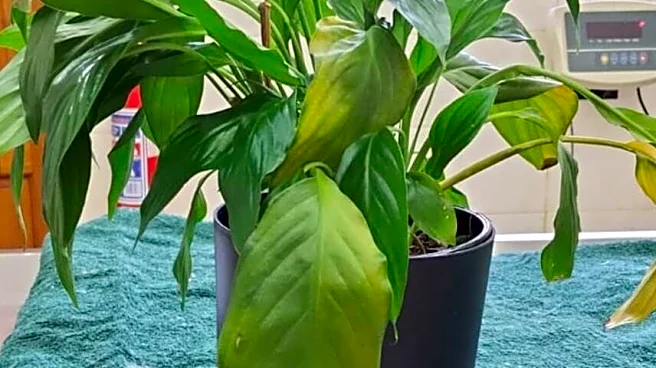
So it was a memorable moment when the FreeMe Wildlife staff recently found themselves confused, watching as a woman entered their rescue with … a potted plant.
“To say our rehab staff were a little taken aback … is a bit of an understatement,” FreeMe Wildlife wrote in a Facebook post. “While we do have a garden full of indigenous plants, we didn't think there was much we could do for this common house plant, especially since there didn't appear to be much wrong with it.”
But it turns out there was someone hiding within the leaves. The plant wasn’t a patient; it was actually a clever form of transportation, a way to save the animal within — a Natal Midlands dwarf chameleon.
Once they realized what was going on, rescuers were thrilled to see the rare animal. According to the International Fund for Animal Welfare, dwarf chameleons have seen a huge population decrease in recent years due to habitat destruction and are now considered to be “one of the most endangered animal species in South Africa.”
The chameleon's rescuer, Liandra, had been working in her office when she spotted a group of wild starlings paying extra attention to the plant. Upon closer inspection, she saw one of the starlings clutching the chameleon in her beak. Of course, the bird wasn’t necessarily doing anything wrong, merely following her instincts. But Liandra knew that chameleons are endangered, so she decided to step in.
Liandra gently shooed the bird away, encouraging the starling to drop the chameleon. She kept the chameleon in the plant, then took the whole plant to the rescue.
“This was quite clever, as a natural environment reduces stress,” FreeMe Wildlife clinic manager Elishia Goosen told The Dodo.
Rescuers were pleased to find that the chameleon was bright, alert and strong. He moved normally and maintained a firm grip on the plant stem. They gave him pain medication for a slight wound on his abdomen and dressed the abrasion with antibacterial spray. Soon, he was ready to return home to the wild.
Liandra took the chameleon back to the area where she found him. Rather than returning him to where the starlings lived, she brought him to her garden, where he could recover in peace.
Weeks later, Liandra still keeps her eye out for the lizard. Though it’s hard to discern one chameleon from another, when she sees one, she likes to believe that it’s him.
“It's impossible to say if it's the exact same chameleon,” Goosen said. “[But] she does still spot one around every now and then.”