







With fewer than 40 individuals remaining in the wild, red wolves are among the world’s most endangered animals.
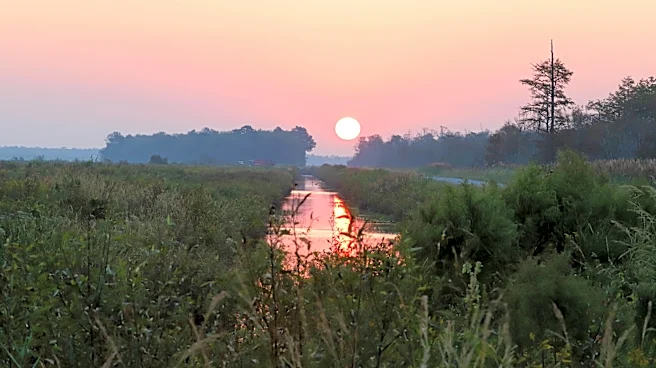
Today, all wild red wolves live in and around the sprawling Alligator River and Pocosin Lakes National Wildlife Refuges in North Carolina, where
they are closely monitored using tracking collars.
But to see a wild red wolf firsthand is still a rare privilege.
Recently, wildlife photographer Shannon Emmel and a friend set out to the 160,000-acre Alligator River National Wildlife Refuge in hopes of capturing images of the elusive animals.
Their patience paid off when, from afar, a red wolf came into view — an individual known as Finch.
Finch, who is about 10 years old, was born in captivity and released into the wild in 2024 as part of a red wolf recovery effort. He’s since fathered three litters of pups.
“I actually spotted him in the distance by taking a picture and zooming in, realizing that it was a wolf,” Emmel told The Dodo. “My friend and I then watched as he walked across a canal into the tall grass.”
Emmel and her friend moved into a different spot and waited. Then the red wolf stepped out into the open.
“He nonchalantly popped out of the field close to us,” Emmel said. “My reaction? Overwhelming awe, the experience is surreal. They are absolutely amazing. I know my photos give the impression they are easy to see, but they’re actually very hard to find — so I consider myself extremely lucky.”
Emmel hopes her encounter with Finch will strike more than just awe in others.
Though red wolves are a protected species, they aren’t without ongoing threats from human activity. This summer, one of the few remaining wild red wolves was killed after being struck by a vehicle — a loss that underscores the need for safer ways for wildlife to cross busy roads.
“[I hope] to convey how incredible and special these red wolves are and how desperately they need our help by advocating for local wildlife protection policies, and supporting the construction of dedicated wildlife underpasses and crossings,” Emmel said.
In the meantime, photos like the ones Emmel took that day offer a reminder of why red wolves like Finch are worth saving.