








Ohio resident Matt Jacobsen was recently on a walk in a nature reserve near his house when he spotted an aphid on the ground. Jacobsen, a macro photography enthusiast, stopped to take a close-up photo of the tiny insect.
As Jacobsen was observing the aphid,
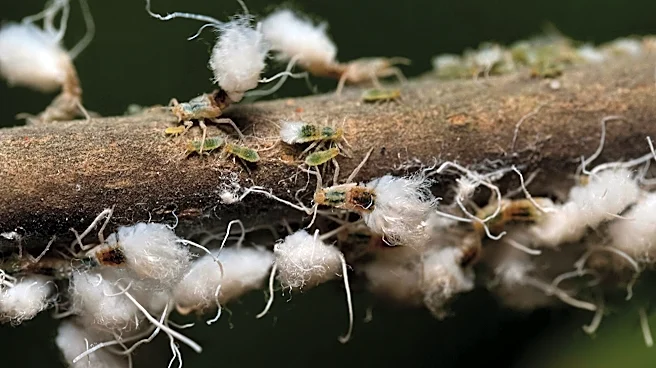
he noticed some movement on the ground. His eyes landed on a twig — completely covered in the tiny white insects. Curious, he picked it up.
Before Jacobsen’s eyes, the aphids on the branch began to sway back and forth in unison. It almost looked like they were all doing a synchronized dance.
“[W]hen I saw it, my first reaction was I couldn’t even believe what I was seeing because it just looked so unnatural,” Jacobsen told The Dodo.
Jacobsen quickly realized that the branch he was holding was covered in beech blight aphids. He was familiar with the species’s dancing behavior, but seeing it with his own two eyes was still astonishing.
“I had seen videos of aphids doing their dance before on Instagram, but I’d never seen it before in person,” Jacobsen said.
The aphids’ synchronized movements seem like something out of a sci-fi movie. But it’s actually very typical behavior for the species — and researchers believe they’ve figured out why they do it.
“Scientists don’t really have a perfect explanation for why they do the dance, but the main theory is that … by doing their dance, it makes them a harder target for these predators,” Jacobsen said.
If the aphids’ dance moves aren’t effective enough at warding off predators, they also have another trick up their sleeve. They release a waxy secretion that helps protect them from getting snatched up. The twig Jacobsen picked up was covered in the sticky substance.
“[T]hat substance [exists] so that when a predator such as a ladybug tries to grab the aphid, they just get a mouthful of wax,” Jacobsen said.
While the word "aphid" may have a negative connotation for many people, beech blight aphids actually aren’t as destructive as people think they are. The idea that the insects are destructive to trees is actually just a common misconception.
“[T]hey’re a native species and they don’t have any major negative impacts,” Jacobsen said.
The aphids’ expert dance moves have earned them the apt nickname "boogie-woogie aphids." Jacobsen is grateful that he got to observe such a talented species up close.
“The movement that they make is honestly really mesmerizing,” Jacobsen said.