

Recently, three Australian Wildlife Conservancy (AWC) ecologists checked a research trap at Karakamia Wildlife Sanctuary and found something shocking.
The scientists expected to open the trap and see a skink or gecko, perhaps a frog. But the animal inside
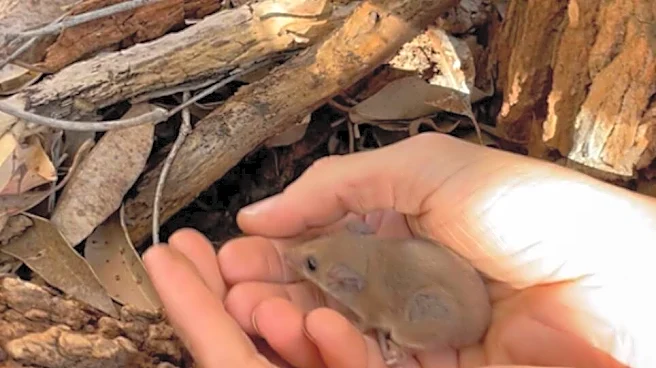
was far more exciting — a western pygmy possum, a “tiny yet remarkable” species rarely seen in the area since the late 90s.
“We were so excited!” survey team member Dr. Bryony Palmer said in a press release. “This capture was so special because the last live capture of the species at Karakamia Wildlife Sanctuary was in 1999, and we’ve only had a few incidental sightings since.”
Western pygmy possums are tiny nocturnal marsupials known for their big eyes and long tails. According to AWC, these endangered animals have dwindled in recent years, falling victim to introduced predators and land-clearing.
In an effort to revive populations of the beloved species, AWC built a feral-proof fence and began reintroducing animals such as possums, hoping they might thrive. This sighting is proof that their efforts were worth it.
“One of the biggest wins to come out of Karakamia Wildlife Sanctuary over the last 35 years is the greater conservation impact of the four species that we reintroduced,” Bryony said. “Within the safety of the fenced area, these populations have grown to a point where we’ve been able to translocate individuals and establish new populations elsewhere.”
The return of the possums benefits not just the people who love them, but also the environment as a whole. According to Bush Heritage Australia, pygmy possums are important pollinators, helping plants grow as they move between them and munch on leaves.
Thanks to these dedicated scientists, western pygmy possums are getting a second chance. With any luck, they’ll be seeing many more in years to come.