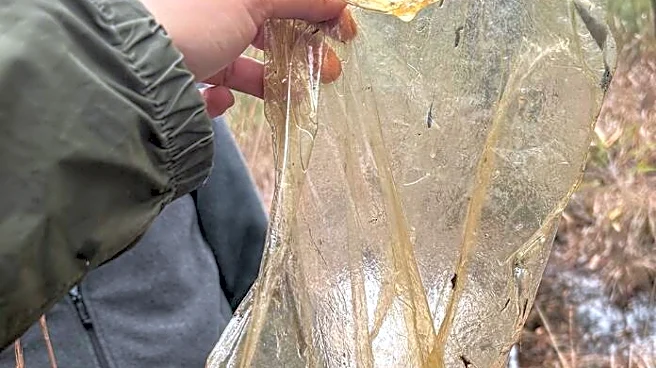

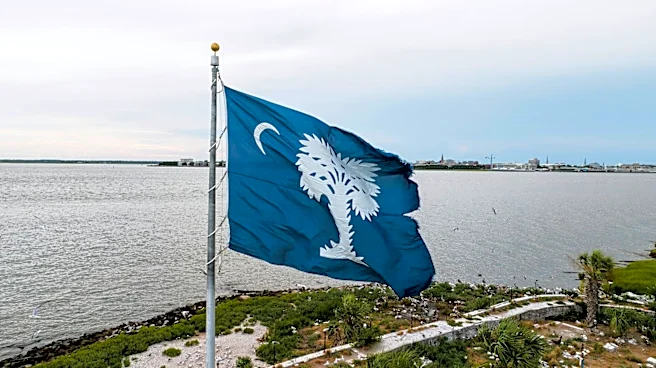
A few weeks ago, Andrea Colton, an associate conservation scientist at The Orianne Society, set out on a turtle surveying expedition. As she was traveling through a wetland north of Charleston, South Carolina, she and the other members of her research team came across a large piece of plastic partially submerged in the water.
Colton, not wanting to leave any debris in the pristine wetland, picked up the plastic, which was full of water. The plastic felt unexpectedly heavy, so Colton began to wonder whether there was a small animal inside. But the water was murky, so she couldn’t tell.
“[S]ure enough, as the water started to drain, we saw [a] turtle,” Colton told The Dodo.
Colton and her team members quickly got the animal out of the plastic. While
aquatic turtles do spend time underwater, they still need to breathe air, so the little reptile would not have made it much longer stuck inside the plastic.
“The turtle was doing well when we freed it,” Colton said. “It wasn’t sluggish or nonresponsive like you might expect from an animal that had been oxygen-deprived.”
The conservation scientists were able to identify the animal as an eastern mud turtle. Although the animal the surveyors saved looks like a baby, eastern mud turtles are only about 5 inches long in their adult form. They spend most of their time at the bottom of wetlands, searching for insects, crustaceans and plant matter to eat.
“I think it’s likely the turtle was foraging around the bottom of the wetland for food and found an opening it wandered into,” Colton said.
As Colton was working on getting the turtle out of the plastic, she realized that it looked like an old balloon, likely recently released from a nearby birthday party. The one the little animal was trapped in looked like a number, and there was also a second "Happy Birthday" balloon nearby.
This turtle’s entrapment serves as a great reminder to never release balloons after a party. Balloons that people let float away inevitably end up deflating and sinking back down to the ground, often landing in natural spaces.
“Those balloons typically end up in natural spaces, where wildlife may mistake them for food and end up with blocked digestive systems or become entangled,” Colton said.
Luckily for this turtle, the rescuers acted quickly. Thanks to the researchers who went out of their way to help, this little turtle got a second chance.
“We lowered it into the water, and it swam away,” Colton said.