






The islands of Borneo and Sumatra in Southeast Asia are known for their thriving rainforests. Here in these dense ecosystems, it’s easy to spy amazing animals like long-tailed macaques, rhinoceros hornbills and saltwater crocodiles.
But not all rainforest-dwellers
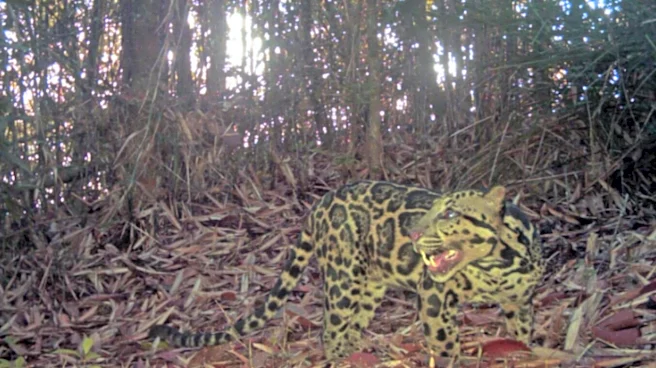
are so easily spotted. The Sunda clouded leopard, “one of the most mysterious wild cats on Earth,” is very rarely seen, even by scientists. That is, until just recently, when a team of researchers caught one on camera and realized she was even more special than they thought.
The research team, comprising academics from the Sabah Forestry Department, the Sabah Wildlife Department, and the indigenous peoples of Sabah, in partnership with Panthera, used hidden cameras to track these leopards over many years to further conservation efforts.
According to a press release, Sunda clouded leopards are so rare they’re known as “the ghost of the forest.” Once more prevalent, their numbers declined over the years due to deforestation, illegal hunting and habitat fragmentation. Today, they’re classified as “vulnerable” on the IUCN Red List.
Poring over their footage, the scientists saw someone amazing — a female Sunda clouded leopard first documented more than 6 years earlier as an adult, making her at least 8 and a half years old, and the oldest ever recorded.
The sighting was notable not just because of the leopard’s age, but because of her gender as well. According to experts, females are much harder to spot than males.
“Females spend far more time in the trees, and their slender bodies and fluffier tails help them balance there,” the press release reads. “Males, by contrast, spend much of their time on the ground patrolling and re-marking territory, which is why they turn up on camera more often.”
The data set also confirmed suspicions that these leopards are more mobile than scientists initially thought, with some leopards traveling over 22 miles between locations.
Researchers are hopeful that this new information can inform future studies and help protect these beloved cats for years to come.
“The female clouded leopard at the heart of this study spent years navigating a landscape shaped by logging and human activity — and outlasted every wild clouded leopard on record,” Panthera wrote in a piece. “Her persistence is a reminder of what these cats are capable of and what becomes possible when we give them the science and habitat they need to survive.”