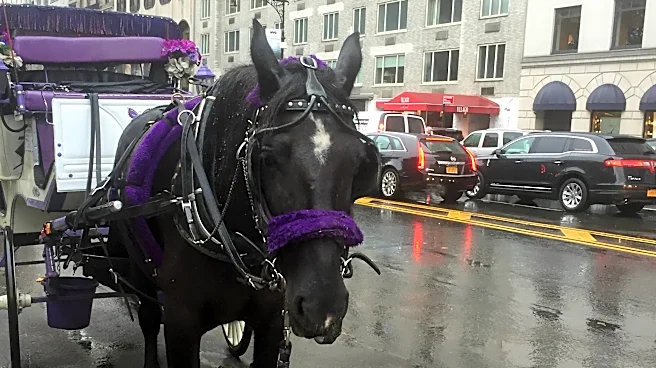








Horse-drawn carriage rides first began in New York City's Central Park shortly after the park opened in 1858. Many people see the practice as a quaint tourist attraction or a fun way to get around the city. But the industry has long put horses at risk
— and after decades of controversy, it may finally be banned for good.
For years now, organizations such as Animal Legal Defense Fund (ALDF) have been working to get rid of the carriage horse industry. There have been countless incidents over the years that have put both horses and humans at risk, causing needless pain and suffering.
“In the past thirteen months alone, Central Park has seen eight separate horse-related incidents, including runaway carriages, collisions, injury and death,” Kathleen Schatzmann, strategic legislative affairs manager at ALDF, told The Dodo.
ALDF was part of a 2019 coalition that helped pass the Carriage Horse Heat Relief Bill, a law that prohibits horses from working when the heat index reaches 90 degrees or more. Despite this protective measure, many horses are still suffering.
“Each day, horses must navigate heavy traffic, breathe vehicle exhaust and walk on hard asphalt,” Schatzmann said. “These conditions carry well-documented risks for horses, including respiratory problems, joint damage and arthritis, hoof and foot problems, heat stress, and psychological distress from prolonged exposure to a high-stimulus urban environment.”
In August 2022, an elderly horse named Ryder collapsed on 9th Avenue while pulling a carriage in the summer heat. He was whipped while the driver yelled at him to get back up and keep working. Unfortunately, he never recovered and passed away in October 2022.
Ryder’s Law was introduced not long after the incident, and ALDF was able to get signatures from 25 celebrities on a letter of support for the bill, including Billie Eilish, Joaquin Phoenix, Ricky Gervais, Hilary Swank, Christopher Walken and Edie Falco. Despite the support, the bill stalled — until an incident this summer renewed public interest in the cause.
On June 17, 18-year-old Romanch Mahajan was visiting NYC from India with his family. They decided to take a carriage ride, but tragedy struck when the horse pulling their carriage bolted. Unfortunately, Mahajan did not survive the incident.
The teenager’s family has been extremely vocal about putting an end to the carriage horse industry, and Ryder’s Law is now known as Romanch’s Law. The bill aims to ban horse-drawn carriages in NYC by June 1, 2028.
“Approximately 160 horses will be transferred to safe environments as part of passing Romanch’s Law,” Schatzmann said. “The animal welfare community is ready with a list of over 30 sanctuaries and rescues willing to give these horses lifelong homes and proper care.”
The bill would also require the Department of Consumer and Worker Protection to create a workforce development program to help those in the carriage horse industry find other jobs once the law goes into effect. Currently, the status of the bill is “Laid Over in Committee” while final revisions are made and additional votes are organized. The bill has more support than this issue has ever garnered before, giving activists hope that the end is near.
“Council Member Christopher Marte is the prime sponsor of Romanch's Law, along with a majority of city council members cosponsoring the bill,” Schatzmann said. “Speaker Julie Menin is publicly supporting Romanch’s Law and Mayor Mamdani has also indicated support.”
There isn’t currently a set date for the bill to reach Mayor Zohran Mamdani’s desk, but once it does, he has the opportunity to not only make history, but to create a safer city for horses, tourists and everyday New Yorkers. The mayor has expressed support for the bill as long as it protects both the horses and the workers transitioning to new lines of work.
It’s been a long road for those fighting for a better life for carriage horses, and they are hopeful that very soon it will all have been worth it.
“By pairing an industry phaseout with workforce support and protections for the horses, Romanch’s Law offers a balanced, compassionate path to reform,” Schatzmann said.