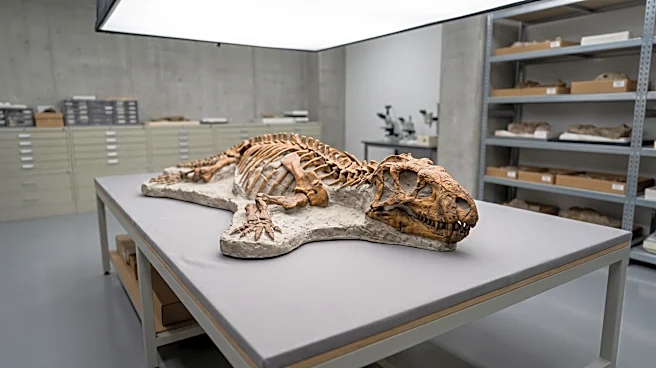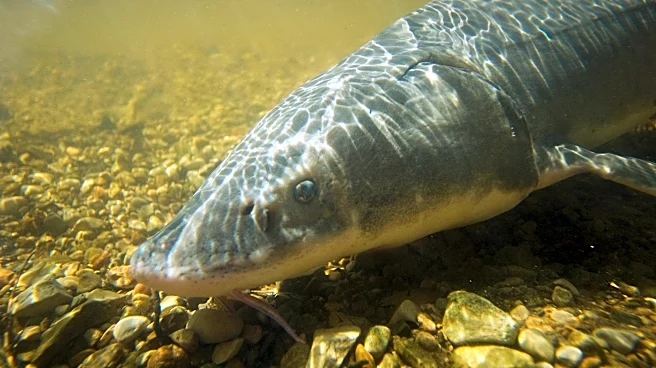








Sturgeons are a family of large fish who live all over Eurasia and North America. They’ve been around for over 200 million years, as the earliest known sturgeon fossils date back to the Late Cretaceous period.
“They’ve outlasted the dinosaurs and other
species that have come and gone,” Ed Baker, the research station manager at Michigan Department of Natural Resources (DNR)'s Marquette Fisheries Research Station, told The Dodo.
Until recently, it was thought that lake sturgeons, the only fish in the family who live in fresh water, had a lifespan of around 150 years. But new research indicates that the sturgeon's lifespan has been greatly underestimated.
The way researchers typically estimate a fish species’s lifespan is by counting rings that form on hard parts of their bodies, such as scales or inner ear bones. Each summer, when the fish goes through a growth period, rings form, which can then be counted up in a process similar to counting the rings on a tree. But because sturgeons grow so slowly, this method is not very accurate.
“For fish like sturgeon that have very long lifespans and their growth is very slow once they reach sexual maturity, it’s difficult, if not impossible, to count these annual rings because they become so close together they’re essentially indistinguishable from one another,” Baker said.
So Baker and other experts decided to try a new method based on growth rather than rings on bones. 40 years ago, researchers captured, tagged and measured lake sturgeon from all over the Great Lakes. Then, four decades later, this research team remeasured the same individuals and used the data they collected to calculate a new lifespan estimate.
“If we take the amount of growth that the fish put on in that 40-year period and divide that number by 40, that’s how much it’s growing per year on average,” Baker said. And then it’s a fairly simple question to answer … [I]f the fish is growing at this rate, how long does that fish have to live to reach this observed size that we see for sturgeon?”
The new numbers were staggeringly different from the original estimate of 150 years. Based on the data, the scientists determined that male sturgeon may live to 279 years, while females may live up to 427 years.
“It was a bit of a surprise to get longevity estimates in the range that we have,” Baker said.
More research is needed to determine whether these findings might apply to other species of sturgeon. Either way, this study serves as a great reminder that there is always more to learn about the many mysterious animal species with whom we share the Earth.
“It’s a startling realization that there are critters that live on the planet far longer than we do,” Baker said.