



If you’ve spent time on the Mid-Atlantic Coast or Delaware Bay, you may have seen a horseshoe crab on the beach. And while these animals seem familiar, they have a remarkable life cycle that few people know about.
Horseshoe crabs spend most of their lives
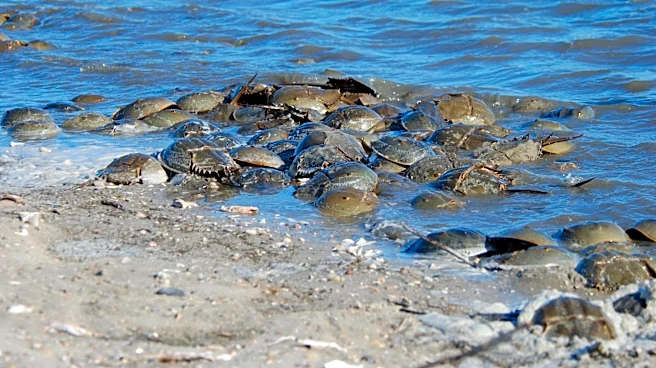
in the deep ocean. When it’s time for them to lay their eggs, they wait for a full or new moon and use the extra high tides to come up onto the beach.
“When it’s time to spawn, they all make this mass movement toward beaches and they spawn on sandy beaches — that’s where they like to lay their eggs,” Sheila Eyler, project leader of the Mid-Atlantic Fish and Wildlife Conservation Office for the U.S. Fish and Wildlife Service, told The Dodo.
The female horseshoe crabs then dig holes in the sand, where they lay all of their eggs. Over the course of several weeks, the females will visit the beach several times, depositing eggs in multiple nests each time, with each nest containing up to 4,000 eggs.
“[S]he can lay up to 100,000 eggs over the course of one season,” Eyler said.
When the eggs are first laid, they look like small green pellets. But as they start to grow and develop, they become more and more translucent. By the end of the two- to four-week incubation period, the eggs become completely transparent and the baby horseshoe crabs can be seen turning around inside of them.
The effect is completely mesmerizing, making the eggs look almost like crystal balls:
Horseshoe crabs don’t take care of their young, so when the babies hatch, they’re on their own. They don’t reach reproductive maturity until they’re about 10 years old, and when they do, the cycle repeats.
There are four species of horseshoe crabs in the world, and unfortunately, three of them are considered endangered. It's important that we do everything we can to protect these unique animals, who are vital to both their native ecosystems and to humans as a whole.
While laying 100,000 translucent eggs a year may seem unusual to humans, it’s actually a process that horseshoe crabs, who are often referred to as living fossils, have been going through for hundreds of millions of years. So clearly, it’s working for them.
“They are an ancient critter,” Eyler said. “They haven’t really changed … for 350 million years. So they were around during the time of the dinosaurs, basically like they look today.”