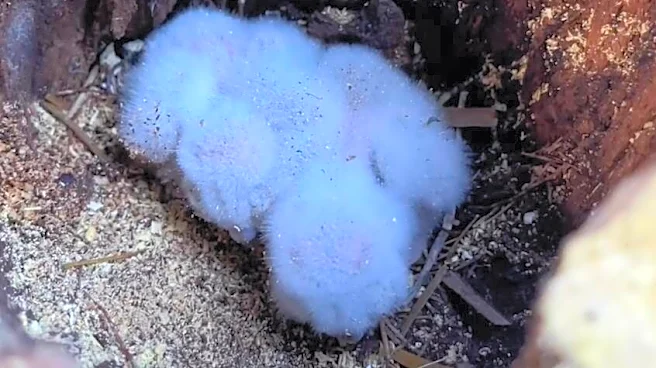







This past April, homeowners in South Florida hired a tree removal company to come cut down a dead tree in their backyard. After the workers cut down the top part of the trunk, they discovered two balls of fuzz inside the hollowed-out stump.
When the workers looked closer, they realized that the fuzz balls were baby eastern screech owls. The homeowners and workers knew the little owls needed help, so they carefully transported the tree stump with the owlets inside to South Florida Wildlife Center (SFWC).
The SFWC staff examined the owlets and found that they luckily hadn’t been injured by the chainsaw or by the tree falling down. Despite everything they’d been through, they were healthy.
“The nestlings were so young, small and fluffy that their
eyes were still closed, and they had likely hatched only a few days prior,” Haillie Mesics, development associate and marketing specialist at SFWC, told The Dodo.
Because the baby owls didn’t need any immediate medical attention, the SFWC staff decided they wanted to try reuniting the babies with their mama. They attached a wooden box to a different tree in the homeowners’ backyard and gently placed the owlets inside, hoping the mom would find them and use the box as a new nest.
“To alert the mom that her babies were back, we played eastern screen owl calls from our phones at the base of the new tree to entice her back into the area,” Mesics said.
In the morning, SFWC’s release coordinator, Melanie Lemieux, checked on the little owls to see if their mama had visited them overnight. She placed the babies on a scale to see if they’d gained any weight, but unfortunately they hadn’t, which meant the mom hadn’t fed them.
“[T]he removal of the nesting tree could have caused too much of a disturbance for Mom to feel safe returning,” Mesics said.
SFWC made the decision to bring the owlets back to their rescue facility and care for them until they were ready to survive outside on their own. The nestlings needed round-the-clock care in SFWC’s intensive care unit, but before long, they were thriving.
“They quickly began eating on their own, and once deemed ready, they graduated to an outdoor enclosure for continued rehabilitation,” Mesics said.
Unfortunately, SFWC has seen many cases of wild babies left stranded after the trees they call home get cut down. To prevent more cases like this in the future, SFWC recommends holding off on trimming or cutting down trees until late fall, when most baby animals have left their nests.
Thanks to the SFWC team, the two tiny puffballs who arrived at the center in April have now grown into lanky teenage owls. They’re getting stronger and more independent by the day, and soon they’ll be transferred into a flight enclosure to start strengthening their wings and learning to feed themselves. Once they’re ready, they’ll fly out into the world and start their new lives.