


As the founder of Wildlife Rescue, an animal advocacy and rehabilitation group based in South Africa, Lindy Elmes often monitors wildlife in her area. Recently, Elmes was surveying vervet monkeys in KwaZulu-Natal when she saw something spectacular.
The
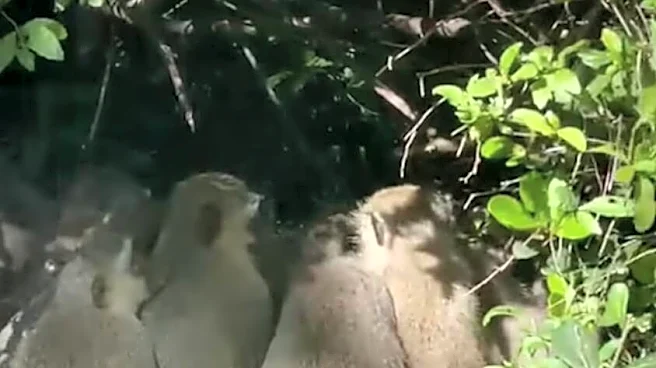
troop of female monkeys was gathered together, making loud noises and behaving in an “unusually animated” way.
“I had never witnessed [behavior] like this before,” Elmes told The Dodo. “I was completely fascinated.”
Vervet monkeys, often called vervets, are native to Africa and known for their black faces and gray hair. According to the African Wildlife Foundation, vervets tend to live in “complex but stable social groups” or “troops,” so it’s not surprising to see them together.
But why were these vervets acting this way?
At first, Elmes assumed they were responding to nearby danger, but then she spotted a figure at the center of the group. The monkeys were gathered around an expectant mother.
“In what can only be described as a birthing circle of sorts, the females appeared to be holding space around another female as she gave birth,” Elmes wrote in a Facebook post. “The atmosphere was intense, protective and deeply social.”
Elmes watched from a careful distance for two hours as the mother monkey gave birth to her baby and emerged “proudly,” basking in the excitement of her fellow monkeys, cradling her newborn to her chest.
The wildlife advocate was thrilled to document this unique moment, one that she will surely never forget.
“It was a beautiful reminder of the complex social bonds, intelligence and emotional lives of these remarkable animals,” Elmes wrote. “[It was] a privilege to witness such a rare and intimate moment in the wild.”