





As a volunteer for FLAP Canada, Karly-Lynne spends many spring and fall mornings walking through downtown Toronto, searching for migrating birds who have collided with buildings, hoping to help them heal.
Recently, on one such search, the rescuer was on her
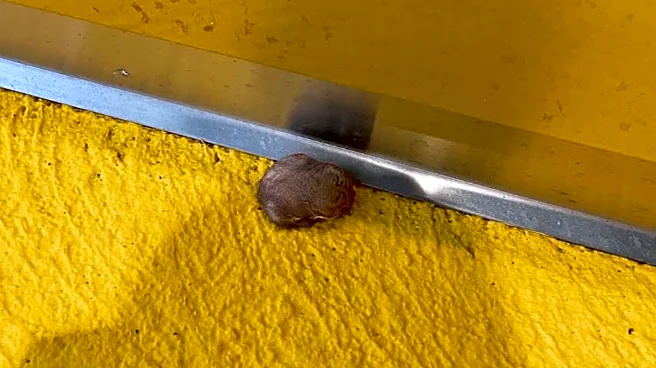
way to the office to drop off a group of injured birds when she saw what looked like a “mouse” near the base of the building.
“When I bent down to investigate, its wings quickly shot out,” Karly-Lynne told The Dodo. “I knew I had found a bat!”
More specifically, she was an eastern red bat, one of seven endangered bat species in the area, according to the Toronto Wildlife Centre (TWC).
Luckily, Karly-Lynne was no stranger to bats, as they're also prone to window collisions. The rescuer donned animal-safe leather gloves and guided the bat into a container.
“Despite needing help, the little red bat angrily chittered at me and showed its tiny, sharp teeth,” Karly-Lynne said. “I hoped that her being feisty was a good sign and that she would be able to make a full recovery!”
Karly-Lynne took the bat to the TWC, a charity and veterinary hospital, which, according to communications manager Brittany Seki, is the only wildlife rescue program of its kind in Canada. At the center, knowledgeable experts are always rescuing and rehabilitating sick, injured and orphaned wild animals. The bat was in great hands.
Team members examined the bat and found she suffered from minor head trauma, but otherwise seemed healthy. Over nine days, they monitored her to make sure she was healing properly and able to fly.
Eventually, the bat was ready to return home to the wild.
“She flew beautifully out of her tent,” TWC rescuer Andrea told The Dodo. “I remember her even circling around us once before disappearing between the trees. When they do that, I always get a tingle, because it feels like a spin of happiness and realization of their newly acquired freedom.”