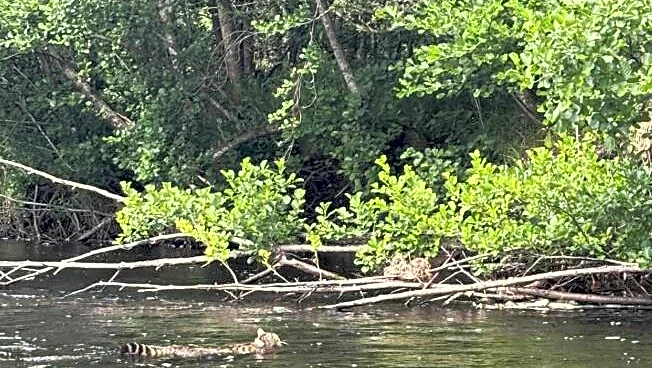



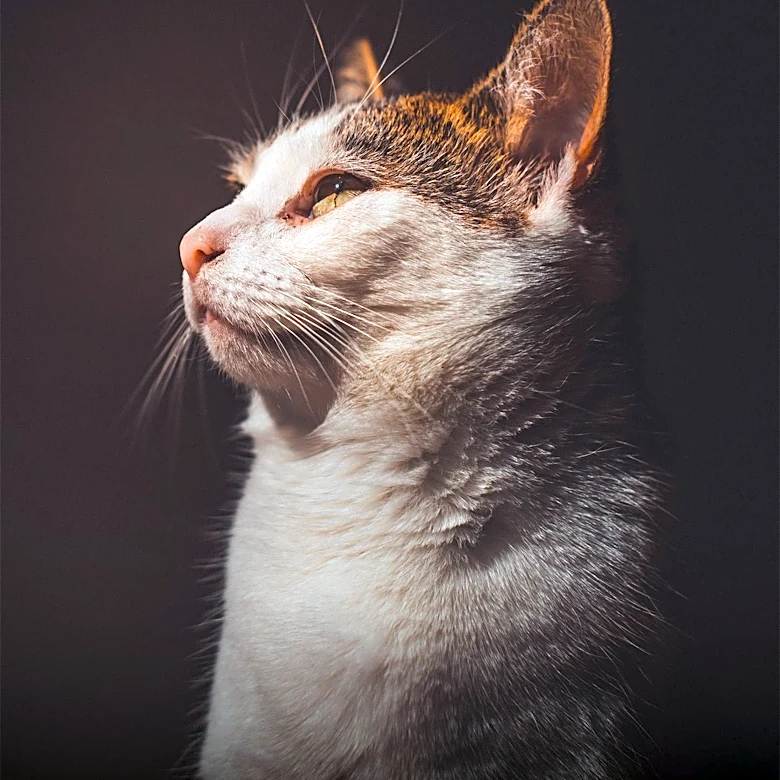



The other day, a resident of Scotland named Craig was out canoeing on a river with a group of friends when he spotted a furry animal hop into the water and start swimming. The little animal had a fluffy tail and pointed ears like a house cat — but what
would a house cat be doing in a river?
Then, Craig and his fellow canoers noticed something: The animal was wearing a collar. Suddenly, everything clicked, and Craig realized that the animal was no ordinary cat — she was a Scottish wildcat.
Wildcats are undomesticated felines who live across Europe, Africa and Asia. All domesticated house cats are descendants of African wildcats. Scottish wildcats are a subsect of European wildcats who once called the entire UK home, but now occupy only a small section of the country.
“[The population decline] was due to a number of reasons, like historical persecution, habitat loss, human population growth, intensification of agricultural practices and deforestation as well,” Saving Wildcats field operations manager Louise Hughes told The Dodo.
While Scottish wildcats look nearly identical to domesticated cats, there are a few key visual differences between them. They have unique fur markings and distinct bushy tails.
“[The tail] is a bit shorter than you would see in the domestic cat … It’s got this black tip to it and these very distinct black rings,” Hughes said.
Scottish wildcats, also known as Highland tigers, were recently declared functionally extinct in the wild. But a conservation program called Saving Wildcats has been working hard to reverse that. Through their captive breeding and release program, they’ve introduced 46 wildcats into their natural habitat over the past three years.
When Saving Wildcats releases the felines, they attach GPS collars on them to track and study their movements. The organization’s staff members had seen on the cats’ maps that they sometimes cross rivers, but they’d never actually observed the behavior before. So when Craig sent in the video he’d captured of the wildcat swimming in the river, everyone was stunned.
“We could assume that they maybe were swimming, but now to have the video evidence of that is really amazing,” Hughes said.
Everyone who either saw the wildcat swimming in person or watched the video was amazed by how expertly she navigated her way across the deep water. She had clearly crossed the river in that same spot before — she knew exactly where the current was going to take her and how to stay dry.
“Once she was out of the water, the thing that surprised them the most was the fact that her tail was bone dry,” Hughes said. “You would expect that she would be quite wet, but apparently she wasn’t.”
The wildcat’s presence on the river serves as a great sign for the species’ success. Thanks to Saving Wildcats and their partner organizations, one of Scotland’s most iconic animals is slowly returning to their home.