





The Kimberley region of Western Australia is known for its sprawling wilderness, defined by gorges, savannas and steep mountain ranges.
Here in this tropical biome, many wild animals thrive. But there’s one species who’s largely been missing for the past
50 years. At least until recently, when scientists began spotting them on hidden cameras.
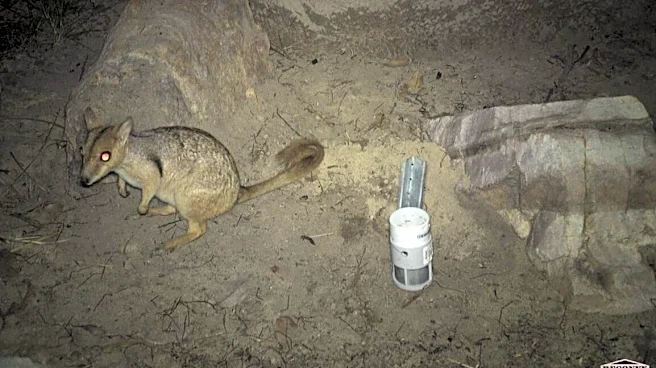
Nabarleks are the second-smallest species of rock-wallabies, known for their long tails and gray-brown fur. According to World Wildlife Fund Australia, nabarleks are “thought to be on the brink of extinction,” their numbers steadily decreasing due to introduced predators and wildfires.
For years, scientists struggled to study nabarlek populations, as the animals live in extremely remote, rocky habitats. So when researchers with the Australian Wildlife Conservancy (AWC) recently spotted nabarleks scurrying in front of hidden cameras placed in two locations across the Kimberley region, they almost couldn’t believe their eyes.
According to AWC, the sightings marked the first time scientists had seen the species on mainland Dambeemangaddee Country in over 50 years and the first record in the Yampi Sound Training Area. It was “the ecological equivalent of finding a needle in a haystack.”
“This is very exciting and great news for the species,” AWC senior field ecologist Larissa Potter said in a press release. “Confirming the nabarlek’s presence at two new sites on mainland Dambeemangaddee Country is a major step forward for our understanding of where the species occurs.”
Now that scientists and local communities have confirmed the presence of nabarleks, they’re eager to learn more.
“Is it a healthy population?” Dambeemangaddee traditional owner Inga Pedersen asked in the press release. “We want to compare them to the ones on the islands and make sure this animal isn't disappearing.”
Researchers hope this new information can support conservation efforts for these unique animals. Reviving nebarlek populations is valuable not just for the locals who love them, but also for the ecosystem itself, which benefits from the vegetation management the animals provide.
“Every animal has its own song and story,” Pedersen said. “They might be small, they might be big, but they all play their part.”