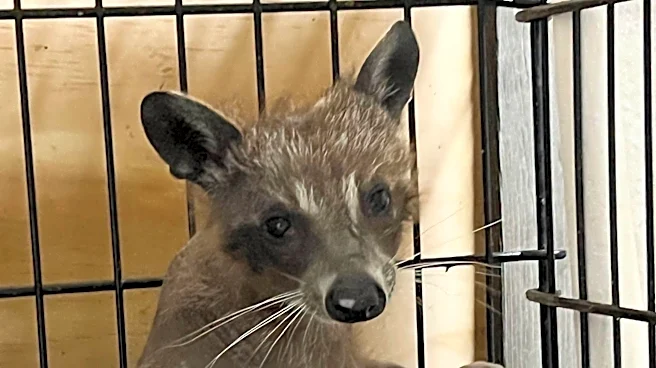

A few weeks ago, the folks at Carolina Wildlife Conservation Center (CWCC) received a concerning call from a local homeowner. A sick raccoon was visiting their porch during the day, and his coat looked
unlike anything they’d ever seen: The little guy had a distinctive furry head and tail, but the rest of his body was completely bare and shiny.
The folks at CWCC could tell just by the description that the raccoon had been suffering from mange, and his strange behavior confirmed their suspicions.
“He was eating their outdoor cat food and took shelter in their warm outdoor cat house,” Morgan Rafael, CWCC’s executive director, told The Dodo. “This is typical for animals with mange, since they seek the sun to stay warm, even the nocturnal animals.”
The raccoon had been visiting every day, so the CWCC team advised the homeowner to set a humane trap. To everyone’s surprise, the raccoon went into the trap overnight and remained unusually docile when the CWCC arrived to pick him up.
“He was very easy to catch … It stood out that he was weak and seemed to be really relieved to be [rescued],” Rafael said. “He wasn't aggressive at all; he was lethargic and shy.”
As the team loaded the raccoon into their vehicle, they noticed he was incredibly stinky. The poor boy smelled almost like yeast — another symptom of severe mange.
At CWCC’s headquarters, the raccoon stayed uncharacteristically calm as the team gave him a thorough checkup. They then sedated him to do a skin scrape test, which confirmed that he had mites, and immediately began treatment.
Thankfully, the raccoon wasn’t suffering from any secondary bacterial infections, which can often happen with mange cases. The team was relieved, especially since his case of mange was so severe.
“He was likely like this for a while, due to his complete hair loss and intense thickening of the skin,” Rafael said.
You can read more about his rescue here:
The raccoon’s mange was one of the worst CWCC’s team had ever encountered, but his docile nature stood out most.
“His personality is extremely shy,” Rafael said. “He doesn't growl or make noise when working around him or medicating him; he just buries his head and cuddles up in his blankets.”
The little guy went straight into quarantine to begin his healing process, where he’s been ever since. With around-the-clock care, the raccoon is finally starting to feel better, and the team hopes he’ll join the rest of the raccoons at their center soon for his second phase of recovery.
“Once he is free of the mites, he can go in with other raccoons so he can cuddle with them for warmth during the winter months,” Rafael said. “He will be in our center to shield him from the intense cold while his fur grows back.”
The CWCC can’t wait to see the raccoon in his natural coat again, socializing with his peers at the center. And one day, they hope to watch him return to his natural habitat, healthy and thriving.
“Once he has healed, he will be released back to where he was found, back to the wild where he belongs …” Rafael said.