


What is the story about?
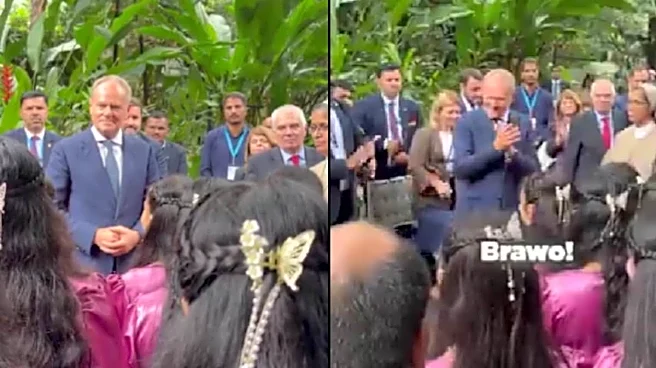
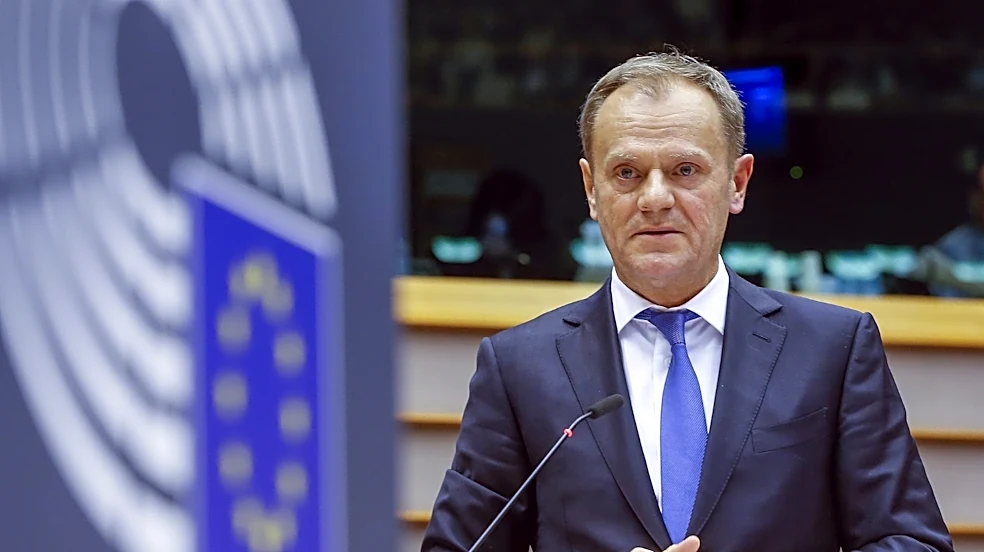
Polish Prime Minister Donald Tusk’s arrival in India on October 21 comes at a time when both countries have compelling reasons to strengthen their relationship. The world is becoming less predictable, Europe is reassessing its security and economic priorities, and India is seeking reliable partners to expand its industrial and technological capabilities. Tusk’s discussions with PM Modi in New Delhi on October 22, followed by business engagements in Delhi and Bengaluru, should therefore be viewed against a larger strategic canvas.
Poland’s economic transformation since the end of communist rule has been striking, making it the largest economy in Central and Eastern Europe. Its position on NATO’s eastern flank, substantial investment in defence and prominent support for Ukraine have also enhanced its standing within the European Union. Warsaw has consequently acquired a greater voice in debates on European security, industrial resilience and the continent’s future relationship with Russia.
New Delhi’s European diplomacy has traditionally concentrated on major powers such as France and Germany, alongside Britain and the European Union’s institutions. Poland deserves a more prominent place in that calculation. It brings industrial expertise, a substantial domestic market and influence in European decision-making. For Warsaw, meanwhile, India offers an opportunity to diversify commercial relationships and participate in the growth of a major economy whose global importance continues to increase. The relationship can benefit both countries without requiring them to have identical positions on every international issue.
The strategic partnership agreed during Modi’s visit to Warsaw in August 2024 established a four-year action plan covering security, trade, technology, connectivity and other areas. Subsequent exchanges have given the defence dimension greater substance. A meeting of the India-Poland Joint Working Group on Defence Cooperation in Warsaw in September 2026 examined prospects for industrial collaboration, including joint development and production.
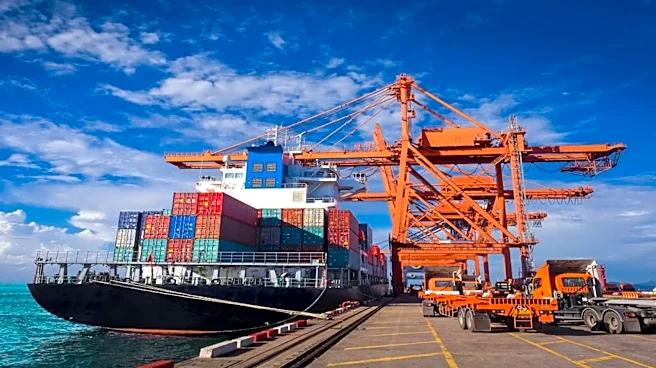
Bilateral trade reached approximately $6 billion in 2025. Poland aims to raise the figure to $10 billion. Yet the composition of trade reveals room for improvement. Indian exports include textiles, pharmaceuticals, engineering goods, chemicals and machinery, while Polish sales to India feature industrial equipment, specialised machinery and other manufactured products. India needs to encourage more Polish investment in the country, enabling both countries to participate more deeply in each other’s industrial development.
Polish investment in India, estimated at roughly $635 million by Indian official sources, remains modest relative to the possibilities. Can-Pack has established a manufacturing presence in metal packaging, while TZMO produces hygiene and sanitary products. Maflow and other Polish companies operate in automotive and railway components, and Ekolog has developed expertise in waste management and waste-to-energy solutions. Solaris has entered India’s electric mobility market through a joint venture with JBM Auto. These investments illustrate how Polish technology can be combined with Indian manufacturing capacity and domestic demand. The next investment cycle should target electric mobility, rail equipment, industrial automation, renewable energy and urban waste management.
Indian businesses, for their part, have built a substantial presence in Poland. Tata Consultancy Services, Infosys, HCL Technologies and Wipro are among the companies employing Polish professionals and serving international markets from the country. Indian investment also extends to manufacturing, pharmaceuticals and other industries.
The India-Poland business roundtables are scheduled to be held in Delhi and Bengaluru on October 22 and 23, respectively. In Bengaluru, meetings involving information technology and space-sector stakeholders are also scheduled and should connect Polish industrial strengths with India’s technology ecosystem. Cooperation in satellite applications, cybersecurity, artificial intelligence and digital services merits particular attention. Joint research projects, university partnerships and business-to-business agreements would give the visit a practical outcome beyond political statements. ICI will sign satellite collaboration projects with ISRO, while the University of Krakow will collaborate with counterparts in Bengaluru on artificial intelligence and quantum technologies.
Negotiations on the India-EU free trade agreement concluded in January 2026, opening up prospects for greater commercial integration. Poland can help Indian businesses understand European industrial requirements and market opportunities. Indian companies, in turn, can offer Polish firms access to India’s manufacturing base and rapidly expanding consumer market.
History gives this partnership an unusually warm foundation. During the Second World War, Maharaja Digvijaysinhji of Nawanagar sheltered more than a thousand Polish children at Balachadi, while thousands of Polish women and children found refuge in Kolhapur. The memory of the Good Maharaja remains deeply valued in Poland. Today, an Indian community estimated at around 30,000, including professionals, entrepreneurs and students, provides another bridge between the two societies. Their networks can encourage business links, education and cultural exchange.
Tusk’s visit should deliver a clear set of priorities: a credible pathway towards the $10-billion trade target, new investment commitments, identifiable defence-industrial projects and cooperation in space and digital technologies. Poland is too important to India’s European engagement to remain an underdeveloped relationship; India is too important to Poland’s economic future to be treated as a distant market. The friendship has endured for decades. The task now is to give this partnership the commercial weight and strategic purpose it deserves.
(Anil Wadhwa is a former Secretary (East) in the Ministry of External Affairs, and has served as the Indian Ambassador to Poland. Views are personal.)