/images/ppid_59c68470-image-178782252994111912.webp)

/images/ppid_59c68470-image-178789508463184599.webp)
What is the story about?
The 18th BRICS Summit will take place in New Delhi on September 12-13, with India seeking to turn its year-long chairship into concrete outcomes on trade, finance, technology, climate resilience and cooperation across the Global South.
India, which assumed the rotating BRICS chair on January 1, will host the leaders of BRICS member and partner countries as well as outreach invitees at Bharat Mandapam. The summit comes as the grouping navigates a rapidly changing global economic and geopolitical landscape, including trade tensions, supply-chain disruptions, an ongoing war, among other things.
India has framed its chairmanship around the theme “Building for Resilience, Innovation, Cooperation and Sustainability”, with a stated focus on a people-centric, “Humanity First” approach.
More than 350 BRICS meetings and high-level engagements have already been held across more than 25 Indian cities this year, covering the grouping's three core pillars: political and security cooperation; economic and financial cooperation; and cultural and people-to-people exchanges.
Trade, finance and the push for more resilient supply chains
Economic cooperation is expected to be a major focus when leaders meet in New Delhi.
India's BRICS trade ministers have already endorsed the Strategy for BRICS Economic Partnership 2030, while also agreeing on measures aimed at expanding trade in services, strengthening global value chains and improving access to finance for small businesses. The Jaipur Consensus and principles for MSME credit are among the outcomes expected to feed into the leaders' discussions.
De-dollarisation and the payments question
One of the most closely watched economic issues will be the future of cross-border payments.
BRICS countries have been exploring ways to make payments between member economies cheaper and less dependent on traditional dollar-based channels. The Reserve Bank of India has proposed discussions on linking fast-payment systems and central bank digital currencies, while RBI Governor Sanjay Malhotra said in August that several options remain under consideration.
India is also pushing for greater international use of the rupee. It recently eased rules governing rupee-denominated export payments in a move aimed at encouraging wider use of the currency in international trade settlements.
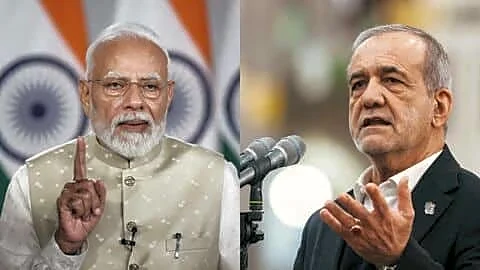
The New Development Bank could also feature prominently in discussions around development finance. Iran, which joined BRICS in 2024, has said it expects to join the bank, although the NDB has not independently confirmed the membership.
Xi's expected visit to Delhi
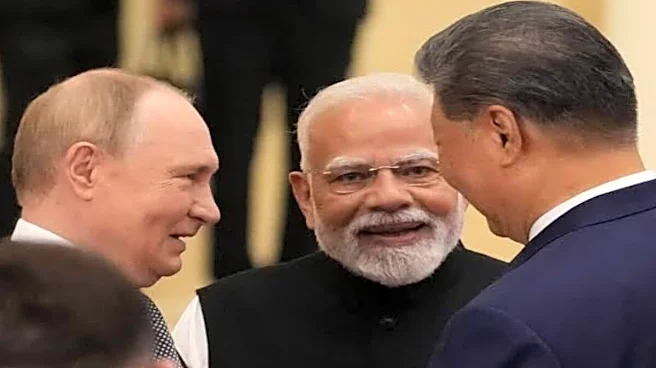
The summit is also likely to have significance beyond the formal BRICS agenda because of the expected presence of Chinese President Xi Jinping.
Reuters reported this week that Xi is likely to attend the New Delhi summit with a delegation of around 400 officials, potentially making it his first visit to India in seven years. His attendance has not yet been officially confirmed.
If he comes, the summit could provide an important setting for Prime Minister Narendra Modi and Xi to assess the gradual improvement in India-China ties following the 2020 border clashes. Discussions on managing the unresolved boundary dispute and expanding bilateral engagement could take place alongside the BRICS proceedings.
AI, technology and innovation
Technology is another emerging area on the agenda.
India has made innovation one of the four central themes this year for the gathering, while BRICS discussions have covered artificial intelligence, digital infrastructure, fintech and technology cooperation. The country has also proposed a BRICS Incubator Network and a BRICS Startup Innovation Fund to promote innovation-led growth.
The leaders could therefore look at how emerging technologies can be used to address development gaps while also dealing with questions around AI governance, cybersecurity and responsible deployment.
Climate, energy and disaster resilience
The “resilience” and “sustainability” pillars could yield discussions on energy security, climate change, disaster risk reduction, food security and resilient supply chains.
India's stated priorities include strengthening cooperation in agriculture, health, disaster preparedness, energy and supply chains. BRICS ministers have already discussed issues including smart grids, energy storage and climate-related challenges.
For developing economies facing increasingly frequent climate shocks, the focus will be on whether BRICS can create mechanisms that deliver financing, technology and practical cooperation rather than simply reiterating commitments.
BRICS today is considerably larger than the original grouping of Brazil, Russia, India, China and South Africa. The expansion has brought in countries including Egypt, Ethiopia, Iran, Indonesia and the UAE, alongside a wider circle of partner countries.
India has previously chaired BRICS in 2012, 2016 and 2021.
India, which assumed the rotating BRICS chair on January 1, will host the leaders of BRICS member and partner countries as well as outreach invitees at Bharat Mandapam. The summit comes as the grouping navigates a rapidly changing global economic and geopolitical landscape, including trade tensions, supply-chain disruptions, an ongoing war, among other things.
India has framed its chairmanship around the theme “Building for Resilience, Innovation, Cooperation and Sustainability”, with a stated focus on a people-centric, “Humanity First” approach.
More than 350 BRICS meetings and high-level engagements have already been held across more than 25 Indian cities this year, covering the grouping's three core pillars: political and security cooperation; economic and financial cooperation; and cultural and people-to-people exchanges.
Trade, finance and the push for more resilient supply chains
Economic cooperation is expected to be a major focus when leaders meet in New Delhi.
India's BRICS trade ministers have already endorsed the Strategy for BRICS Economic Partnership 2030, while also agreeing on measures aimed at expanding trade in services, strengthening global value chains and improving access to finance for small businesses. The Jaipur Consensus and principles for MSME credit are among the outcomes expected to feed into the leaders' discussions.
De-dollarisation and the payments question
One of the most closely watched economic issues will be the future of cross-border payments.
BRICS countries have been exploring ways to make payments between member economies cheaper and less dependent on traditional dollar-based channels. The Reserve Bank of India has proposed discussions on linking fast-payment systems and central bank digital currencies, while RBI Governor Sanjay Malhotra said in August that several options remain under consideration.
India is also pushing for greater international use of the rupee. It recently eased rules governing rupee-denominated export payments in a move aimed at encouraging wider use of the currency in international trade settlements.
The New Development Bank could also feature prominently in discussions around development finance. Iran, which joined BRICS in 2024, has said it expects to join the bank, although the NDB has not independently confirmed the membership.
Xi's expected visit to Delhi
The summit is also likely to have significance beyond the formal BRICS agenda because of the expected presence of Chinese President Xi Jinping.
Reuters reported this week that Xi is likely to attend the New Delhi summit with a delegation of around 400 officials, potentially making it his first visit to India in seven years. His attendance has not yet been officially confirmed.
If he comes, the summit could provide an important setting for Prime Minister Narendra Modi and Xi to assess the gradual improvement in India-China ties following the 2020 border clashes. Discussions on managing the unresolved boundary dispute and expanding bilateral engagement could take place alongside the BRICS proceedings.
AI, technology and innovation
Technology is another emerging area on the agenda.
India has made innovation one of the four central themes this year for the gathering, while BRICS discussions have covered artificial intelligence, digital infrastructure, fintech and technology cooperation. The country has also proposed a BRICS Incubator Network and a BRICS Startup Innovation Fund to promote innovation-led growth.
The leaders could therefore look at how emerging technologies can be used to address development gaps while also dealing with questions around AI governance, cybersecurity and responsible deployment.
Climate, energy and disaster resilience
The “resilience” and “sustainability” pillars could yield discussions on energy security, climate change, disaster risk reduction, food security and resilient supply chains.
India's stated priorities include strengthening cooperation in agriculture, health, disaster preparedness, energy and supply chains. BRICS ministers have already discussed issues including smart grids, energy storage and climate-related challenges.
For developing economies facing increasingly frequent climate shocks, the focus will be on whether BRICS can create mechanisms that deliver financing, technology and practical cooperation rather than simply reiterating commitments.
BRICS today is considerably larger than the original grouping of Brazil, Russia, India, China and South Africa. The expansion has brought in countries including Egypt, Ethiopia, Iran, Indonesia and the UAE, alongside a wider circle of partner countries.
India has previously chaired BRICS in 2012, 2016 and 2021.

/images/ppid_59c68470-image-178810752480098194.webp)

/images/ppid_59c68470-image-178808002431483992.webp)
/images/ppid_59c68470-image-17881175306899277.webp)


/images/ppid_59c68470-image-178817256238530572.webp)
/images/ppid_59c68470-image-178793507486848678.webp)