/images/ppid_59c68470-image-178906002704999454.webp)


/images/ppid_59c68470-image-178914508485737252.webp)

What is the story about?
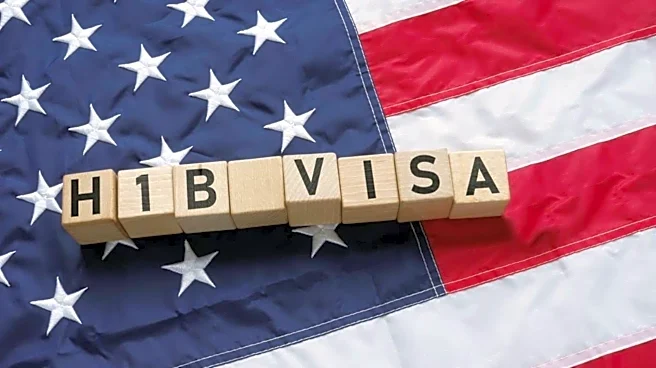
The Trump administration has proposed ending a 60-day grace period that allows certain foreign workers, including skilled workers on H-1B visas, to remain in the US and look for a new employer after losing their jobs.
Under a notice published Thursday in the Federal Register by the US Department of Homeland Security, H-1B and certain other temporary work visa holders would generally have to leave the US when their employment ends, rather than using the existing grace period to find another sponsor.
The proposal would mark another tightening of legal immigration under President Donald Trump, who returned to the White House in January 2025. His administration has also raised visa fees for skilled workers and recently paused immigrant visa appointments at US missions worldwide as it works on a new training programme.
DHS acknowledged that the proposed change could disrupt employers and workers, but said companies could instead offer the positions to qualified US workers. Foreign workers who leave the country could later apply for a new visa if an employer files a fresh petition on their behalf.
“DHS presumes that they will either offer the same jobs to equally qualified US workers or go through the I-129 petition process depending on their workforce requirement,” the notice said.
ALSO READ | Trump’s big midterm promise: $5,000 for every US adult if GOP wins
What the 60-day rule means
The 60-day grace period, introduced in 2017, gives foreign workers time to find another job or make arrangements to leave the US after their employment ends.
That can mean finding a new sponsor, transferring to another eligible status or winding down their lives in the country, including selling a home or making arrangements for children who attend US schools.
The proposed change would therefore give affected workers significantly less time to find another employer before they have to leave the country.
Why it matters to Indian tech workers
H-1B visas, established by Congress in 1990, are widely used by US technology companies and other employers to hire skilled foreign workers for specialised roles.
Indian nationals account for a large share of H-1B beneficiaries, making changes to the programme particularly significant for India's technology workforce.
Major H-1B sponsors include consulting firms such as Deloitte, PwC and Ernst & Young, as well as Indian IT services companies including Tata Consultancy Services, Infosys, HCLTech and LTIMindtree.
ALSO READ | As Donald Trump takes center stage in Dallas, Republicans debate a future without him
Other visa categories could be affected
The proposed rule would extend beyond H-1B workers. It would also cover several other temporary employment-based visa categories, including E-1 international traders, E-2 treaty investors, L-1 executives and managers transferred within multinational companies, O-1 workers with extraordinary ability in fields such as science, sports and the arts, and TN professional workers.
It would also affect H-1B1 skilled workers from Singapore and Chile and E-3 specialty workers from Australia.
The proposal is not yet final. It will be subject to a public comment period before the administration can issue a final rule.
ALSO READ | Trump's threats could boost BRICS de-dollarisation: Jeffrey Sachs
Under a notice published Thursday in the Federal Register by the US Department of Homeland Security, H-1B and certain other temporary work visa holders would generally have to leave the US when their employment ends, rather than using the existing grace period to find another sponsor.
The proposal would mark another tightening of legal immigration under President Donald Trump, who returned to the White House in January 2025. His administration has also raised visa fees for skilled workers and recently paused immigrant visa appointments at US missions worldwide as it works on a new training programme.
DHS acknowledged that the proposed change could disrupt employers and workers, but said companies could instead offer the positions to qualified US workers. Foreign workers who leave the country could later apply for a new visa if an employer files a fresh petition on their behalf.
“DHS presumes that they will either offer the same jobs to equally qualified US workers or go through the I-129 petition process depending on their workforce requirement,” the notice said.
ALSO READ | Trump’s big midterm promise: $5,000 for every US adult if GOP wins
What the 60-day rule means
The 60-day grace period, introduced in 2017, gives foreign workers time to find another job or make arrangements to leave the US after their employment ends.
That can mean finding a new sponsor, transferring to another eligible status or winding down their lives in the country, including selling a home or making arrangements for children who attend US schools.
The proposed change would therefore give affected workers significantly less time to find another employer before they have to leave the country.
Why it matters to Indian tech workers
H-1B visas, established by Congress in 1990, are widely used by US technology companies and other employers to hire skilled foreign workers for specialised roles.
Indian nationals account for a large share of H-1B beneficiaries, making changes to the programme particularly significant for India's technology workforce.
Major H-1B sponsors include consulting firms such as Deloitte, PwC and Ernst & Young, as well as Indian IT services companies including Tata Consultancy Services, Infosys, HCLTech and LTIMindtree.
ALSO READ | As Donald Trump takes center stage in Dallas, Republicans debate a future without him
Other visa categories could be affected
The proposed rule would extend beyond H-1B workers. It would also cover several other temporary employment-based visa categories, including E-1 international traders, E-2 treaty investors, L-1 executives and managers transferred within multinational companies, O-1 workers with extraordinary ability in fields such as science, sports and the arts, and TN professional workers.
It would also affect H-1B1 skilled workers from Singapore and Chile and E-3 specialty workers from Australia.
The proposal is not yet final. It will be subject to a public comment period before the administration can issue a final rule.
ALSO READ | Trump's threats could boost BRICS de-dollarisation: Jeffrey Sachs





/images/ppid_59c68470-image-178896753822429506.webp)

/images/ppid_59c68470-image-178902005702641873.webp)