/images/ppid_59c68470-image-178850006380962124.webp)

/images/ppid_59c68470-image-17888700361047765.webp)

/images/ppid_59c68470-image-178887011935359760.webp)
What is the story about?
Former Bangladesh Prime Minister Sheikh Hasina has said she intends to return to Bangladesh around December despite facing a death sentence and what she describes as serious threats to her safety, setting the stage for a potentially pivotal moment in the country's political future.
In an interview with News18, Hasina said she was prepared to return voluntarily, appear before the courts and defend herself. But she insisted that any judicial process must be transparent, impartial and conducted according to the rule of law.
Hasina framed her decision not as an attempt to regain power but as a political obligation to supporters whom she claims have faced arrests, intimidation and legal action under the current government led by the Bangladesh Nationalist Party (BNP) .
That puts the spotlight on how the BNP administration responds. The current political establishment emerged from the mass uprising that ousted Hasina in August 2024. Its core justification was that Bangladesh needed to move away from the authoritarianism under Hasina's regime and restore democratic accountability.
Hasina has already been sentenced to death in a case against her, but she has questioned the legitimacy of proceedings conducted in her absence, arguing that justice cannot mean a predetermined outcome.
Bangladesh has formally sought her extradition from India, where she has been residing. Hasina declined to comment on New Delhi's position, saying the matter would be decided through India's legal processes.
That places India in a delicate position. New Delhi has long viewed stability in Bangladesh as a critical strategic interest, given the two countries' extensive economic, security and connectivity ties. How India handles the extradition question could influence bilateral relations while drawing scrutiny from both domestic and international observers.
Hasina denied reports of any backchannel negotiations with Bangladesh's interim administration or opposition forces regarding the terms of her return. She described the decision as entirely her own and rejected the idea of political bargains with a government that has banned the Awami League and pursued cases against its leaders.
Democracies do not prove themselves by how they treat allies. They prove themselves by how they treat adversaries.
Read more: Seven policy changes in India triggered by the US-Iran war
In an interview with News18, Hasina said she was prepared to return voluntarily, appear before the courts and defend herself. But she insisted that any judicial process must be transparent, impartial and conducted according to the rule of law.
Hasina framed her decision not as an attempt to regain power but as a political obligation to supporters whom she claims have faced arrests, intimidation and legal action under the current government led by the Bangladesh Nationalist Party (BNP) .
That puts the spotlight on how the BNP administration responds. The current political establishment emerged from the mass uprising that ousted Hasina in August 2024. Its core justification was that Bangladesh needed to move away from the authoritarianism under Hasina's regime and restore democratic accountability.
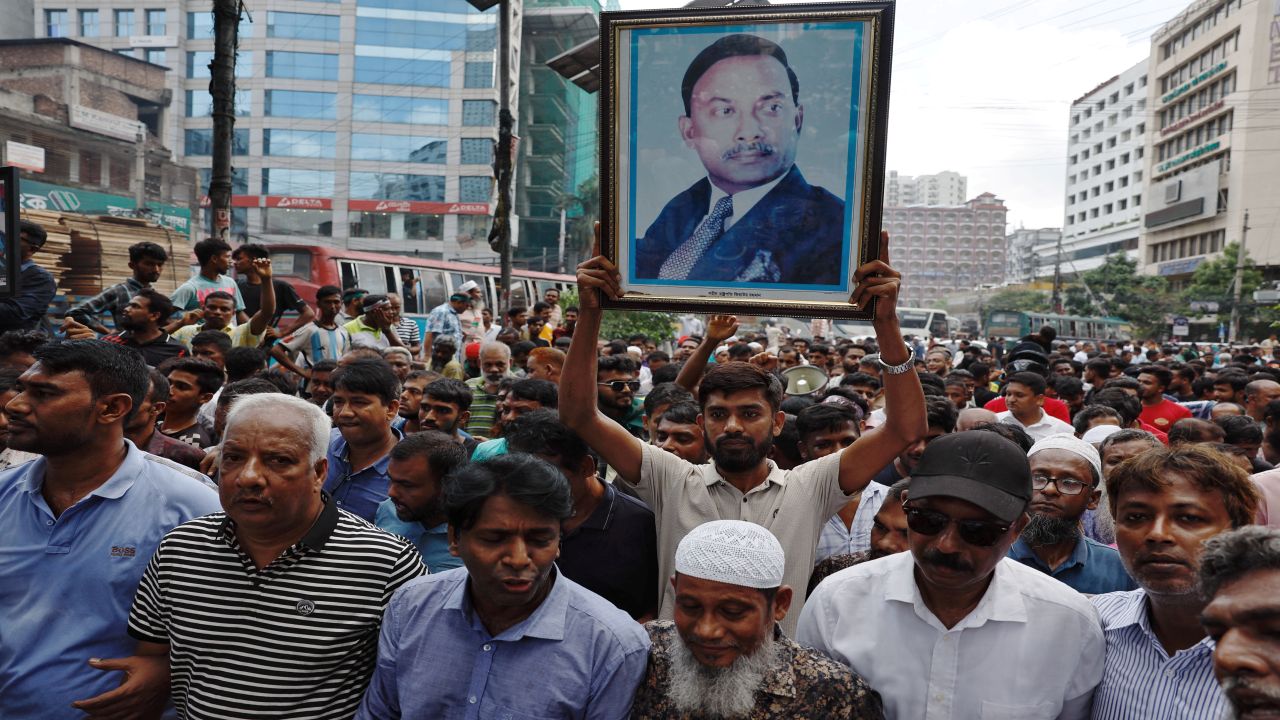
FILE PHOTO: A supporter of Bangladesh Nationalist Party (BNP) holds a picture of former President Ziaur Rahman while joining in a rally, days after the resignation of former Prime Minister Sheikh Hasina, in Dhaka, Bangladesh, August 7, 2024. REUTERS/Mohammad Ponir Hossain
Hasina has already been sentenced to death in a case against her, but she has questioned the legitimacy of proceedings conducted in her absence, arguing that justice cannot mean a predetermined outcome.
Bangladesh has formally sought her extradition from India, where she has been residing. Hasina declined to comment on New Delhi's position, saying the matter would be decided through India's legal processes.
That places India in a delicate position. New Delhi has long viewed stability in Bangladesh as a critical strategic interest, given the two countries' extensive economic, security and connectivity ties. How India handles the extradition question could influence bilateral relations while drawing scrutiny from both domestic and international observers.
Hasina denied reports of any backchannel negotiations with Bangladesh's interim administration or opposition forces regarding the terms of her return. She described the decision as entirely her own and rejected the idea of political bargains with a government that has banned the Awami League and pursued cases against its leaders.
Democracies do not prove themselves by how they treat allies. They prove themselves by how they treat adversaries.
Read more: Seven policy changes in India triggered by the US-Iran war