/images/ppid_59c68470-image-178837003119596857.webp)

/images/ppid_59c68470-image-178830753463063044.webp)

What is the story about?
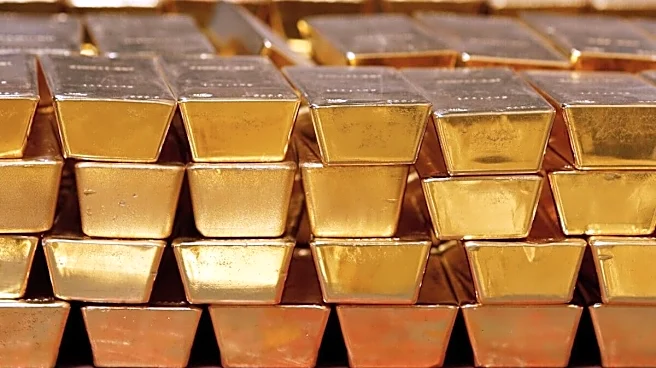
The Dutch Central Bank has shifted gold reserves worth about $12 billion from New York and Ottawa to London, citing concerns about increasing global geopolitical unrest.
Between March and August, the bank transferred approximately 86 metric tons of gold — more than a quarter of the bullion it holds in the US and Canada — to the UK capital. London now holds nearly a third of Dutch gold reserves, the largest share.
"With this relocation, we have improved the tradability of our gold reserves,” Dutch Central Bank Governor Olaf Sleijpen said in a statement Wednesday. “We expect that we will never need to use them, but we do need to strengthen our resilience and preparedness.”
London hosts the world’s most liquid gold market, where hundreds of billions of dollars’ worth of metal changes hands every week. For this reason, central banks have long used the Bank of England as a custodian for their metal, where it can be quickly sold or bought in large quantities, or lent out to raise dollars.
ALSO READ | Gold extends fall below ₹1.51 lakh per 10 grams in India; silver nears ₹2.33 lakh per kg
Gold stored at the Bank of England must also meet international market standards for weight and purity, making bars held there readily interchangeable and easier to trade.
Bullion held at the Bank of England “is considered the most easily tradable gold in the world,” the Dutch central bank said. “This makes it the quickest for DNB to deploy in a crisis situation."
Central banks have long spread their gold across several countries, balancing the security of domestic storage against the ability to trade or mobilise reserves quickly in major financial centers.
But geopolitical tensions are prompting more reserve managers to reconsider where their bullion is kept. A growing share are looking to diversify or repatriate their holdings, according to a recent central bank survey.
The Dutch move comes just months after the French central bank sold its bullion reserves held in the US and replaced them with reserves in Paris, an operation it said was intended to bring its gold bars into line with international standards.
Germany, which holds the world’s second-largest gold reserves, has long faced calls to repatriate bullion held in New York. The opposition AfD this year tabled a motion in the Bundestag seeking the return of all German gold held abroad, arguing that the Trump administration could use its control over assets stored in the US as a source of leverage over Germany.
ALSO READ | Gold, silver ETFs fall: Why silver funds are seeing a sharper correction
"Keeping a larger share of the gold reserves in London strengthens the function of gold as an anchor of trust," the Dutch central bank said. The bank holds 30.8% of its 612.4 tons of gold reserves at its cash center in Zeist, southeast of Amsterdam.
The Dutch Central Bank executed the move by selling approximately 59 tons of gold in New York and buying the equivalent amount in London. More than 27 tons of gold were also physically moved from the US and Canada to Zeist, and a similar quantity of gold was then transferred to London.
Preparations to move the gold were not disclosed until the process was completed because it was a matter of vital public interest, Finance Minister Eelco Heinen said in a statement.
It’s not the first time the Netherlands has reduced its gold reserves in the US. In 2014, the central bank cut the amount stored in New York City from 51% of the total, and repatriated it to the Netherlands. That shift was to align with other central banks that store a larger portion of their gold reserves domestically.
ALSO READ | Higher gold prices unlikely to derail festive demand: IAGES CEO
New York’s vast stockpile of central-bank gold is largely a legacy of World War II and the Bretton Woods era, when European countries moved bullion to the US for safekeeping and later accumulated dollar reserves that could be converted into gold. That stockpile amounted to over 12,000 tons of monetary gold at its peak in 1973, but has since nearly halved.
Between March and August, the bank transferred approximately 86 metric tons of gold — more than a quarter of the bullion it holds in the US and Canada — to the UK capital. London now holds nearly a third of Dutch gold reserves, the largest share.
"With this relocation, we have improved the tradability of our gold reserves,” Dutch Central Bank Governor Olaf Sleijpen said in a statement Wednesday. “We expect that we will never need to use them, but we do need to strengthen our resilience and preparedness.”
London hosts the world’s most liquid gold market, where hundreds of billions of dollars’ worth of metal changes hands every week. For this reason, central banks have long used the Bank of England as a custodian for their metal, where it can be quickly sold or bought in large quantities, or lent out to raise dollars.
ALSO READ | Gold extends fall below ₹1.51 lakh per 10 grams in India; silver nears ₹2.33 lakh per kg
Gold stored at the Bank of England must also meet international market standards for weight and purity, making bars held there readily interchangeable and easier to trade.
Bullion held at the Bank of England “is considered the most easily tradable gold in the world,” the Dutch central bank said. “This makes it the quickest for DNB to deploy in a crisis situation."
Central banks have long spread their gold across several countries, balancing the security of domestic storage against the ability to trade or mobilise reserves quickly in major financial centers.
But geopolitical tensions are prompting more reserve managers to reconsider where their bullion is kept. A growing share are looking to diversify or repatriate their holdings, according to a recent central bank survey.
The Dutch move comes just months after the French central bank sold its bullion reserves held in the US and replaced them with reserves in Paris, an operation it said was intended to bring its gold bars into line with international standards.
Germany, which holds the world’s second-largest gold reserves, has long faced calls to repatriate bullion held in New York. The opposition AfD this year tabled a motion in the Bundestag seeking the return of all German gold held abroad, arguing that the Trump administration could use its control over assets stored in the US as a source of leverage over Germany.
ALSO READ | Gold, silver ETFs fall: Why silver funds are seeing a sharper correction
"Keeping a larger share of the gold reserves in London strengthens the function of gold as an anchor of trust," the Dutch central bank said. The bank holds 30.8% of its 612.4 tons of gold reserves at its cash center in Zeist, southeast of Amsterdam.
The Dutch Central Bank executed the move by selling approximately 59 tons of gold in New York and buying the equivalent amount in London. More than 27 tons of gold were also physically moved from the US and Canada to Zeist, and a similar quantity of gold was then transferred to London.
Preparations to move the gold were not disclosed until the process was completed because it was a matter of vital public interest, Finance Minister Eelco Heinen said in a statement.
It’s not the first time the Netherlands has reduced its gold reserves in the US. In 2014, the central bank cut the amount stored in New York City from 51% of the total, and repatriated it to the Netherlands. That shift was to align with other central banks that store a larger portion of their gold reserves domestically.
ALSO READ | Higher gold prices unlikely to derail festive demand: IAGES CEO
New York’s vast stockpile of central-bank gold is largely a legacy of World War II and the Bretton Woods era, when European countries moved bullion to the US for safekeeping and later accumulated dollar reserves that could be converted into gold. That stockpile amounted to over 12,000 tons of monetary gold at its peak in 1973, but has since nearly halved.


/images/ppid_59c68470-image-178840756503462710.webp)
/images/ppid_59c68470-image-178841002747224449.webp)




/images/ppid_59c68470-image-178832752535431833.webp)
/images/ppid_59c68470-image-178831752242347013.webp)