/images/ppid_59c68470-image-178875755496275125.webp)

/images/ppid_59c68470-image-178877256831757372.webp)


What is the story about?
The United States may not reach a negotiated agreement with Iran to prevent it from obtaining a nuclear weapon, US Energy Secretary Chris Wright said on Sunday. The US-Israeli war on Iran has now entered its seventh month.
Speaking on ABC News' This Week, Wright said the US could instead focus on eliminating Iran's ability to develop nuclear weapons. “There may not be a nuclear agreement. It may be simply destroying their capabilities to do it,” Wright said, adding that an agreement could have to wait for a future administration in Iran.
US focuses on Iran's nuclear capabilities
President Donald Trump has repeatedly said that preventingIran from acquiring a nuclear weapon is one of the main objectives of the US campaign. While Trump has also sought a negotiated settlement, Wright's comments suggested that the administration could pursue its objective without reaching a nuclear agreement.
Asked whether the US would continue targeting Iran if it attempted to rebuild its nuclear infrastructure, Wright said the country's capabilities would have to be destroyed.
“We are degrading their capacity to develop nuclear weapons and ultimately to deliver them. It is a 47-year-long effort. This is not trivial, but the United States will get the job done and we will work in cooperation with our allies in the region," he said.
Wright later told CBS' Face the Nation that Trump's preference was to reach a negotiated settlement and avoid military action unless it was absolutely necessary.
US Targets Iranian oil infrastructure
Wright also said a major role of the US military in the region was to stop Iran's exports of crude oil, natural gas and related products, putting further pressure on the country's economy.
“We are strangling their economy to try to bring either a change in policy from the existing regime or a new regime," he added.
Iran warns of 'heavier' response
Iranian parliament speaker and top negotiator Mohammad Bagher Ghalibaf said on Sunday that Iran's ‘proportionate responses’ to previous US attacks were over. He also warned that any future action against Iran's interests would receive a “faster, heavier, and more painful” response.
Ghalibaf also acknowledged the economic pressure Iran is facing, citing inflation, unemployment and exchange-rate fluctuations as major challenges.
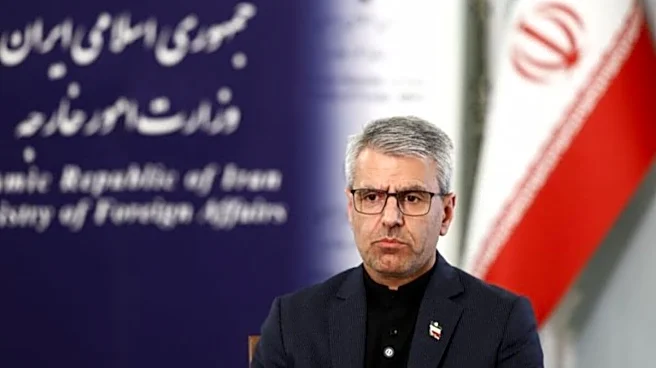
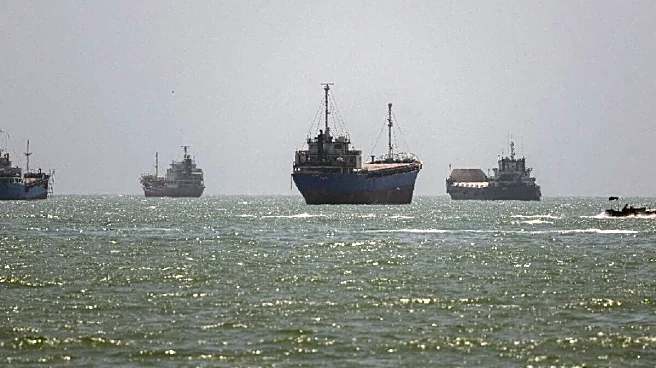
Meanwhile, Iran's Supreme National Security Council Secretary Mohsen Rezaei said Tehran planned to announce a new restriction zone outside the Strait of Hormuz, as per Reuters.
Speaking on ABC News' This Week, Wright said the US could instead focus on eliminating Iran's ability to develop nuclear weapons. “There may not be a nuclear agreement. It may be simply destroying their capabilities to do it,” Wright said, adding that an agreement could have to wait for a future administration in Iran.
US focuses on Iran's nuclear capabilities
President Donald Trump has repeatedly said that preventingIran from acquiring a nuclear weapon is one of the main objectives of the US campaign. While Trump has also sought a negotiated settlement, Wright's comments suggested that the administration could pursue its objective without reaching a nuclear agreement.
Asked whether the US would continue targeting Iran if it attempted to rebuild its nuclear infrastructure, Wright said the country's capabilities would have to be destroyed.
“We are degrading their capacity to develop nuclear weapons and ultimately to deliver them. It is a 47-year-long effort. This is not trivial, but the United States will get the job done and we will work in cooperation with our allies in the region," he said.
Wright later told CBS' Face the Nation that Trump's preference was to reach a negotiated settlement and avoid military action unless it was absolutely necessary.
US Targets Iranian oil infrastructure
Wright also said a major role of the US military in the region was to stop Iran's exports of crude oil, natural gas and related products, putting further pressure on the country's economy.
“We are strangling their economy to try to bring either a change in policy from the existing regime or a new regime," he added.
Iran warns of 'heavier' response
Iranian parliament speaker and top negotiator Mohammad Bagher Ghalibaf said on Sunday that Iran's ‘proportionate responses’ to previous US attacks were over. He also warned that any future action against Iran's interests would receive a “faster, heavier, and more painful” response.
Ghalibaf also acknowledged the economic pressure Iran is facing, citing inflation, unemployment and exchange-rate fluctuations as major challenges.
Meanwhile, Iran's Supreme National Security Council Secretary Mohsen Rezaei said Tehran planned to announce a new restriction zone outside the Strait of Hormuz, as per Reuters.



/images/ppid_59c68470-image-1788840076481300.webp)



/images/ppid_59c68470-image-178877502661634610.webp)