/images/ppid_59c68470-image-178914002635279422.webp)


/images/ppid_59c68470-image-178913753934419938.webp)
What is the story about?
Iranian President Masoud Pezeshkian on Friday (September 11) pitched Iran as a strategic partner for energy supply chains and transport within BRICS and called for greater use of national currencies in trade among member countries.
“The Islamic Republic of Iran is ready to play the role of a strategic partner in energy supply chains and transport within BRICS,” Pezeshkian said while addressing the Leaders’ Session of the BRICS Business Forum in New Delhi.
He also called for mechanisms to manage currency risks and enable reciprocal settlements between member countries.
Pezeshkian said the global financial system had become vulnerable to economic and political pressure because it relies heavily on a limited number of currencies. Economic security, he said, could not be separated from national security.
He called for gradual financial integration among BRICS members while stressing that countries should not disrupt trade.
“Today’s world is in one of its most complex periods; the increasing use of economic tools to exert economic pressure has threatened the legitimate trade of other countries,” he said.
Pezeshkian criticises sanctions
Pezeshkian said Iran had faced extensive sanctions for several years and that the pressure had intensified over the past year following what he described as aggression by the US and Israel.
“Over the past years, Iran has faced extensive sanctions; these pressures have entered a new stage over the past year following the aggression of the United States and Israel,” he said.
He also said military action had made sanctions harder to enforce, and pointed to growing global instability while stressing the importance of food and energy security.
Pezeshkian called for the New Development Bank to become the main financing engine for infrastructure and energy projects in BRICS countries.
He proposed dedicated credit lines, financing in local currencies and guarantee mechanisms to attract private capital.
Iran pitches bigger role in BRICS
Pezeshkian said regional stability would have an impact on the global economy and reiterated that Iran was ready to play a strategic role in BRICS energy supply chains and transport.
He also called for BRICS countries to play a greater role in shaping digital-economy standards rather than remaining primarily consumers of technology.
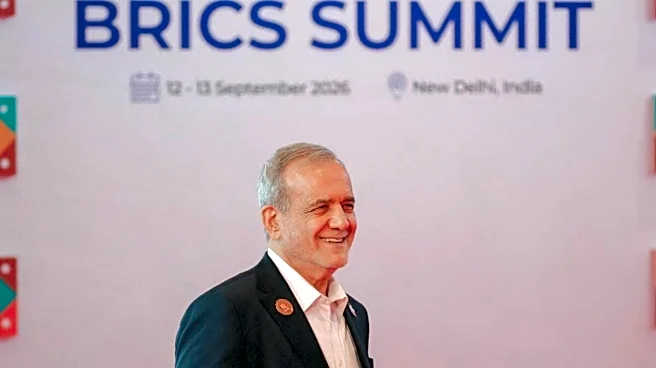
The Iranian president arrived in New Delhi on Friday for the BRICS summit and is scheduled to hold bilateral talks with Prime Minister Narendra Modi. His first visit to India as president comes amid heightened tensions in West Asia and new US economic measures targeting Iran.
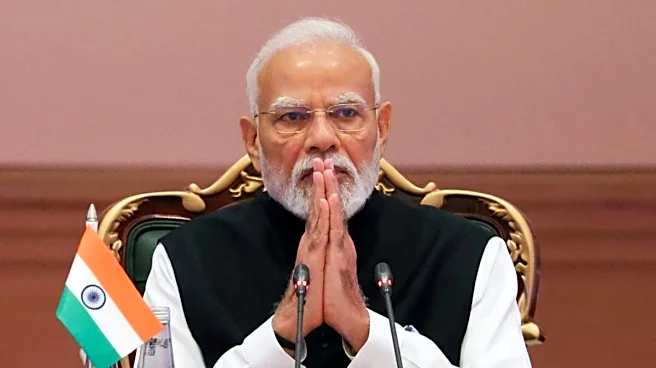
The meeting between Modi and Pezeshkian will be their second in less than two weeks. The two leaders last met in Bishkek on August 31 on the sidelines of the Shanghai Cooperation Organisation summit, where they discussed bilateral ties and exchanged views on the conflict in West Asia.
The two-day BRICS Summit 2026, hosted by India at Bharat Mandapam in New Delhi on September 12 and 13, will focus on resilience in food, energy, health, disaster reduction and critical supply chains amid geopolitical and economic uncertainty.
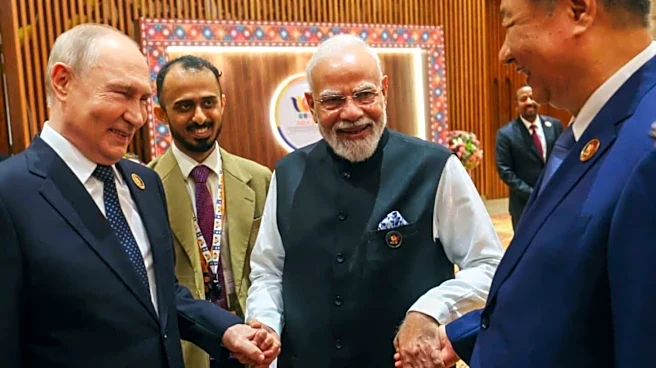
The summit will bring together leaders including Russian President Vladimir Putin, Chinese President Xi Jinping, Iranian President Masoud Pezeshkian and South African President Cyril Ramaphosa.
“The Islamic Republic of Iran is ready to play the role of a strategic partner in energy supply chains and transport within BRICS,” Pezeshkian said while addressing the Leaders’ Session of the BRICS Business Forum in New Delhi.
He also called for mechanisms to manage currency risks and enable reciprocal settlements between member countries.
Pezeshkian said the global financial system had become vulnerable to economic and political pressure because it relies heavily on a limited number of currencies. Economic security, he said, could not be separated from national security.
He called for gradual financial integration among BRICS members while stressing that countries should not disrupt trade.
“Today’s world is in one of its most complex periods; the increasing use of economic tools to exert economic pressure has threatened the legitimate trade of other countries,” he said.
Pezeshkian criticises sanctions
Pezeshkian said Iran had faced extensive sanctions for several years and that the pressure had intensified over the past year following what he described as aggression by the US and Israel.
“Over the past years, Iran has faced extensive sanctions; these pressures have entered a new stage over the past year following the aggression of the United States and Israel,” he said.
He also said military action had made sanctions harder to enforce, and pointed to growing global instability while stressing the importance of food and energy security.
Pezeshkian called for the New Development Bank to become the main financing engine for infrastructure and energy projects in BRICS countries.
He proposed dedicated credit lines, financing in local currencies and guarantee mechanisms to attract private capital.
Iran pitches bigger role in BRICS
Pezeshkian said regional stability would have an impact on the global economy and reiterated that Iran was ready to play a strategic role in BRICS energy supply chains and transport.
He also called for BRICS countries to play a greater role in shaping digital-economy standards rather than remaining primarily consumers of technology.
The Iranian president arrived in New Delhi on Friday for the BRICS summit and is scheduled to hold bilateral talks with Prime Minister Narendra Modi. His first visit to India as president comes amid heightened tensions in West Asia and new US economic measures targeting Iran.
The meeting between Modi and Pezeshkian will be their second in less than two weeks. The two leaders last met in Bishkek on August 31 on the sidelines of the Shanghai Cooperation Organisation summit, where they discussed bilateral ties and exchanged views on the conflict in West Asia.
The two-day BRICS Summit 2026, hosted by India at Bharat Mandapam in New Delhi on September 12 and 13, will focus on resilience in food, energy, health, disaster reduction and critical supply chains amid geopolitical and economic uncertainty.
The summit will bring together leaders including Russian President Vladimir Putin, Chinese President Xi Jinping, Iranian President Masoud Pezeshkian and South African President Cyril Ramaphosa.
/images/ppid_59c68470-image-178922003694899718.webp)



/images/ppid_59c68470-image-178913506932268890.webp)
