/images/ppid_59c68470-image-178962008477598265.webp)

What is the story about?
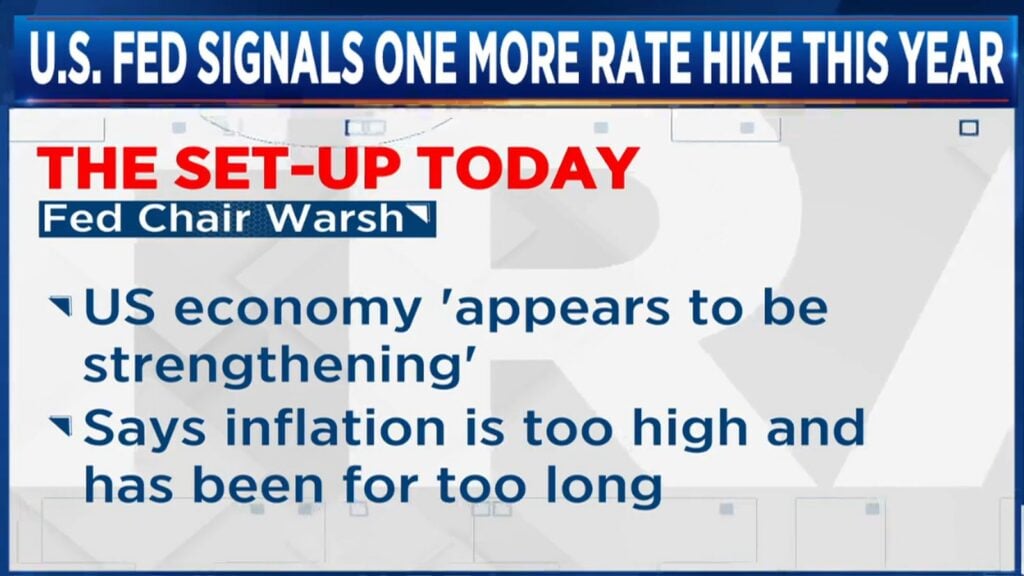
The US Federal Reserve may have one or two more rate hikes in store, according to Todd Buchholz, Fellow at Yale University and former Managing Director at Tiger Hedge Fund. He said the Fed's unanimous decision suggests that policymakers believe a 25-basis-point hike alone may not be enough to bring inflation under control. However, weaker economic data or better-behaved inflation could change that view.
Buchholz said higher interest rates are already weighing on housing, while the US economy continues to grow strongly. He also cautioned that the AI data center investment boom could face a slowdown as financing costs rise and political concerns over energy prices and water use increase. For India, he said the proposed US sanctions on countries buying Russian energy give President Donald Trump leverage, but do not necessarily mean immediate tariffs.
This is an edited transcript of the interview.
Q: Does this look to you like it's going to be a two- or three-rate-hike cycle and then done, or are we going to see a series of rate hikes which extends? Fed Chair Kevin Warsh was clear that we haven't been at 2% inflation for a very long time, inflation is elevated, and the economy is solid. In a way, it can absorb all these hikes. So, what's this rate-hiking cycle going to look like and what does this mean for someone sitting out here in India?
A: The first thing it means is that Kevin Warsh is quite independent. A lot of people had criticised him when he was appointed by Donald Trump, saying, "Oh, he's just going to be a puppet of the president."
Well, as we heard, President Trump thinks interest rates, short-term lending rates, should be 1%, not the rates that Kevin has now set at the Federal Reserve Board. So, this shows independence, which is a good thing for the central bank. Many studies have shown that countries with independent central banks tend to have lower inflation.
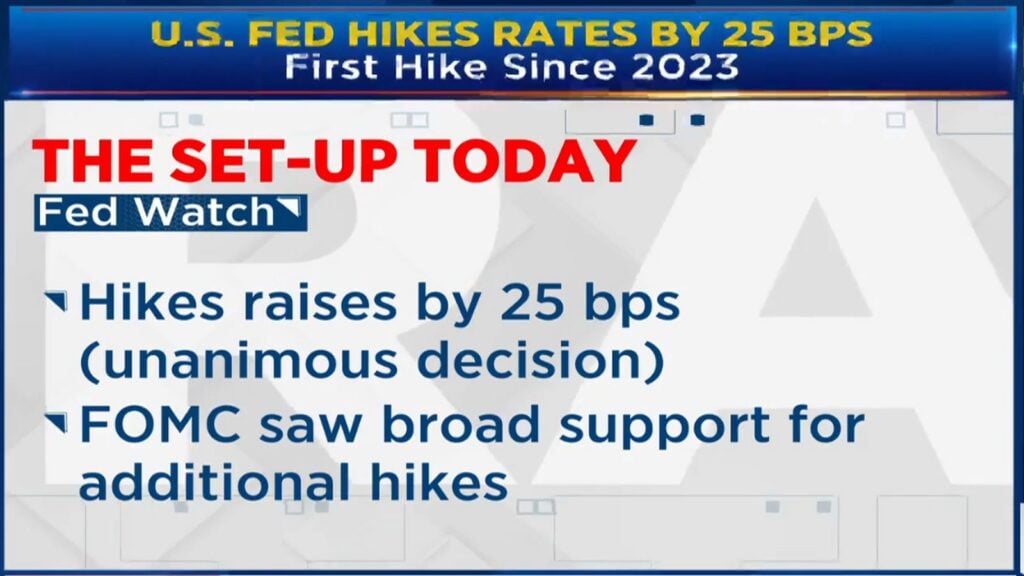
Now, you ask me what's going on and what the likely path of Fed funds rates is. Well, look, it was a unanimous vote. It wouldn't have been a unanimous vote if they thought it was just going to be 25 basis points. If it was simply a coin toss about 25 basis points and that's it, there would have been some on the other side.
So, I think the Fed itself believes it's going to be hiking one or two more times. There's no guarantee that they will do that. The data may come in weaker; inflation may be better behaved over the course of the next couple of weeks, and they could change their mind.
But if you want to read the minds of the Fed at the moment, I think it's clear they think that 25 basis points is not enough to put the brakes on inflation.
Q: So, you're factoring in one more rate hike this year. And what about next?
A: The real question is: Do the energy forces that have been unleashed by war with Iran filter through the economy so strongly that not just energy-related or manufacturing industries are affected, but service industries?
That's really what you've got to distinguish here. Of course, when oil prices go up, it's going to cost more to drive. Of course, it's going to cost more to deliver goods.
But when you see the fees of dentists or hair cutters or others in the pure service industry ratcheting up their prices, that's a signal that somehow inflation is diffusing, spreading through the economy. And I think that's what Kevin Warsh is concerned about right now.
Q: The US economy has been solid; it's been pretty good. Can the Fed raise rates without triggering any kind of recession or a growth slowdown, simply put, being pushed further out?
A: Right now, the economy is humming along. And when you look at commercial and industrial loan growth, it's quite strong. Even the job market is more robust than most people have predicted.
But interest-rate-sensitive sectors like housing, that is not the case. In fact, it's rather remarkable that the US economy is growing as well as it is while housing is in a severe slump.
And these higher interest rates, these higher mortgage rates, are going to be even more punishing on that sector. And then, of course, when you slow down housing, that also slows down the sales of furniture and appliances and copper and other elements that go into new homes and into refurbishing old homes.
So, the economy is growing strongly, but that doesn't mean that every sector is prospering.
Q: The other issue we'd like to talk to you about is the Lindsey Graham sanctioning of Russia and Iran, which has introduced potential secondary tariffs of up to 100% on major buyers of Russian energy. That means India is directly in focus. What are your thoughts on this? How does it play out?
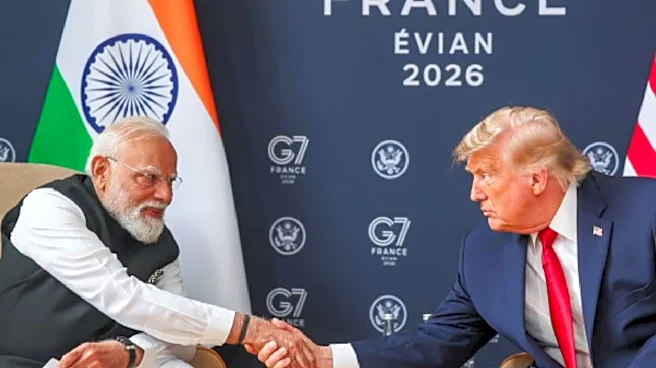
A: Well, yes, as you say, this bill would permit the president to levy severe tariffs on countries that are doing business with Russia, and of course, India is a prime candidate.
Now, the president is not obligated to do so, and we know that President Trump's policies are often affected by his personal relationship with other leaders.
And so, you see relationships with Canada, for instance, have eroded terribly and are eroding each day. And that is exacerbated by the fact that President Trump does not get along with Prime Minister Mark Carney.
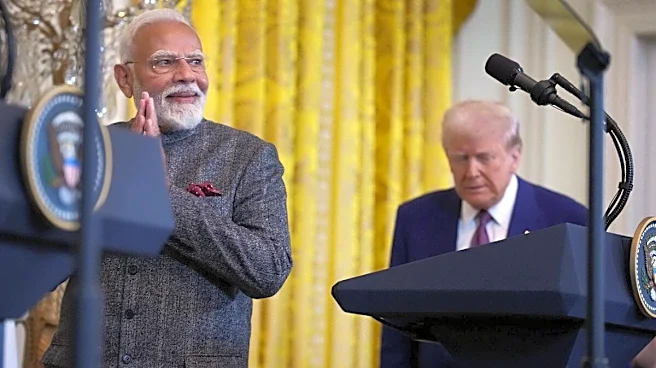
To India's advantage, Prime Minister Modi and President Trump have a rather warm relationship, and one in which President Trump, in fact, admires many aspects of Modi's leadership.
But at the same time, President Trump wants to be seen as correcting the US overall global trade deficit. Of course, the trade deficit that the US has with India is very small compared to the trade deficit with China.
So, all I can say is these gives the president leverage to negotiate even harder, but it doesn't mean that his finger is going to be pushing on that button very soon.
Q: Let's talk about a couple of asset classes. What does higher-for-longer Fed mean for the US dollar? That's been quite weak, but it's showing signs that it's coming back, currently holding above the $100-odd mark. Could a stronger dollar become a bit of a problem for equity markets, emerging markets in particular?
A: I don't think it becomes a problem. I think the US, because it is growing robustly—and of course, we know India's growth rate exceeds the US, but it's a different spectrum, a different kind of comparison—the US growth rate, which looks in this quarter like it might actually reach 4%, is attracting a great deal of investment.
And we know the US lead in AI and data centers is attracting a great deal of investment, which is also supporting the dollar, in addition to the fact that interest-rate bias is now upward.
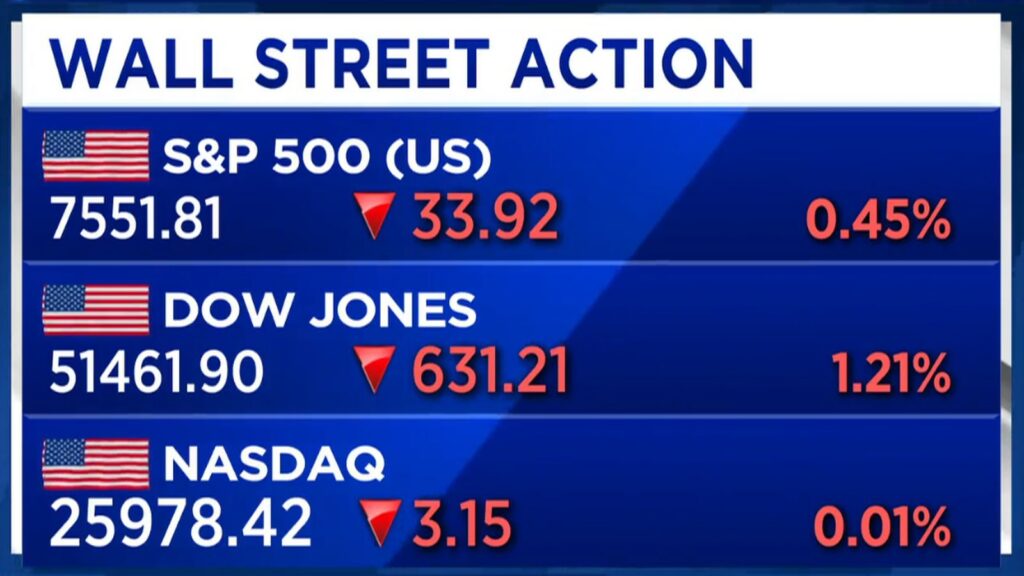
At the same time, I wouldn't be forecasting, nor do I think many people are, a suddenly soaring US dollar. I just think that this gives a firmness to the dollar until President Trump decides that he wants to undermine the dollar himself, and then we'll have to see what his strategy would be for doing that.
Because Republican administrations have generally been in favour of a strong dollar. But every once in a while, when things get out of hand, as they did in the late 80s, Republican administrations then want to start talking in the other direction.
Q: Since you briefly spoke about data centers, is the AI investment powerful enough to offset the traditional negative impact of higher interest rates on equity valuations and corporate capex as well? How are you reading it? You've got a lot of sound bites coming in from the United States on this AI story, which has still now grabbed everyone's attention and has a lot of momentum going as well. Do you think that it slows down a little bit?
A: First, it was so strong and so powerful at a time when, for instance, there were no US politicians pushing against it on the other side. So now you have a situation where the data center buildout was running with such enthusiasm, such momentum, such conviction, and there were no obstacles, no speed bumps in front of it.
Watch the full conversation here
Now you've got state governors, especially on the Democratic side of the aisle, but now even some Republicans who are joining in and saying, "Wait, hold on, we're concerned it's going to raise energy prices and use up water supply, and so on."
So, I do think that this is putting a kind of political brake on things. In addition, higher financing costs make the hurdle rate higher. So yes, I do think that the first half of this year was the best possible world, the best possible scenario for AI data center buildout. And now we've got some obstacles from financing rates, as well as politicians, as well as a suspicion that maybe too much money was being poured into it.
Catch all the latest updates from the stock market here
Buchholz said higher interest rates are already weighing on housing, while the US economy continues to grow strongly. He also cautioned that the AI data center investment boom could face a slowdown as financing costs rise and political concerns over energy prices and water use increase. For India, he said the proposed US sanctions on countries buying Russian energy give President Donald Trump leverage, but do not necessarily mean immediate tariffs.
This is an edited transcript of the interview.
Q: Does this look to you like it's going to be a two- or three-rate-hike cycle and then done, or are we going to see a series of rate hikes which extends? Fed Chair Kevin Warsh was clear that we haven't been at 2% inflation for a very long time, inflation is elevated, and the economy is solid. In a way, it can absorb all these hikes. So, what's this rate-hiking cycle going to look like and what does this mean for someone sitting out here in India?
A: The first thing it means is that Kevin Warsh is quite independent. A lot of people had criticised him when he was appointed by Donald Trump, saying, "Oh, he's just going to be a puppet of the president."
Well, as we heard, President Trump thinks interest rates, short-term lending rates, should be 1%, not the rates that Kevin has now set at the Federal Reserve Board. So, this shows independence, which is a good thing for the central bank. Many studies have shown that countries with independent central banks tend to have lower inflation.
Now, you ask me what's going on and what the likely path of Fed funds rates is. Well, look, it was a unanimous vote. It wouldn't have been a unanimous vote if they thought it was just going to be 25 basis points. If it was simply a coin toss about 25 basis points and that's it, there would have been some on the other side.
So, I think the Fed itself believes it's going to be hiking one or two more times. There's no guarantee that they will do that. The data may come in weaker; inflation may be better behaved over the course of the next couple of weeks, and they could change their mind.
But if you want to read the minds of the Fed at the moment, I think it's clear they think that 25 basis points is not enough to put the brakes on inflation.
Q: So, you're factoring in one more rate hike this year. And what about next?
A: The real question is: Do the energy forces that have been unleashed by war with Iran filter through the economy so strongly that not just energy-related or manufacturing industries are affected, but service industries?
That's really what you've got to distinguish here. Of course, when oil prices go up, it's going to cost more to drive. Of course, it's going to cost more to deliver goods.
But when you see the fees of dentists or hair cutters or others in the pure service industry ratcheting up their prices, that's a signal that somehow inflation is diffusing, spreading through the economy. And I think that's what Kevin Warsh is concerned about right now.
Q: The US economy has been solid; it's been pretty good. Can the Fed raise rates without triggering any kind of recession or a growth slowdown, simply put, being pushed further out?
A: Right now, the economy is humming along. And when you look at commercial and industrial loan growth, it's quite strong. Even the job market is more robust than most people have predicted.
But interest-rate-sensitive sectors like housing, that is not the case. In fact, it's rather remarkable that the US economy is growing as well as it is while housing is in a severe slump.
And these higher interest rates, these higher mortgage rates, are going to be even more punishing on that sector. And then, of course, when you slow down housing, that also slows down the sales of furniture and appliances and copper and other elements that go into new homes and into refurbishing old homes.
So, the economy is growing strongly, but that doesn't mean that every sector is prospering.
Q: The other issue we'd like to talk to you about is the Lindsey Graham sanctioning of Russia and Iran, which has introduced potential secondary tariffs of up to 100% on major buyers of Russian energy. That means India is directly in focus. What are your thoughts on this? How does it play out?
A: Well, yes, as you say, this bill would permit the president to levy severe tariffs on countries that are doing business with Russia, and of course, India is a prime candidate.
Now, the president is not obligated to do so, and we know that President Trump's policies are often affected by his personal relationship with other leaders.
And so, you see relationships with Canada, for instance, have eroded terribly and are eroding each day. And that is exacerbated by the fact that President Trump does not get along with Prime Minister Mark Carney.
To India's advantage, Prime Minister Modi and President Trump have a rather warm relationship, and one in which President Trump, in fact, admires many aspects of Modi's leadership.
But at the same time, President Trump wants to be seen as correcting the US overall global trade deficit. Of course, the trade deficit that the US has with India is very small compared to the trade deficit with China.
So, all I can say is these gives the president leverage to negotiate even harder, but it doesn't mean that his finger is going to be pushing on that button very soon.
Q: Let's talk about a couple of asset classes. What does higher-for-longer Fed mean for the US dollar? That's been quite weak, but it's showing signs that it's coming back, currently holding above the $100-odd mark. Could a stronger dollar become a bit of a problem for equity markets, emerging markets in particular?
A: I don't think it becomes a problem. I think the US, because it is growing robustly—and of course, we know India's growth rate exceeds the US, but it's a different spectrum, a different kind of comparison—the US growth rate, which looks in this quarter like it might actually reach 4%, is attracting a great deal of investment.
And we know the US lead in AI and data centers is attracting a great deal of investment, which is also supporting the dollar, in addition to the fact that interest-rate bias is now upward.
At the same time, I wouldn't be forecasting, nor do I think many people are, a suddenly soaring US dollar. I just think that this gives a firmness to the dollar until President Trump decides that he wants to undermine the dollar himself, and then we'll have to see what his strategy would be for doing that.
Because Republican administrations have generally been in favour of a strong dollar. But every once in a while, when things get out of hand, as they did in the late 80s, Republican administrations then want to start talking in the other direction.
Q: Since you briefly spoke about data centers, is the AI investment powerful enough to offset the traditional negative impact of higher interest rates on equity valuations and corporate capex as well? How are you reading it? You've got a lot of sound bites coming in from the United States on this AI story, which has still now grabbed everyone's attention and has a lot of momentum going as well. Do you think that it slows down a little bit?
A: First, it was so strong and so powerful at a time when, for instance, there were no US politicians pushing against it on the other side. So now you have a situation where the data center buildout was running with such enthusiasm, such momentum, such conviction, and there were no obstacles, no speed bumps in front of it.
Watch the full conversation here
Now you've got state governors, especially on the Democratic side of the aisle, but now even some Republicans who are joining in and saying, "Wait, hold on, we're concerned it's going to raise energy prices and use up water supply, and so on."
So, I do think that this is putting a kind of political brake on things. In addition, higher financing costs make the hurdle rate higher. So yes, I do think that the first half of this year was the best possible world, the best possible scenario for AI data center buildout. And now we've got some obstacles from financing rates, as well as politicians, as well as a suspicion that maybe too much money was being poured into it.
Catch all the latest updates from the stock market here


/images/ppid_59c68470-image-178962503175034689.webp)
/images/ppid_59c68470-image-178963005582382546.webp)
/images/ppid_59c68470-image-178960752420974633.webp)

/images/ppid_59c68470-image-17895725646569712.webp)