/images/ppid_59c68470-image-179073758603976795.webp)

/images/ppid_59c68470-image-179070515049772181.webp)

What is the story about?
US President Donald Trump on Tuesday, September 29, signed an executive order renaming artificial intelligence as “Super Intelligence” while unveiling a voluntary White House accord with major technology companies aimed at strengthening safety controls around frontier AI models.
The White House Accord on Super Intelligence, described as a joint commitment on frontier responsibilities, says every company developing and deploying frontier models is responsible for doing so safely and building trust with customers and the public.
Under the accord, companies have committed to four layers of controls and audits. They will establish robust internal controls to monitor the capabilities and alignment of their models during training and deployment, including risks involving cybersecurity, biosecurity and chemical threats.
Companies will also create internal teams to ensure those controls, monitoring and detection systems are working as intended, and partner with independent external auditors or evaluators to assess the systems.
The accord further calls for an independent board committee to oversee the controls and receive reports from internal and external auditors.
“The participating companies will meet regularly to establish standards and best practices to improve the safety of their systems,” the document said.
It added that, over time, “it may make sense to codify these steps into laws or regulations”, while stressing that the companies consider the controls and audits critical to ensuring safe AI development.
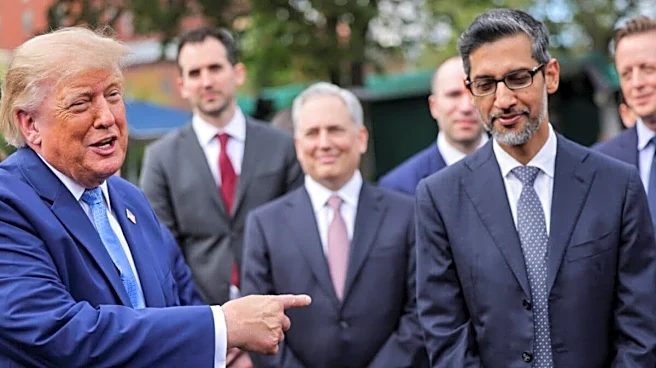
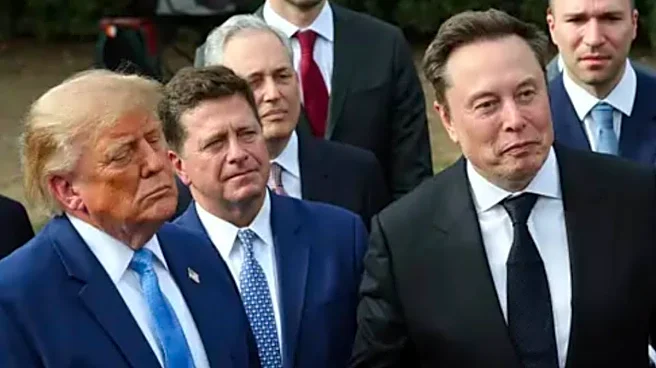
The accord was signed by Trump and executives from major tech companies including Google, Anthropic, Meta, OpenAI, X and Nvidia.
Trump had earlier described the agreement as “morally binding” and backed greater industry self-policing of AI.
The renaming order formalises Trump's push to replace “artificial intelligence” with “super intelligence” in US government terminology. Trump has argued that the word “artificial” is inaccurate because the technology is not “fake”.
The White House Accord on Super Intelligence, described as a joint commitment on frontier responsibilities, says every company developing and deploying frontier models is responsible for doing so safely and building trust with customers and the public.
Under the accord, companies have committed to four layers of controls and audits. They will establish robust internal controls to monitor the capabilities and alignment of their models during training and deployment, including risks involving cybersecurity, biosecurity and chemical threats.
Companies will also create internal teams to ensure those controls, monitoring and detection systems are working as intended, and partner with independent external auditors or evaluators to assess the systems.
The accord further calls for an independent board committee to oversee the controls and receive reports from internal and external auditors.
“The participating companies will meet regularly to establish standards and best practices to improve the safety of their systems,” the document said.
It added that, over time, “it may make sense to codify these steps into laws or regulations”, while stressing that the companies consider the controls and audits critical to ensuring safe AI development.
The accord was signed by Trump and executives from major tech companies including Google, Anthropic, Meta, OpenAI, X and Nvidia.
Trump had earlier described the agreement as “morally binding” and backed greater industry self-policing of AI.
The renaming order formalises Trump's push to replace “artificial intelligence” with “super intelligence” in US government terminology. Trump has argued that the word “artificial” is inaccurate because the technology is not “fake”.


/images/ppid_59c68470-image-179068003496766619.webp)
/images/ppid_59c68470-image-179064756205751108.webp)
/images/ppid_59c68470-image-179057508340056677.webp)
/images/ppid_59c68470-image-179065002391546903.webp)