


What is the story about?
Iranian authorities have issued a public advisory explaining how citizens should respond in the event of a nuclear explosion. The guidance, released through an eight-minute educational video circulating on social media, covers taking shelter, avoiding radioactive contamination and protecting against nuclear fallout.
The advisory asks residents to seek shelter in basements or central rooms away from windows, close doors and windows and switch off air conditioners and ventilation systems that draw in outside air. It also outlines precautions for people caught outdoors during an explosion and advises citizens to remain inside shelters for at least 24 hours.
The instructions come amid renewed speculation about a possible US strike onIran's nuclear facilities.
Iran's nuclear emergency advisory: What should citizens do?
The video, issued by emergency services in Isfahan, identifies intense light, blast waves, extreme heat and radioactive materials as the main dangers of a nuclear explosion.
Ebrahim Adelzadeh, deputy director of education and research at the Isfahan Red Crescent Society, advised people to take shelter in sturdy buildings and stay away from windows, India Today reported citing Iranian state-run broadcaster IRNA. "A basement or a room in the central part of a building, away from windows, can be a suitable shelter if it can be accessed safely," he said.
Residents have also been advised to shut doors and windows and turn off air conditioners and ventilation systems that bring outside air indoors. The guidance recommends preparing to remain sheltered for at least 24 hours and waiting for official instructions before leaving.
If a building catches fire or faces the risk of collapse, people should move to another safe shelter.
What if someone is caught outdoors during a nuclear explosion?
The advisory warns people not to look directly at the bright flash produced by a nuclear explosion. Those caught outside and unable to reach a building immediately should lie close to the ground, take cover behind a barrier and protect their heads and faces.
Once the initial blast wave has passed, they should move into the nearest sturdy building. The instructions also caution against staying outdoors to watch or photograph the explosion and advise people not to use vehicles as shelters.
How to protect against radioactive fallout
One of the key concerns highlighted in the advisory is the possibility of radioactive particles spreading through the atmosphere and affecting areas far beyond the initial explosion site.
Adelzadeh warned that even people living at a considerable distance from the blast should take official alerts seriously and follow instructions from the relevant authorities.
People who may have been exposed to radioactive dust have been advised to carefully remove their outer clothing, seal it in a bag and wash exposed skin and hair with soap and water. The guidance also recommends using bottled water and packaged food to reduce the risk of consuming contaminated supplies.
Iran warns against taking iodine tablets without medical advice
The video also explains the limited role of certain medicines used during radiation emergencies.
Abbas Abedi, a spokesperson for Isfahan's pre-hospital emergency services, warned people against taking iodine tablets without medical guidance. He explained that stable iodine can help limit the thyroid's absorption of radioactive iodine under specific circumstances, but it does not protect against other radioactive materials or radiation from an explosion.
The advisory also mentions Prussian Blue, a medicine used in certain cases of internal contamination involving radioactive caesium-137.
Officials have also warned that electromagnetic pulses could disrupt electronic devices and communication systems, recommending battery-powered radios for receiving official updates.
Why has Iran issued the advisory now?
The guidance was released as part of Iran's Passive Defence Week, an annual initiative focused on civil preparedness and protection against potential threats. Although the country has observed the week for more than a decade, reports have not indicated that it previously issued a nuclear attack survival guide of this kind.
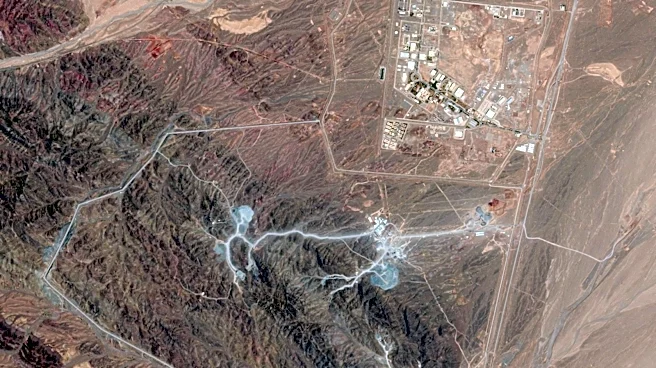
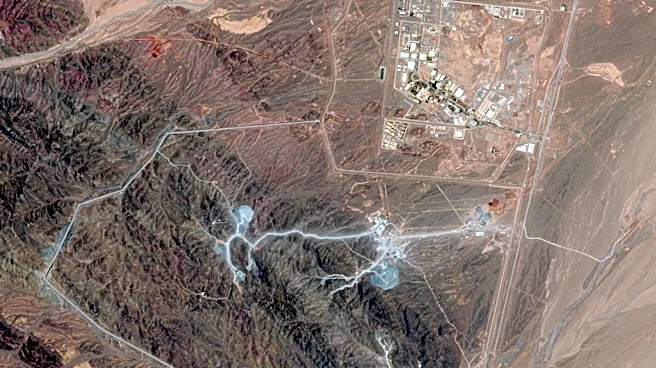
The advisory has attracted attention partly because Isfahan is located near the Natanz nuclear facility, while speculation continues over a possible US strike onPickaxe Mountain, an underground nuclear-related site close to Natanz.
In October,US President Donald Trump indicated that Washington could target the mountain but ruled out the use of nuclear weapons. Separately, US journalist and commentator Tucker Carlson claimed that Israeli Prime Minister Benjamin Netanyahu was urging Trump to carry out a nuclear strike on the site within days.