/images/ppid_59c68470-image-178826003094981611.webp)

/images/ppid_59c68470-image-178840264465735533.webp)
/images/ppid_59c68470-image-178823512448422647.webp)

What is the story about?
The Trump administration is considering ending a work-authorisation programme that allows certain spouses of H-1B visa holders to work in the US, potentially affecting Indian families waiting years for permanent residency.
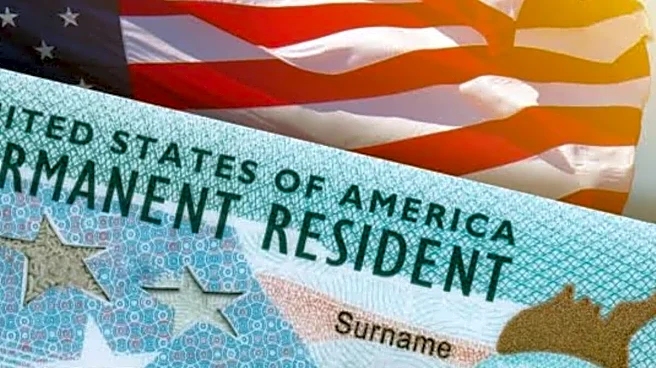
The Department of Homeland Security (DHS) has added a proposal to its regulatory agenda that would remove certain H-4 dependent spouses from the categories of non-citizens eligible to apply for an Employment Authorization Document, or EAD.
An EAD essentially acts as a work permit, allowing eligible H-4 spouses to take up employment in the US.
Importantly, nothing changes immediately. Existing H-4 EAD holders aren't losing their work permits or jobs because of the regulatory entry.
DHS hasn't yet formally proposed the rule, and its own agenda doesn't give a date for when that might happen.
What does the Trump administration want to change?
H-4 visas are issued to spouses and dependent children of H-1B workers. An H-4 visa allows them to live in the US but, by itself, doesn't give them permission to work.
That changed for some spouses in 2015.
Under rules introduced that year, certain H-4 spouses became eligible for work permits if their H-1B partners had reached specified stages of the employment-based green-card process.
That includes some families where the H-1B worker has an approved employment-based immigrant petition or has been allowed to remain on an H-1B visa beyond the usual six-year limit because of delays in obtaining a green card.
The new DHS proposal, titled “Removing H-4 Dependent Spouses From the Classes of Noncitizens Eligible for Employment Authorization,” seeks to reverse that policy for certain H-4 spouses.
In practical terms, if the proposal eventually becomes law in its currently stated form, affected spouses would no longer be able to rely on the H-4 EAD route to work in the US.
Also read: PM Modi at SCO Summit: ‘No double standards’ on terror, dialogue over war
Why does this matter particularly to Indians?
Indians make up the biggest group of H-1B beneficiaries.
According to US Citizenship and Immigration Services data cited in the material, people born in India accounted for 71% of approved H-1B petitions in fiscal 2024, compared with about 12% for people born in China.
Indians have also historically dominated the H-4 EAD programme. Earlier data showed that about 93% of approved initial H-4 EAD applications went to Indian nationals, while about 94% went to women.
The programme is particularly important because of the long wait many Indian H-1B workers face for employment-based green cards.
During that wait, an eligible spouse can obtain an H-4 EAD and pursue a career independently rather than having to remain out of the workforce.
Removing that option could therefore mean the loss of a second income for affected households and disrupt careers built by spouses during years spent waiting for permanent residency.
Are current H-4 work permits being cancelled?
No.
At this point, the proposal is only on the DHS regulatory agenda.
The department hasn't published a formal Notice of Proposed Rulemaking (NPRM) in the Federal Register. The timetable for doing so is currently listed as “To Be Determined.”
Before the rules can change, DHS would first have to publish the proposed rule and invite public comments. It would then have to consider those comments before issuing a final rule.
Only after that process could a change take effect.
There is also no information yet on what would happen to people who already have H-4 EADs, those waiting for renewals or people with applications pending.
For example, it isn't yet clear whether existing EAD holders would be allowed to continue working until their permits expire. Those details would have to emerge during the rulemaking process.
Trump tried this before
This isn't the first time a Trump administration has sought to end H-4 work permits.
During Donald Trump's first term, DHS pursued a similar effort to remove H-4 spouses' eligibility for employment authorisation.
That effort never took effect and was withdrawn in January 2021.
The latest regulatory entry puts the issue back on the table, but H-4 EAD remains available under the existing rules for now.
The Department of Homeland Security (DHS) has added a proposal to its regulatory agenda that would remove certain H-4 dependent spouses from the categories of non-citizens eligible to apply for an Employment Authorization Document, or EAD.
An EAD essentially acts as a work permit, allowing eligible H-4 spouses to take up employment in the US.
Importantly, nothing changes immediately. Existing H-4 EAD holders aren't losing their work permits or jobs because of the regulatory entry.
DHS hasn't yet formally proposed the rule, and its own agenda doesn't give a date for when that might happen.
What does the Trump administration want to change?
H-4 visas are issued to spouses and dependent children of H-1B workers. An H-4 visa allows them to live in the US but, by itself, doesn't give them permission to work.
That changed for some spouses in 2015.
Under rules introduced that year, certain H-4 spouses became eligible for work permits if their H-1B partners had reached specified stages of the employment-based green-card process.
That includes some families where the H-1B worker has an approved employment-based immigrant petition or has been allowed to remain on an H-1B visa beyond the usual six-year limit because of delays in obtaining a green card.
The new DHS proposal, titled “Removing H-4 Dependent Spouses From the Classes of Noncitizens Eligible for Employment Authorization,” seeks to reverse that policy for certain H-4 spouses.
In practical terms, if the proposal eventually becomes law in its currently stated form, affected spouses would no longer be able to rely on the H-4 EAD route to work in the US.
Also read: PM Modi at SCO Summit: ‘No double standards’ on terror, dialogue over war
Why does this matter particularly to Indians?
Indians make up the biggest group of H-1B beneficiaries.
According to US Citizenship and Immigration Services data cited in the material, people born in India accounted for 71% of approved H-1B petitions in fiscal 2024, compared with about 12% for people born in China.
Indians have also historically dominated the H-4 EAD programme. Earlier data showed that about 93% of approved initial H-4 EAD applications went to Indian nationals, while about 94% went to women.
The programme is particularly important because of the long wait many Indian H-1B workers face for employment-based green cards.
During that wait, an eligible spouse can obtain an H-4 EAD and pursue a career independently rather than having to remain out of the workforce.
Removing that option could therefore mean the loss of a second income for affected households and disrupt careers built by spouses during years spent waiting for permanent residency.
Are current H-4 work permits being cancelled?
No.
At this point, the proposal is only on the DHS regulatory agenda.
The department hasn't published a formal Notice of Proposed Rulemaking (NPRM) in the Federal Register. The timetable for doing so is currently listed as “To Be Determined.”
Before the rules can change, DHS would first have to publish the proposed rule and invite public comments. It would then have to consider those comments before issuing a final rule.
Only after that process could a change take effect.
There is also no information yet on what would happen to people who already have H-4 EADs, those waiting for renewals or people with applications pending.
For example, it isn't yet clear whether existing EAD holders would be allowed to continue working until their permits expire. Those details would have to emerge during the rulemaking process.
Trump tried this before
This isn't the first time a Trump administration has sought to end H-4 work permits.
During Donald Trump's first term, DHS pursued a similar effort to remove H-4 spouses' eligibility for employment authorisation.
That effort never took effect and was withdrawn in January 2021.
The latest regulatory entry puts the issue back on the table, but H-4 EAD remains available under the existing rules for now.

/images/ppid_59c68470-image-178836009606178513.webp)
/images/ppid_59c68470-image-178834002543314395.webp)
/images/ppid_59c68470-image-178840002528683464.webp)
/images/ppid_59c68470-image-178832005829660505.webp)



/images/ppid_59c68470-image-178828003003598200.webp)