/images/ppid_59c68470-image-178912253683146610.webp)



What is the story about?
BRICS countries will continue work on cross-border payment systems and explore greater use of local currencies for trade and investment, as the group seeks to deepen financial cooperation amid rising trade fragmentation and economic uncertainty.
Finance ministers and central bank governors from the bloc agreed to continue discussions on the BRICS Cross-Border Payments Initiative, including efforts to make different payment and messaging systems work more easily with one another.
The group said there would be no single model for all members and that any arrangements would have to take into account individual countries' priorities and domestic systems.
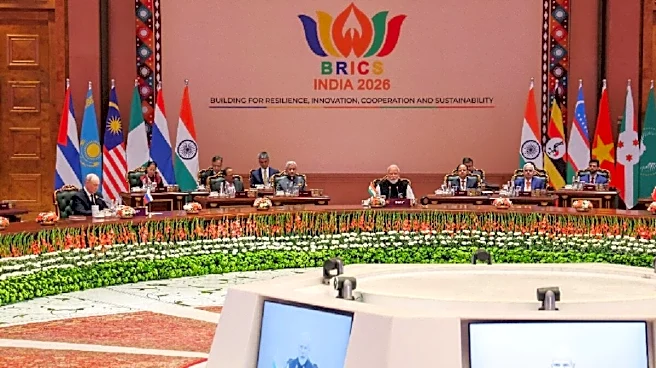
The decisions were outlined in a joint statement issued on Thursday after a meeting of BRICS finance ministers and central bank governors in Mumbai.
The ministers also criticised unilateral trade and financial measures, including tariffs and non-tariff barriers, saying such steps can distort trade and are inconsistent with World Trade Organisation rules.
Local currencies get a bigger role
The BRICS Payment Task Force has been examining ways to make cross-border payments faster and more efficient, including the possible use of member countries' currencies for trade settlements and investment.
The group said it would continue working towards payment arrangements that are faster, cheaper, more accessible, efficient, transparent and secure.
The statement did not propose a common BRICS currency or announce a new bloc-wide payment network. Instead, the focus remains on connecting existing payment and messaging systems and improving the infrastructure needed for cross-border transactions.
BRICS members will also continue discussions on settlement and depositary infrastructure. A technical workshop examined differences in the legal, institutional, regulatory and technical frameworks across member countries.
Also read: BRICS Summit: India, Russia push investment, trade ties; talks on aircraft, nuclear technology
BRICS wants more say at IMF, World Bank
The group also renewed its call for reforms at the International Monetary Fund and World Bank, arguing that emerging markets and developing economies remain underrepresented in global financial institutions.
BRICS backed implementation of the quota increases agreed under the IMF's 16th General Review of Quotas and called for further work under the 17th review to realign quotas with countries' positions in the global economy.
It said the changes should increase the quota and voting shares of emerging and developing economies.
The group similarly called for changes to the World Bank's shareholding structure, saying developing countries continue to have less representation than their economic weight warrants.
Trade fragmentation remains a concern
The statement highlighted geopolitical tensions, protectionism, trade fragmentation and policy uncertainty among the risks facing the global economy. It also pointed to fiscal and inflationary pressures, high debt and financial vulnerabilities.
Against that backdrop, BRICS members said they would strengthen cooperation in areas including development finance, infrastructure, technology and trade, particularly to address the financing needs of emerging and developing economies.
The group also welcomed progress on the BRICS Multilateral Guarantees initiative, which the New Development Bank is preparing for a pilot phase.
The initiative is designed to help infrastructure and development projects attract private investment by providing guarantees that can reduce risks for investors and potentially lower financing costs.
Work on the various financial initiatives will continue through 2026. China is scheduled to take over the BRICS chairship in 2027.
Finance ministers and central bank governors from the bloc agreed to continue discussions on the BRICS Cross-Border Payments Initiative, including efforts to make different payment and messaging systems work more easily with one another.
The group said there would be no single model for all members and that any arrangements would have to take into account individual countries' priorities and domestic systems.
The decisions were outlined in a joint statement issued on Thursday after a meeting of BRICS finance ministers and central bank governors in Mumbai.
The ministers also criticised unilateral trade and financial measures, including tariffs and non-tariff barriers, saying such steps can distort trade and are inconsistent with World Trade Organisation rules.
Local currencies get a bigger role
The BRICS Payment Task Force has been examining ways to make cross-border payments faster and more efficient, including the possible use of member countries' currencies for trade settlements and investment.
The group said it would continue working towards payment arrangements that are faster, cheaper, more accessible, efficient, transparent and secure.
The statement did not propose a common BRICS currency or announce a new bloc-wide payment network. Instead, the focus remains on connecting existing payment and messaging systems and improving the infrastructure needed for cross-border transactions.
BRICS members will also continue discussions on settlement and depositary infrastructure. A technical workshop examined differences in the legal, institutional, regulatory and technical frameworks across member countries.
Also read: BRICS Summit: India, Russia push investment, trade ties; talks on aircraft, nuclear technology
BRICS wants more say at IMF, World Bank
The group also renewed its call for reforms at the International Monetary Fund and World Bank, arguing that emerging markets and developing economies remain underrepresented in global financial institutions.
BRICS backed implementation of the quota increases agreed under the IMF's 16th General Review of Quotas and called for further work under the 17th review to realign quotas with countries' positions in the global economy.
It said the changes should increase the quota and voting shares of emerging and developing economies.
The group similarly called for changes to the World Bank's shareholding structure, saying developing countries continue to have less representation than their economic weight warrants.
Trade fragmentation remains a concern
The statement highlighted geopolitical tensions, protectionism, trade fragmentation and policy uncertainty among the risks facing the global economy. It also pointed to fiscal and inflationary pressures, high debt and financial vulnerabilities.
Against that backdrop, BRICS members said they would strengthen cooperation in areas including development finance, infrastructure, technology and trade, particularly to address the financing needs of emerging and developing economies.
The group also welcomed progress on the BRICS Multilateral Guarantees initiative, which the New Development Bank is preparing for a pilot phase.
The initiative is designed to help infrastructure and development projects attract private investment by providing guarantees that can reduce risks for investors and potentially lower financing costs.
Work on the various financial initiatives will continue through 2026. China is scheduled to take over the BRICS chairship in 2027.
/images/ppid_59c68470-image-17892100345427432.webp)