/images/ppid_59c68470-image-178662253597111037.webp)


/images/ppid_59c68470-image-178658502685899562.webp)
What is the story about?
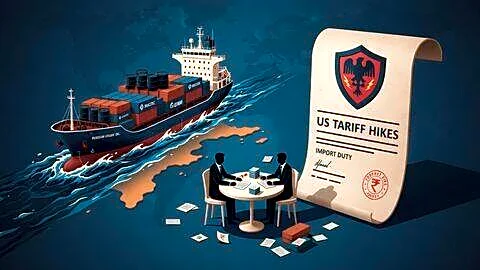
India is closely tracking a US sanctions bill that could expose countries buying Russian energy to additional tariffs of as much as 100%, with New Delhi remaining in contact with Washington at various levels, government sources told CNBC-TV18.
The proposed legislation is still going through the US Congress, the sources said, adding that India doesn't want to comment on the US's internal legislative process.
In their engagements, India and the US have reiterated their commitment to work towards a trade agreement that is "balanced, mutually beneficial, and in line with the Joint Statement of February 2026," the sources said.
The comments come after the US Senate overwhelmingly approved legislation last week that could pave the way for additional tariffs on countries that continue buying Russian crude oil or natural gas.
What the Russia sanctions bill could mean for India
The Senate passed the bipartisan Lindsay O. Graham Sanctioning Russia and Iran Act of 2025 on August 7 by an 86-11 vote.
The legislation now returns to the House of Representatives, which is due to reconvene on August 31. The House can approve, amend or reject the Senate version. Any changes would require the two chambers to agree on identical legislation before it can be sent to President Donald Trump.
Crucially, the bill doesn't automatically impose a 100% tariff on Indian goods.
It would instead give the US President the power to impose additional tariffs of up to 100% on goods from countries that continue purchasing Russian crude oil or natural gas 30 days after the legislation takes effect.
The US Trade Representative could raise or lower the tariff within a range of more than zero and up to 100%, depending on whether a country increases, reduces or stops its purchases of Russian energy.
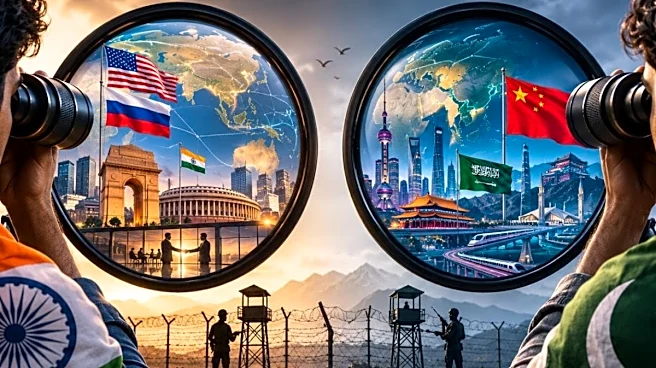
The bill's sponsors have identified China, India, Slovakia, Hungary and Azerbaijan among the biggest buyers of Russian crude.
Any tariffs imposed under the legislation would come on top of existing US duties, including those levied under Sections 301 and 232, as well as antidumping and countervailing duties.
Also read: Why is Karoline Leavitt leaving White House Press secretary post?
India, US remain engaged on trade
Separately, the Commerce Ministry said India remains in regular contact with US authorities as the two countries work towards concluding a bilateral trade agreement.
Following sustained engagement by New Delhi, the US imposed an additional 10% ad valorem duty on select Indian imports under Section 301, lower than the 12.5% initially proposed, the ministry said. The higher 12.5% levy continues to apply to 43 countries.
About 45% of India's exports to the US remain exempt from the additional duty, according to the ministry.
"India continues to actively engage with the US authorities to resolve outstanding trade issues while working toward the early conclusion of the India-US Bilateral Trade Agreement," the ministry said.
India's Commerce Secretary has previously said the framework for the bilateral trade agreement has been finalised and that the deal would be signed at the appropriate time.
India currently faces the additional 10% tariff alongside 16 other economies. The US Trade Representative had concluded that 60 economies failed to adequately prohibit or enforce restrictions on goods made using forced labour.
India hasn't received a tariff-rate quota exemption for textiles and apparel under the new Section 301 forced-labour tariff. Such exemptions have been provided for specified volumes of exports from Bangladesh, Cambodia, Indonesia and Malaysia that use US-origin cotton and fibre.
Most Indian exports to the US are otherwise subject to a weighted-average most-favoured-nation tariff of about 2.8%. Separate tariffs apply to products including steel, aluminium, copper and auto components.
Also read: Iran’s military pivots to ‘offensive’ mode for next round of war
On US Trade Representative probes into excess industrial capacity, the government said India has already submitted its responses and expects the investigations to be completed within the coming weeks or months.
The government also highlighted energy as an increasingly important component of India's imports from the US.
India's crude-oil imports from the US rose to $9.1 billion in FY26 from $6.6 billion a year earlier, while overall US energy purchases reached $12.5 billion. These included $1.4 billion of liquefied natural gas, $896 million of liquefied petroleum gas and $861 million of petroleum coke.
The increase comes as India's purchases of Russian crude remain significant.
Russia accounted for 30.3% of India's crude imports in FY26, with purchases valued at $40.8 billion out of India's total crude import bill of $134.7 billion.
Discounted Russian crude has helped India reduce its import costs, bolster energy security and contain inflation.
Washington has previously imposed Russia-related tariffs on India. An additional 25% tariff on Indian goods was imposed in July 2025 before being withdrawn in February 2026.
The proposed legislation is still going through the US Congress, the sources said, adding that India doesn't want to comment on the US's internal legislative process.
In their engagements, India and the US have reiterated their commitment to work towards a trade agreement that is "balanced, mutually beneficial, and in line with the Joint Statement of February 2026," the sources said.
The comments come after the US Senate overwhelmingly approved legislation last week that could pave the way for additional tariffs on countries that continue buying Russian crude oil or natural gas.
What the Russia sanctions bill could mean for India
The Senate passed the bipartisan Lindsay O. Graham Sanctioning Russia and Iran Act of 2025 on August 7 by an 86-11 vote.
The legislation now returns to the House of Representatives, which is due to reconvene on August 31. The House can approve, amend or reject the Senate version. Any changes would require the two chambers to agree on identical legislation before it can be sent to President Donald Trump.
Crucially, the bill doesn't automatically impose a 100% tariff on Indian goods.
It would instead give the US President the power to impose additional tariffs of up to 100% on goods from countries that continue purchasing Russian crude oil or natural gas 30 days after the legislation takes effect.
The US Trade Representative could raise or lower the tariff within a range of more than zero and up to 100%, depending on whether a country increases, reduces or stops its purchases of Russian energy.
The bill's sponsors have identified China, India, Slovakia, Hungary and Azerbaijan among the biggest buyers of Russian crude.
Any tariffs imposed under the legislation would come on top of existing US duties, including those levied under Sections 301 and 232, as well as antidumping and countervailing duties.
Also read: Why is Karoline Leavitt leaving White House Press secretary post?
India, US remain engaged on trade
Separately, the Commerce Ministry said India remains in regular contact with US authorities as the two countries work towards concluding a bilateral trade agreement.
Following sustained engagement by New Delhi, the US imposed an additional 10% ad valorem duty on select Indian imports under Section 301, lower than the 12.5% initially proposed, the ministry said. The higher 12.5% levy continues to apply to 43 countries.
About 45% of India's exports to the US remain exempt from the additional duty, according to the ministry.
"India continues to actively engage with the US authorities to resolve outstanding trade issues while working toward the early conclusion of the India-US Bilateral Trade Agreement," the ministry said.
India's Commerce Secretary has previously said the framework for the bilateral trade agreement has been finalised and that the deal would be signed at the appropriate time.
India currently faces the additional 10% tariff alongside 16 other economies. The US Trade Representative had concluded that 60 economies failed to adequately prohibit or enforce restrictions on goods made using forced labour.
India hasn't received a tariff-rate quota exemption for textiles and apparel under the new Section 301 forced-labour tariff. Such exemptions have been provided for specified volumes of exports from Bangladesh, Cambodia, Indonesia and Malaysia that use US-origin cotton and fibre.
Most Indian exports to the US are otherwise subject to a weighted-average most-favoured-nation tariff of about 2.8%. Separate tariffs apply to products including steel, aluminium, copper and auto components.
Also read: Iran’s military pivots to ‘offensive’ mode for next round of war
India responds to USTR probes
On US Trade Representative probes into excess industrial capacity, the government said India has already submitted its responses and expects the investigations to be completed within the coming weeks or months.
The government also highlighted energy as an increasingly important component of India's imports from the US.
India's crude-oil imports from the US rose to $9.1 billion in FY26 from $6.6 billion a year earlier, while overall US energy purchases reached $12.5 billion. These included $1.4 billion of liquefied natural gas, $896 million of liquefied petroleum gas and $861 million of petroleum coke.
The increase comes as India's purchases of Russian crude remain significant.
Russia accounted for 30.3% of India's crude imports in FY26, with purchases valued at $40.8 billion out of India's total crude import bill of $134.7 billion.
Discounted Russian crude has helped India reduce its import costs, bolster energy security and contain inflation.
Washington has previously imposed Russia-related tariffs on India. An additional 25% tariff on Indian goods was imposed in July 2025 before being withdrawn in February 2026.


/images/ppid_59c68470-image-178664006448214989.webp)
/images/ppid_59c68470-image-17867150308461952.webp)

/images/ppid_59c68470-image-178667258456057730.webp)