/images/ppid_59c68470-image-178810762591260659.webp)

What is the story about?
A devastating flash flood that tore through Nepal’s Trishuli Valley on Wednesday swept away school buildings and left communities scrambling for safety, but 1,643 children at a school in Nuwakot managed to escape after an urgent evacuation.
The children were at Tribhuvan Trishuli Secondary School when the principal, Rajendra Dawadi, received a warning at around 9.20 am that a nearby village had been swept away by the river, The Times reported.
Dawadi, 47, immediately sounded the school bell and instructed teachers to get students out of their classrooms. He also contacted the school bus drivers and asked them to turn back. One bus, however, had already crossed the bridge before the driver could be reached.
The school’s three-storey concrete building initially appeared to be in a relatively safe location, standing around 60 metres above the river and at roughly the same level as a steel bridge connecting the village to the eastern bank, according to The Times.
The situation changed quickly when a parent arrived and warned that the water level was rising.
As students were evacuated, one girl suffered a panic attack and was taken towards higher ground on a motorbike. The remaining children fled on foot, with Dawadi following them. They eventually gathered under a bodhi tree as floodwaters surged through the area and swept away the school buildings.
All 1,643 children survived. Two school employees, however, were killed. Social history teacher Santos Pariyar, 32, was swept away after returning to his rented room near the river to prepare breakfast. The school’s janitor, Sultan Lama, also died after going back to close the doors, The Times reported.
Children survive in Dhading as teachers issue warning
In another flood-hit area of Nepal, children at a school in Dhading also escaped after teachers warned them to leave their classrooms shortly before the floodwaters arrived, the Associated Press reported.
Some students had happened to leave their classrooms for a lunch break when the flooding struck, while others escaped after teachers told them to leave immediately, abandoning their schoolbags and lunch boxes.
“The teachers said, ‘There is a flood and you should leave bags and tiffins,’” Lakshmi Shrestha, the mother of a student, told AP. “That’s how they managed to survive.”
Shrestha was among parents and children who returned to the school on Sunday to search for belongings and see what could be salvaged.
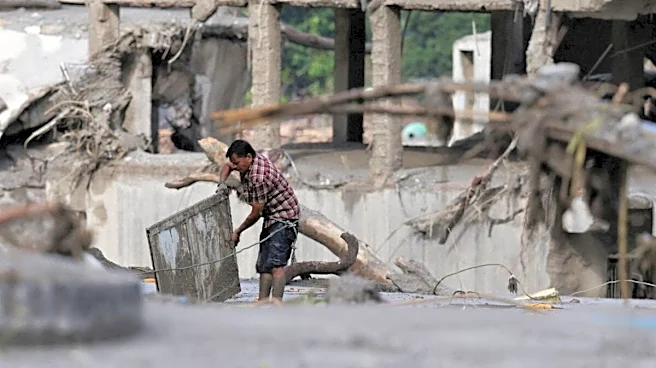
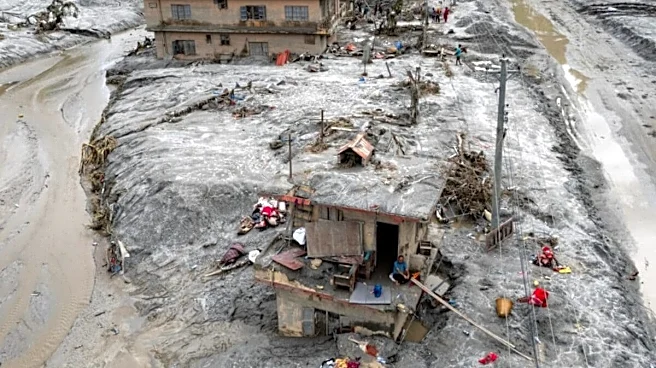
The school was covered in thick brown and grey mud, with sediment filling the courtyard and coating benches, walls and notebooks. Water marks on the walls showed how rapidly the floodwaters had risen. Mud-covered backpacks, some still carrying colourful key chains, lay scattered around the classrooms.
Kopila Mizar, whose son attends the school, could not find his backpack but said she was grateful that he had survived.
“My son is alive, that is my biggest happiness,” she told AP.
Nearly 19,000 children affected
The flooding has severely damaged Nepal’s education infrastructure. At least 69 schools in flood-hit districts have been destroyed or damaged, putting the education of nearly 19,000 children at risk, according to Save the Children, AP reported.
The figure could rise as rescue teams reach more affected areas.
The government has ordered schools and universities to remain closed for three days after torrential rains triggered flash floods and landslides across parts of Nepal. University examinations have also been paused.
With authorities continuing to issue flood warnings and advise communities to move to higher ground, it remains unclear when classes will resume.
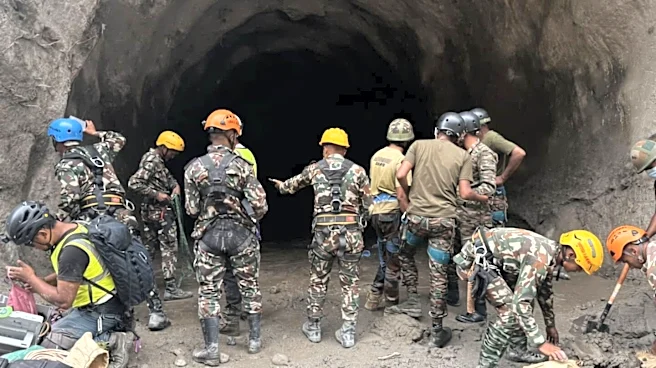
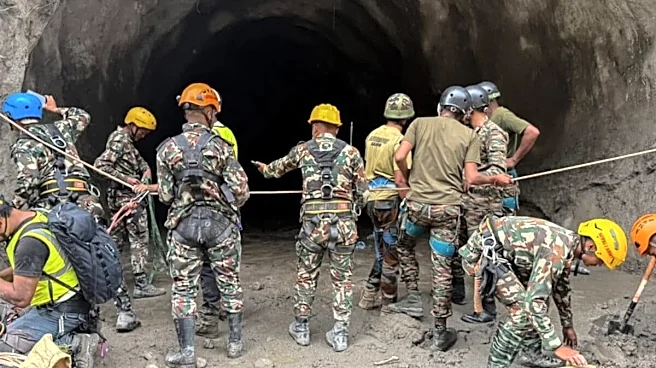
Nepal’s disaster agency said on Sunday that the death toll had risen to 788, with 2,502 people still missing. Chinese authorities reported 16 deaths and 546 missing on the Chinese side of the border.
The missing include hundreds of people from more than a dozen countries who were in the region for work, tourism or pilgrimage. Chinese state media reported that 261 foreign nationals were missing in Tibet, including more than 100 Nepalis.
The children were at Tribhuvan Trishuli Secondary School when the principal, Rajendra Dawadi, received a warning at around 9.20 am that a nearby village had been swept away by the river, The Times reported.
Dawadi, 47, immediately sounded the school bell and instructed teachers to get students out of their classrooms. He also contacted the school bus drivers and asked them to turn back. One bus, however, had already crossed the bridge before the driver could be reached.
The school’s three-storey concrete building initially appeared to be in a relatively safe location, standing around 60 metres above the river and at roughly the same level as a steel bridge connecting the village to the eastern bank, according to The Times.
The situation changed quickly when a parent arrived and warned that the water level was rising.
As students were evacuated, one girl suffered a panic attack and was taken towards higher ground on a motorbike. The remaining children fled on foot, with Dawadi following them. They eventually gathered under a bodhi tree as floodwaters surged through the area and swept away the school buildings.
All 1,643 children survived. Two school employees, however, were killed. Social history teacher Santos Pariyar, 32, was swept away after returning to his rented room near the river to prepare breakfast. The school’s janitor, Sultan Lama, also died after going back to close the doors, The Times reported.
Children survive in Dhading as teachers issue warning
In another flood-hit area of Nepal, children at a school in Dhading also escaped after teachers warned them to leave their classrooms shortly before the floodwaters arrived, the Associated Press reported.
Some students had happened to leave their classrooms for a lunch break when the flooding struck, while others escaped after teachers told them to leave immediately, abandoning their schoolbags and lunch boxes.
“The teachers said, ‘There is a flood and you should leave bags and tiffins,’” Lakshmi Shrestha, the mother of a student, told AP. “That’s how they managed to survive.”
Shrestha was among parents and children who returned to the school on Sunday to search for belongings and see what could be salvaged.
The school was covered in thick brown and grey mud, with sediment filling the courtyard and coating benches, walls and notebooks. Water marks on the walls showed how rapidly the floodwaters had risen. Mud-covered backpacks, some still carrying colourful key chains, lay scattered around the classrooms.
Kopila Mizar, whose son attends the school, could not find his backpack but said she was grateful that he had survived.
“My son is alive, that is my biggest happiness,” she told AP.
Nearly 19,000 children affected
The flooding has severely damaged Nepal’s education infrastructure. At least 69 schools in flood-hit districts have been destroyed or damaged, putting the education of nearly 19,000 children at risk, according to Save the Children, AP reported.
The figure could rise as rescue teams reach more affected areas.
The government has ordered schools and universities to remain closed for three days after torrential rains triggered flash floods and landslides across parts of Nepal. University examinations have also been paused.
With authorities continuing to issue flood warnings and advise communities to move to higher ground, it remains unclear when classes will resume.
Nepal’s disaster agency said on Sunday that the death toll had risen to 788, with 2,502 people still missing. Chinese authorities reported 16 deaths and 546 missing on the Chinese side of the border.
The missing include hundreds of people from more than a dozen countries who were in the region for work, tourism or pilgrimage. Chinese state media reported that 261 foreign nationals were missing in Tibet, including more than 100 Nepalis.
/images/ppid_59c68470-image-178845010575726563.webp)



/images/ppid_59c68470-image-178842004264850540.webp)
/images/ppid_59c68470-image-178824502862576678.webp)

/images/ppid_59c68470-image-178823257252915072.webp)