/images/ppid_59c68470-image-178833005224221516.webp)

/images/ppid_59c68470-image-178824502862576678.webp)
/images/ppid_59c68470-image-178825505564710094.webp)
What is the story about?
The scale of Nepal’s latest disaster may be unprecedented, but the warning signs were not.
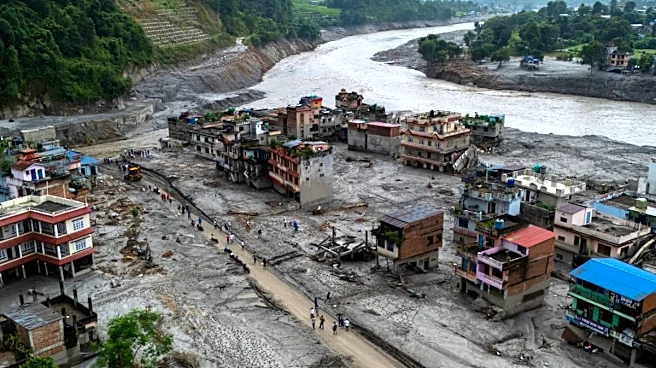
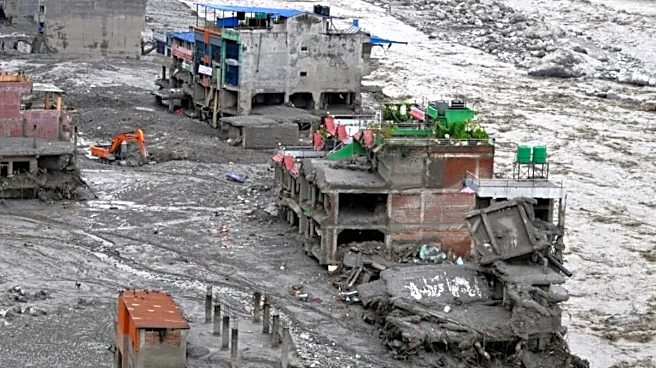
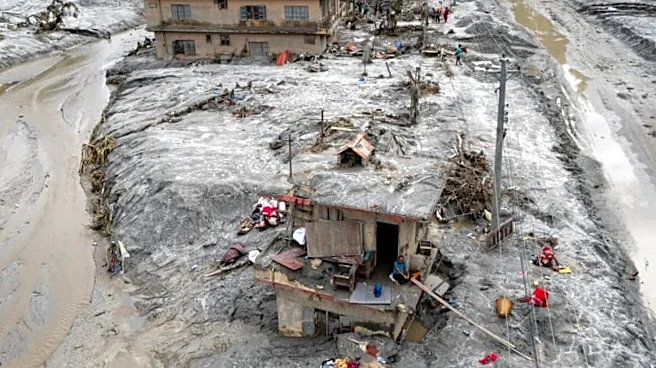
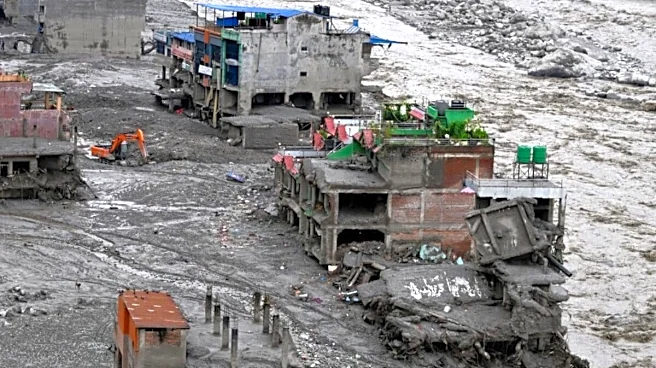
The August 26 flash floods along the Bhote Koshi-Trishuli river system were reportedly triggered by a glacial collapse, creating an unstable dam which then gave way, sending enormous volumes of water, rock, mud and debris downstream.
More than 1,000 people have been killed, and over 4,000 remain missing, while preliminary UN estimates put the debris left behind at around 2.2 million tonnes. Eleven hydropower stations and a solar plant, with a combined capacity of 431.1 MW, have stopped operating, while another 15 projects under construction have also been damaged.
But Nepal has been warning for years that a warming Himalayas is making such disasters more likely.
A 2020 inventory by ICIMOD and UNDP identified 47 potentially dangerous glacial lakes across Nepal, China and India that needed close monitoring. Of these, 21 were in Nepal. The same assessment noted that Nepal had experienced 26 glacial lake outburst flood events since 1977.
The risks have since intensified. The World Meteorological Organisation said in 2025 that the risk of glacial lake outburst floods across the Hindu Kush Himalaya could triple by the end of this century, with rising temperatures playing a key role in the increasing frequency of glacier-origin floods. Nepal recorded multiple glacial-origin floods in 2025 alone.
The more immediate warning signs were also missed.
A HiRISK assessment noted that signs were visible before the disaster: the ice surface had accelerated towards the eventual failure point, meltwater had visibly turned brown by August 24, and there were indications of a crack extending into the surrounding bedrock slope. The mass movement also generated a seismic signal above magnitude 4, suggesting seismic monitoring could potentially be incorporated into future large-scale early-warning systems.
"In hindsight, there were some pre-event indications that the ice surface sped up just prior to the event towards the eventual failure location and meltwater had turned visibly brown by the 24th of August,” the HiRISK report stated.
Nepal’s warning system was effectively outpaced by the flood itself.
According to Nepali Times, the Flood Forecasting Division received information about the flood at around 9 am on August 26 through a telephone call from the District Administration Office in Dhunche and later from an observer at Betrawati, after upstream river gauges had been swept away.
The first warnings were issued by 9:15 am, followed a minute later by 679,295 SMS alerts sent through Nepal Telecom and Ncell to people downstream.
So what is Nepal asking for now?
In the immediate aftermath of the latest disaster, the government has appealed for financial support for its disaster-relief funds, while Nepal has also sought international assistance for rescue and recovery, including financial, technical and equipment support.
Reconstruction alone could cost $4 billion to $5 billion, according to Nepal’s finance minister — close to 10% of the country’s economy.
Nepal has been explicit about this kind of climate finance and Loss and Damage funding for years.
At COP28 in 2023, then Prime Minister Pushpa Kamal Dahal said Nepal was suffering a “direct, disproportionate” impact from climate change despite making a negligible contribution to global emissions. He called for more predictable and equitable climate finance, grants, and a Loss and Damage Fund that is “predictable, simplified, and adequate” for least-developed and mountainous countries.
That demand was echoed by UN Secretary-General António Guterres during his visit to Nepal that year. Guterres said that “there is loss, and there is damage” in Nepal and called for compensation through the Loss and Damage mechanism, alongside greater investment in resilience and adaptation.
The Loss and Damage Fund was created after years of pressure from climate-vulnerable developing countries. It is designed to help countries deal with climate impacts that cannot simply be prevented through emissions cuts or adaptation — from destroyed homes and infrastructure to crop losses, displacement and other irreversible economic and non-economic damage.
And Nepal is not alone in making this argument.
The broader demand has been a longstanding one from countries that contribute relatively little to global emissions but face some of the most severe consequences of climate change. At COP27 in Egypt, governments agreed to establish the Loss and Damage Fund after years of pressure from vulnerable developing nations. The fund was subsequently operationalised at COP28.
Nepal’s own climate policy now explicitly recognises Loss and Damage as a separate pillar, including risks from glacier lake outbursts, floods and landslides.
Its 2025 NDC calls for stronger early-warning systems, better measurement of economic and non-economic losses, and access to the international Loss and Damage Fund.
The August 26 flash floods along the Bhote Koshi-Trishuli river system were reportedly triggered by a glacial collapse, creating an unstable dam which then gave way, sending enormous volumes of water, rock, mud and debris downstream.
More than 1,000 people have been killed, and over 4,000 remain missing, while preliminary UN estimates put the debris left behind at around 2.2 million tonnes. Eleven hydropower stations and a solar plant, with a combined capacity of 431.1 MW, have stopped operating, while another 15 projects under construction have also been damaged.
But Nepal has been warning for years that a warming Himalayas is making such disasters more likely.
A 2020 inventory by ICIMOD and UNDP identified 47 potentially dangerous glacial lakes across Nepal, China and India that needed close monitoring. Of these, 21 were in Nepal. The same assessment noted that Nepal had experienced 26 glacial lake outburst flood events since 1977.
The risks have since intensified. The World Meteorological Organisation said in 2025 that the risk of glacial lake outburst floods across the Hindu Kush Himalaya could triple by the end of this century, with rising temperatures playing a key role in the increasing frequency of glacier-origin floods. Nepal recorded multiple glacial-origin floods in 2025 alone.
The more immediate warning signs were also missed.
A HiRISK assessment noted that signs were visible before the disaster: the ice surface had accelerated towards the eventual failure point, meltwater had visibly turned brown by August 24, and there were indications of a crack extending into the surrounding bedrock slope. The mass movement also generated a seismic signal above magnitude 4, suggesting seismic monitoring could potentially be incorporated into future large-scale early-warning systems.
"In hindsight, there were some pre-event indications that the ice surface sped up just prior to the event towards the eventual failure location and meltwater had turned visibly brown by the 24th of August,” the HiRISK report stated.
Nepal’s warning system was effectively outpaced by the flood itself.
According to Nepali Times, the Flood Forecasting Division received information about the flood at around 9 am on August 26 through a telephone call from the District Administration Office in Dhunche and later from an observer at Betrawati, after upstream river gauges had been swept away.
The first warnings were issued by 9:15 am, followed a minute later by 679,295 SMS alerts sent through Nepal Telecom and Ncell to people downstream.
So what is Nepal asking for now?
In the immediate aftermath of the latest disaster, the government has appealed for financial support for its disaster-relief funds, while Nepal has also sought international assistance for rescue and recovery, including financial, technical and equipment support.
Reconstruction alone could cost $4 billion to $5 billion, according to Nepal’s finance minister — close to 10% of the country’s economy.
Nepal has been explicit about this kind of climate finance and Loss and Damage funding for years.
At COP28 in 2023, then Prime Minister Pushpa Kamal Dahal said Nepal was suffering a “direct, disproportionate” impact from climate change despite making a negligible contribution to global emissions. He called for more predictable and equitable climate finance, grants, and a Loss and Damage Fund that is “predictable, simplified, and adequate” for least-developed and mountainous countries.
That demand was echoed by UN Secretary-General António Guterres during his visit to Nepal that year. Guterres said that “there is loss, and there is damage” in Nepal and called for compensation through the Loss and Damage mechanism, alongside greater investment in resilience and adaptation.
The Loss and Damage Fund was created after years of pressure from climate-vulnerable developing countries. It is designed to help countries deal with climate impacts that cannot simply be prevented through emissions cuts or adaptation — from destroyed homes and infrastructure to crop losses, displacement and other irreversible economic and non-economic damage.
And Nepal is not alone in making this argument.
The broader demand has been a longstanding one from countries that contribute relatively little to global emissions but face some of the most severe consequences of climate change. At COP27 in Egypt, governments agreed to establish the Loss and Damage Fund after years of pressure from vulnerable developing nations. The fund was subsequently operationalised at COP28.
Nepal’s own climate policy now explicitly recognises Loss and Damage as a separate pillar, including risks from glacier lake outbursts, floods and landslides.
Its 2025 NDC calls for stronger early-warning systems, better measurement of economic and non-economic losses, and access to the international Loss and Damage Fund.


/images/ppid_59c68470-image-178845010575726563.webp)


/images/ppid_59c68470-image-178826256589492916.webp)