/images/ppid_59c68470-image-17881175306899277.webp)

/images/ppid_59c68470-image-17880875259327602.webp)
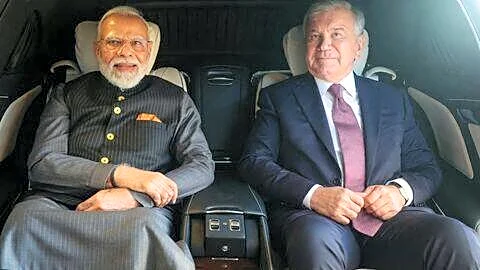
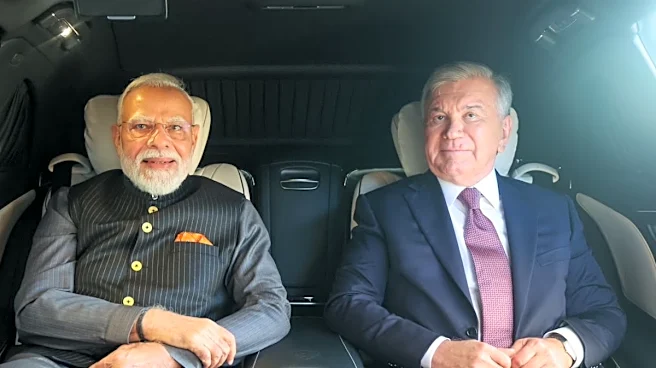
India and Uzbekistan agreed to elevate bilateral ties to a Comprehensive Strategic Partnership, set a target to increase trade to $5 billion by 2030, and establish a long-term arrangement to supply uranium to India during Prime Minister Narendra Modi's visit to Tashkent.
“This year marks the 15th anniversary of our Strategic Partnership. On this special occasion, we have decided to elevate our relations to a Comprehensive Strategic Partnership,” Modi said during the delegation level. “Today, we have prepared an ambitious agenda to advance this new phase of our partnership with greater speed and tangible results.”
The two sides agreed to deepen cooperation across trade, economy and investment, transport connectivity, information technology (IT), artificial intelligence (AI), space, cybersecurity, energy transition, critical minerals, food security, healthcare,
pharmaceuticals and education, as per the joint statement.
The countries exchanged 11 memorandums of understanding and agreements across these domains, including the signing of the Cultural Exchange Program from 2026-2030 and the Uzbekistan-India cooperation in the Field of Archives.
The outcomes also included a cooperation agreement between NIPL (India) and NIPC (Uzbekistan) on digital payments. India also announced a $ 1 million grant for afforestation in the Aral Sea region, 100 Lal Bahadur Shastri Scholarships for students studying Hindi in Uzbekistan, and an ICCR Sanskrit Chair at Tashkent State University of Oriental Studies.
Finally, Uzbekistan reaffirmed its support for India’s candidature for permanent membership of the UN Security Council, and India also announced that the next India-Central Asia summit would be held in India in 2027.
The outcomes were announced following the bilateral meeting between Modi and Uzbek President Shavkat Mirziyoyev in Tashkent on August 30.
A Uranium Arrangement
The two countries will soon formalise a “long-term arrangement” to supply uranium from Uzbekistan to India, Modi said during his opening remarks at the bilateral meeting. This is seen as a crucial step for India’s civil nuclear energy ambitions.
India has a target of 100 GW of civilian nuclear capacity by 2047. India’s uranium reserves are limited and low-grade, making processing costly. As a result, India imports most of its Uranium from Kazakhstan, Canada, Russia and Uzbekistan.
In 2026, India has been on a roll, securing several long-term uranium supply contracts. In July, India formalised an agreement with Australia, and earlier this year, it finalised agreements with Canada and Kazakhstan as well.
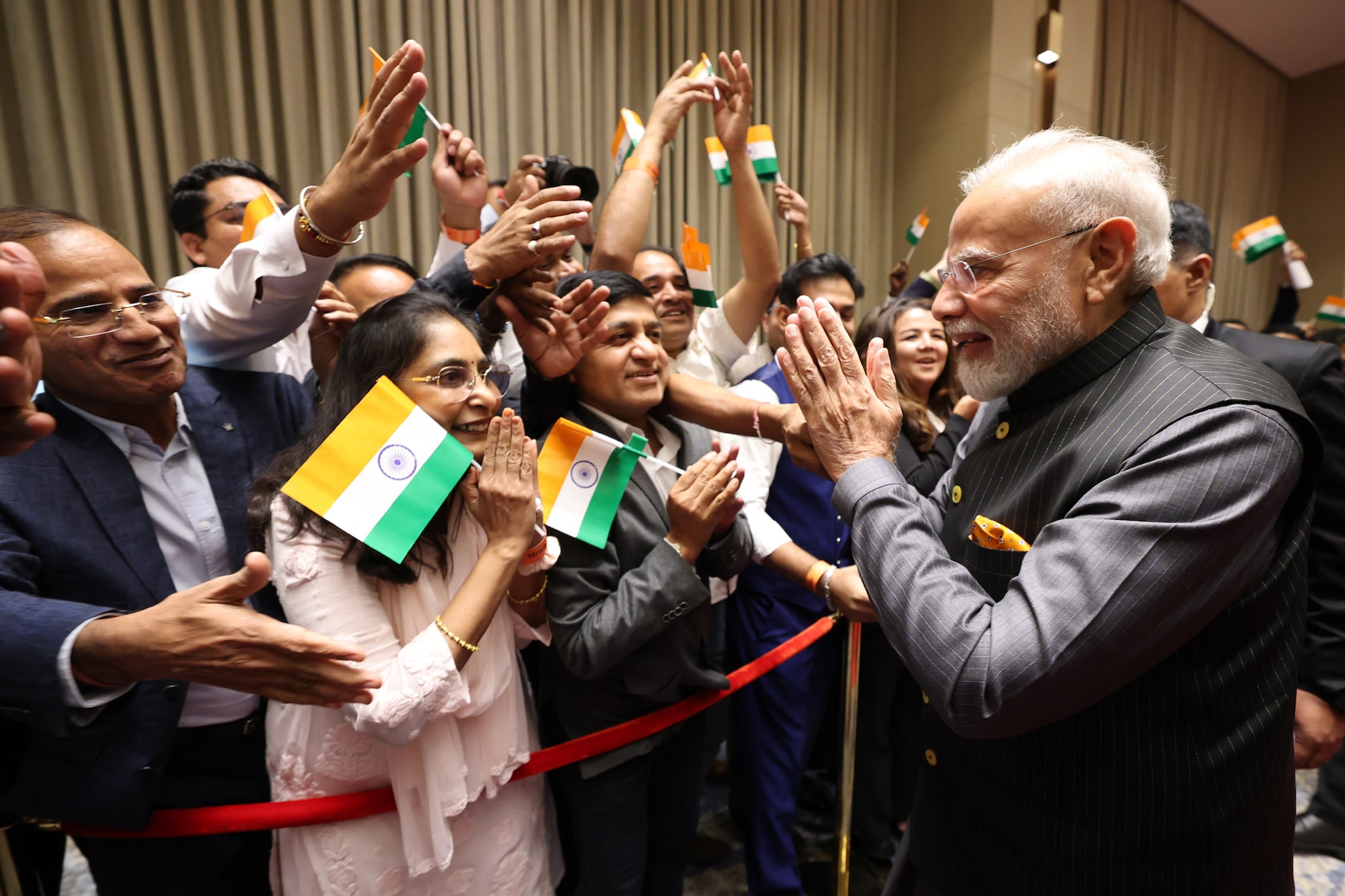
PM receives warm welcome by Indian Community at Tashkent, in Uzbekistan on August 29, 2026.
Uzbekistan is among the world’s largest uranium producers and holds reserves of uranium, copper, lithium, molybdenum, and rare earth elements. India had a uranium deal with Uzbekistan inked in 2019, making it the second Central Asian country to sign a uranium deal with India. The deal covered the supply of 1100 MTU of natural uranium ore concentrates from 2022 to 2026. As that contract nears its conclusion, securing a new deal with Uzbekistan is seen as vital for India’s civil nuclear energy ambitions.
MEA officials said positive discussions had taken place and the two sides were “close to signing an agreement.”
A separate MoU on geology and mineral resources was also signed during the visit.
Comprehensive partnership and a boost to trade
India and Uzbekistan’s trade touched $1 billion for the first time, with the number of joint ventures increasing seven-fold, Mirziyoyev said at the bilateral meeting. As India and Uzbekistan elevated their partnership to a CSP, the two sides decided to boost trade to $5 billion by 2030.
“To achieve this, we will systematically address issues related to market access, connectivity, banking, and payment systems,” Modi said. “We will work together to enhance win-win cooperation in infrastructure development. Cooperation in Digital Public Infrastructure, Artificial Intelligence, critical minerals, clean energy, space, and nuclear energy is making our relationship future-ready.”
Pharmaceutical products, machinery, fruits and vegetables, meat and fertilisers are among the key products traded between the two countries. The two sides identified electrical goods, engineering products, automobiles and pharmaceuticals as sectors with further potential and agreed to strengthen business-to-business ties.
India and Uzbekistan will hold a bilateral business summit and form a Joint Working Group to address non-tariff barriers and investment-related difficulties. To oversee the Comprehensive Strategic Partnership, the two sides agreed to establish a foreign minister-level mechanism and upgrade the Intergovernmental Commission from the secretary level to the ministerial level.
Modi also announced three sister-state and sister-city arrangements. These include the Andijan region and the state of Gujarat, Fergana region and the state of Haryana, as well as Samarkand region and Agra, as per the Uzbek statement.
Defence ties to get a boost
Defence cooperation also featured in the bilateral talks, as the two agreed to strengthen direct links between their defence industries and explore co-production and co-development. The two countries already have a Joint Working Group on military cooperation. Its latest meeting, held in August 2026, discussed new avenues of cooperation in joint training & exercises, capacity building, defence education and defence industry.
At a press briefing prior to the PM’s visit, Ambassador Sibi George, Secretary (West), said that there had been “considerable interaction between the defence industries of both countries with participation of a delegation from the defence industry agency of Uzbekistan participating in Aero India in 2025.”
India and Uzbekistan also conduct the DUSTLIK joint military exercise. Its seventh edition was held in Uzbekistan’s Namangan region in April this year. India also recently provided the Uzbek armed forces with a BHISHM Cube portable hospital to strengthen their disaster-response capabilities.
Counterterrorism was another topic of discussion. The two leaders condemned terrorism, including cross-border terrorism, and reiterated a policy of zero tolerance. They called for action against terrorist financing, safe havens and infrastructure and backed stronger cooperation in intelligence sharing, law enforcement, cybersecurity and combating organised crime. The Leaders reaffirmed the importance of continued cooperation under the Joint Working Group on Counter Terrorism, as per the joint statement.
PM in Uzbekistan
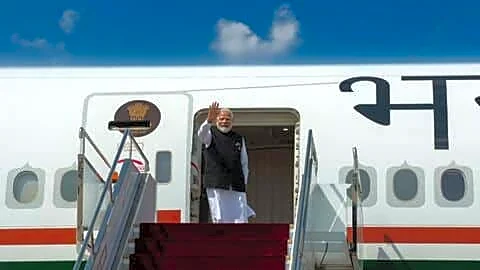
PM Modi was in Uzbekistan for a two-day visit from August 29 to August 30. This marks his fourth visit to the Central Asian country. He arrived in Tashkent on August 29, as his flight took a longer route via China due to the closure of airspace over Pakistan, reports suggest.
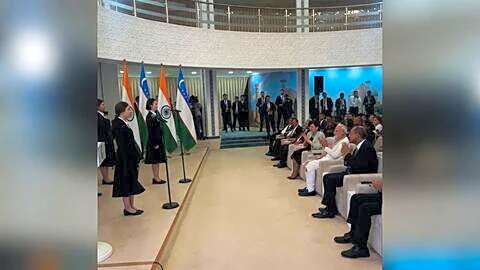
Uzbek President Mirziyoyev received Modi. The two leaders travelled together to the Yangi Uzbekistan Monument, where PM Modi laid the wreath. He then interacted with the Indian diaspora and witnessed various cultural performances.
This was followed by a banquet dinner hosted by the Uzbek leader in honour of PM Modi. Modi said the two held discussions and finalised several ways to strengthen bilateral ties over dinner.
On August 30, Modi began the day with a Yoga event followed by bilateral engagements.
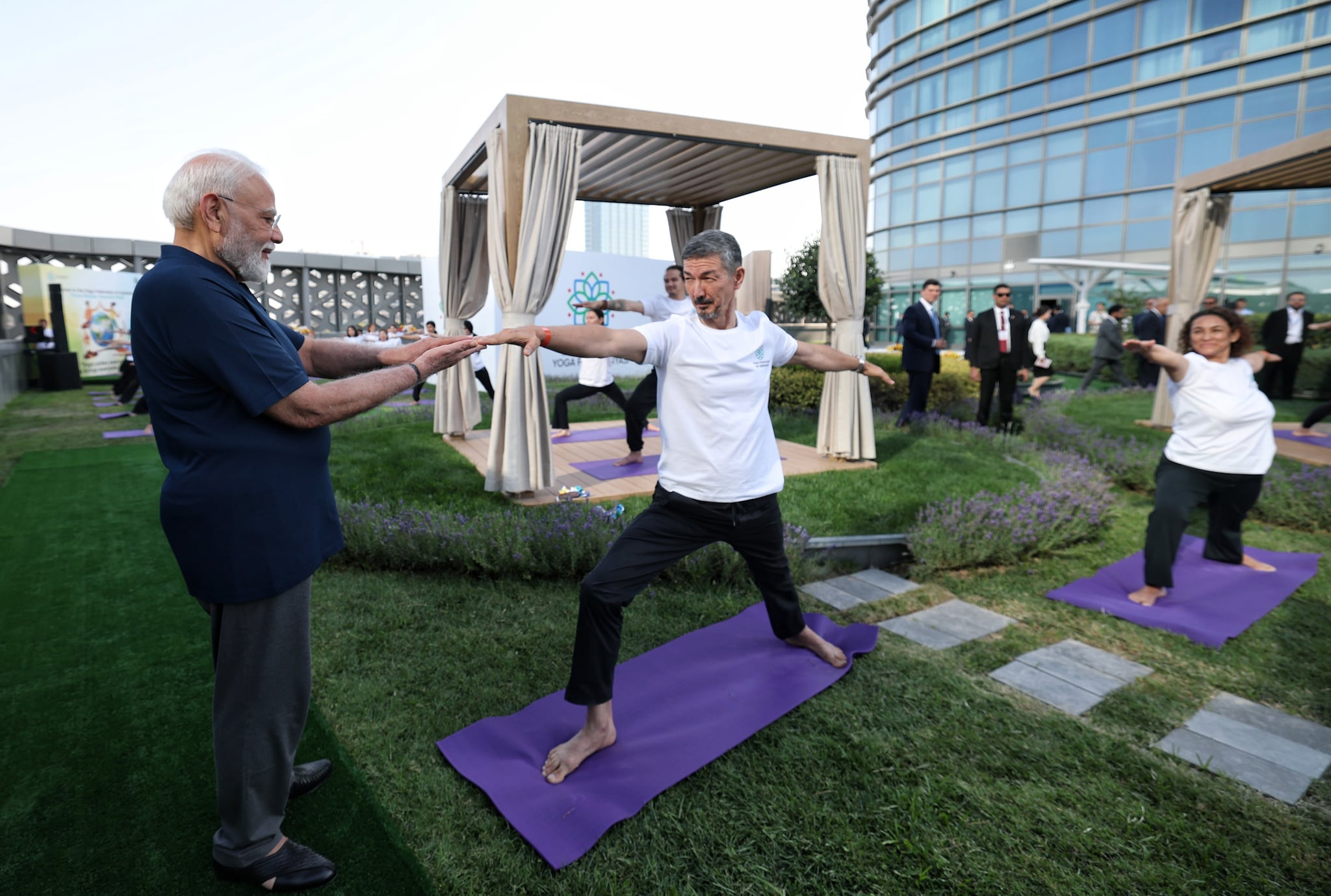
PM takes part in a yoga programme hosted by the Yoga Federation of Uzbekistan during his two-day state visit to the country at Hilton Hotel of Tashkent, in Uzbekistan on August 30, 2026.
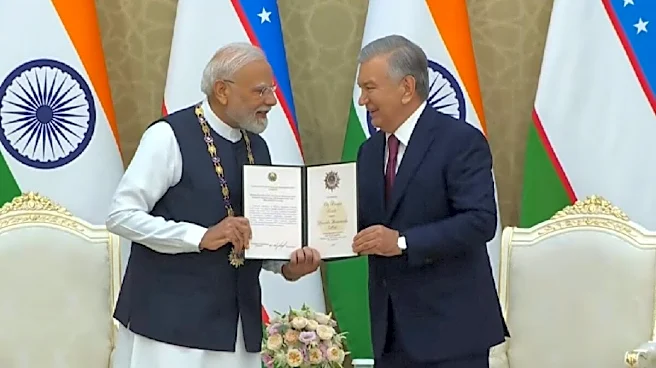
During the visit, PM Modi was conferred with the Order of "Oliy Darajali Doʻstlik" (Order of High-Level Friendship), the highest state award of Uzbekistan, by President Shavkat Mirziyoyev.
Afterwards, the Prime Minister laid a wreath at the Shastri Memorial in Tashkent before departing for the Kyrgyz Republic.
The Prime Minister will now travel to Bishkek for the Shanghai Cooperation Organisation Summit from August 31 to September 1.
Read more: The Makkah Agreement: Why India needs a maximalist strategy
/images/ppid_59c68470-image-178817253001671354.webp)

/images/ppid_59c68470-image-178819269510228957.webp)
/images/ppid_59c68470-image-178828003003598200.webp)

/images/ppid_59c68470-image-178810752480098194.webp)