/images/ppid_59c68470-image-176546504805972979.webp)

What is the story about?
Prime Minister Narendra Modi and former US President Donald Trump held a telephone conversation on Thursday, taking stock of the progress in the India–US Comprehensive Global Strategic Partnership and signalling intent to accelerate cooperation across key sectors.
According to officials familiar with the exchange, both leaders expressed satisfaction at the steady strengthening of bilateral engagements, noting that the strategic partnership has continued to broaden despite geopolitical flux.
The two sides placed particular emphasis on sustaining momentum in trade ties, with an eye on reducing frictions and unlocking new commercial opportunities.
Modi and Trump also discussed the next phase of collaboration in critical technologies, energy, defence and security — pillars that have become central to the implementation of the India–US COMPACT (Catalysing Opportunities for Military Partnership, Accelerated Commerce & Technology) framework for the 21st century.
The leaders underscored that robust cooperation in these domains is essential for maintaining supply-chain resilience and strategic stability in the Indo-Pacific.
Their conversation also covered key regional and global developments. Both leaders agreed to work in close coordination to address shared challenges and advance common strategic interests, amid rising uncertainty in global security and economic systems.
The two leaders affirmed their commitment to remain in regular contact as the bilateral agenda continues to evolve.
The development comes at a time when a US trade delegation led by Deputy US Trade Representative Rick Switzer is in New Delhi this week for a fresh round of engagements with Indian officials, amid growing momentum in the bilateral trade agenda.
Commerce and Industry Minister Piyush Goyal said the ongoing interactions were progressing constructively , noting that India and the United States had already completed five rounds of substantive negotiations.
While emphasising that the current visit does not constitute a formal negotiating round, Goyal reiterated that any agreement must deliver mutual benefit and should not be concluded under artificial deadlines, which could lead to avoidable errors.
India’s Chief Negotiator, Rajesh Agrawal, had travelled to Washington in October, where both sides discussed potential bilateral commitments and sought to narrow gaps across priority sectors.
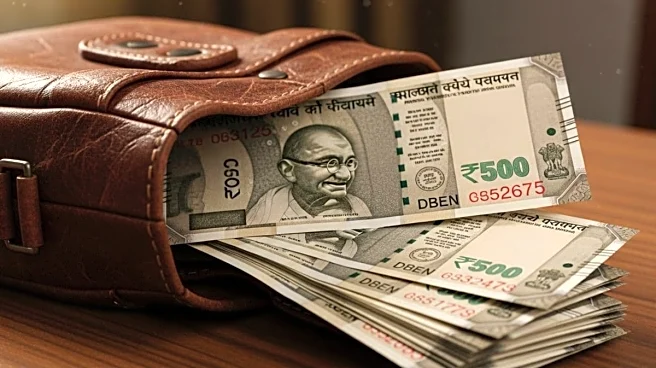
Notwithstanding tariff pressures — with US duties on certain imports touching 50% — Indian exports to the American market have shown strong resilience. Shipments to the US rose to $45.82 billion in the first half of the current financial year, marking a 13.3% increase over the $40.42 billion recorded in the corresponding period last year.
According to officials familiar with the exchange, both leaders expressed satisfaction at the steady strengthening of bilateral engagements, noting that the strategic partnership has continued to broaden despite geopolitical flux.
The two sides placed particular emphasis on sustaining momentum in trade ties, with an eye on reducing frictions and unlocking new commercial opportunities.
Modi and Trump also discussed the next phase of collaboration in critical technologies, energy, defence and security — pillars that have become central to the implementation of the India–US COMPACT (Catalysing Opportunities for Military Partnership, Accelerated Commerce & Technology) framework for the 21st century.
The leaders underscored that robust cooperation in these domains is essential for maintaining supply-chain resilience and strategic stability in the Indo-Pacific.
Their conversation also covered key regional and global developments. Both leaders agreed to work in close coordination to address shared challenges and advance common strategic interests, amid rising uncertainty in global security and economic systems.
The two leaders affirmed their commitment to remain in regular contact as the bilateral agenda continues to evolve.
The development comes at a time when a US trade delegation led by Deputy US Trade Representative Rick Switzer is in New Delhi this week for a fresh round of engagements with Indian officials, amid growing momentum in the bilateral trade agenda.
Commerce and Industry Minister Piyush Goyal said the ongoing interactions were progressing constructively , noting that India and the United States had already completed five rounds of substantive negotiations.
While emphasising that the current visit does not constitute a formal negotiating round, Goyal reiterated that any agreement must deliver mutual benefit and should not be concluded under artificial deadlines, which could lead to avoidable errors.
India’s Chief Negotiator, Rajesh Agrawal, had travelled to Washington in October, where both sides discussed potential bilateral commitments and sought to narrow gaps across priority sectors.
Notwithstanding tariff pressures — with US duties on certain imports touching 50% — Indian exports to the American market have shown strong resilience. Shipments to the US rose to $45.82 billion in the first half of the current financial year, marking a 13.3% increase over the $40.42 billion recorded in the corresponding period last year.