


What is the story about?
Iran’s Pickaxe Mountain facility, built deep inside a mountain near its Natanz nuclear complex, has drawn attention amid questions over whether the United States has weapons capable of destroying it.
The debate intensified after US commentator Tucker Carlson claimed that no conventional American weapon could penetrate the facility’s estimated depth and that a nuclear weapon would be needed to destroy it.
But how much is known about the site, and is that assessment accurate?
Where is Pickaxe Mountain and why is it difficult to target?
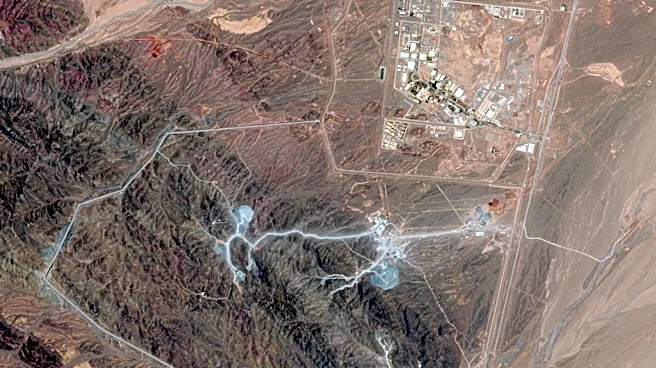
Pickaxe Mountain, also known as Kuh-e Kolang Gaz La, is an underground complex about 2 km south of Iran’s Natanz nuclear facility and roughly 220 km south of Tehran. The mountain's name comes from the Persian word Kolang, meaning pickaxe. Construction began in 2020.
Iran has described the site as a replacement for an above-ground facility used to assemble advanced centrifuges, which was damaged in an earlier attack. Its precise purpose and the activities planned inside remain unclear.
How deep is the facility?
The facility is believed to be buried deep inside a granite mountain. Estimates put its depth at 80–100 metres. According to the Institute for Science and International Security (ISIS), a US nuclear non-proliferation research organisation, the facility is estimated to be at least 100 metres beneath the mountain.
Analysts have used satellite imagery and the volume of excavated material to assess the likely scale of the underground construction. The exact layout and depth of its chambers are not publicly known.
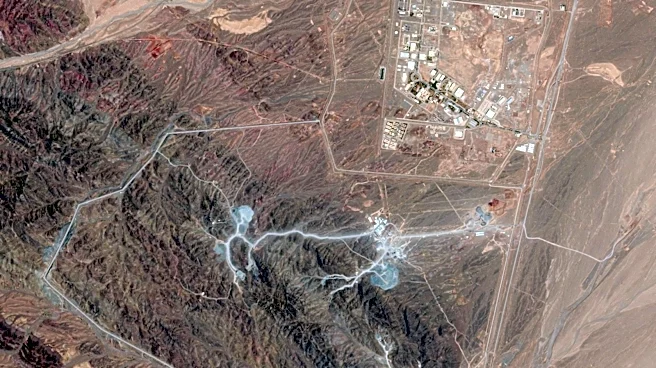
Satellite imagery reviewed by researchers in 2026 showed construction activity and efforts to reinforce or restrict access to the tunnel entrances. Later imagery assessments reported blocked or partially filled entrances, with the facility appearing dormant and no major construction activity underway as of October.
What does the facility contain?
The exact contents of Pickaxe Mountain remain unknown. Iran has said the underground complex was intended to replace the advanced centrifuge assembly facility destroyed at Natanz.
There have also been reports that Iran may have moved centrifuges and related equipment into the tunnels after the June 2025 conflict. However, these reports have not been independently verified, and satellite imagery has not established whether enrichment is taking place at the site.
Analysts have suggested the complex could eventually accommodate uranium enrichment or other nuclear-related activities, but its precise use remains unclear.
Can US bunker-busters reach it?
The US military's most powerful conventional bunker-buster is the GBU-57 Massive Ordnance Penetrator (MOP), a 30,000-pound bomb designed to strike hardened and deeply buried targets. The B-2 stealth bomber carries it.
The weapon was used during the US strikes on Iranian nuclear facilities in June 2025. However, estimates of its penetration capability vary with material and conditions. A figure cited for penetration into the ground cannot automatically be applied to a facility buried inside a granite mountain.
That distinction matters: the depth of Pickaxe Mountain and the strength of the surrounding rock could make it significantly harder to destroy than other underground targets.
The US also has the GBU-43/B Massive Ordnance Air Blast bomb, or MOAB. But unlike the GBU-57, it is not a specialised bunker-buster. Its destructive force comes primarily from a large blast, making it a different type of weapon.
Does that mean only a nuclear weapon can destroy it?
Not necessarily. Carlson’s claim that a nuclear weapon would be the only way to destroy Pickaxe Mountain is not an established military assessment.
A conventional strike may not need to penetrate the deepest chambers to damage a facility. Attacks could instead target tunnel entrances, ventilation shafts, power supplies and other supporting infrastructure. Such strikes could restrict access or disrupt operations, even if they do not destroy the underground complex itself.
Researchers have discussed these vulnerabilities as possible options, but that does not mean any particular attack plan would guarantee the facility’s destruction.
Is Pickaxe Mountain operational?
That remains uncertain. Assessments by the Institute for Science and International Security (ISIS) in July 2026 said the facility was still under construction and not operational. Its October assessment described the site as dormant, with entrances blocked or restricted and no evidence of major ongoing construction.
The International Atomic Energy Agency has sought information and access, but the facility’s contents have not been independently verified through inspection.