/images/ppid_59c68470-image-179212258374838304.webp)

/images/ppid_59c68470-image-179194509828218679.webp)
What is the story about?
Tesla Inc. unveiled its long-delayed second-generation Roadster sports car on Thursday at a SpaceX rocket testing facility in McGregor, near Waco, Texas. The event was livestreamed online. The company is hoping the flight demonstration will give its car business a lift. Tesla said production will start in 2028 but did not name a price.
Elon Musk, chief executive officer of Tesla and SpaceX, said the car is “the best of the last of the human-driven cars” and said it would be Tesla's only manually driven model in the long term. Tesla stopped producing the model more than a decade ago and first showed a next-generation version nearly nine years ago.
Roadster Takes Flight
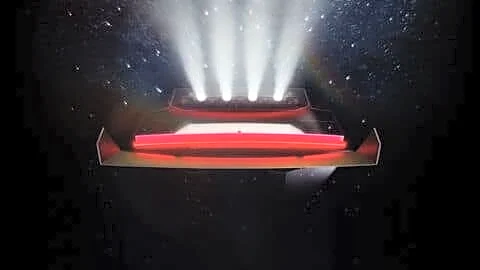
Tesla did not stage a typical reveal. It made the Roadster fly, in a manner. The two-seat prototype is powered by cold-gas thrusters developed with SpaceX engineers. Tesla showed it driving upside down up a ramp using a fan-powered suction system.
It then flipped off the ramp, did a mid-air barrel roll and landed on its wheels. It also used the thrusters to jump over the Cybercab, Cybertruck, Semi truck, Model Y and Model 3.
Musk had said the demo “might be one of the most spectacular demos ever.” “By the way, success is not guaranteed,” he said before the demonstration. He also said it would “probably work”. On stage, he said, “We need an audience to prove that it's not AI or SI.”
He added, “You're going to see the results of what happens when you have a collaboration with the world's best car company and the world's best rocket company.” Musk said the car can “do rolls” and “crazy gymnastics”.
Design and Features
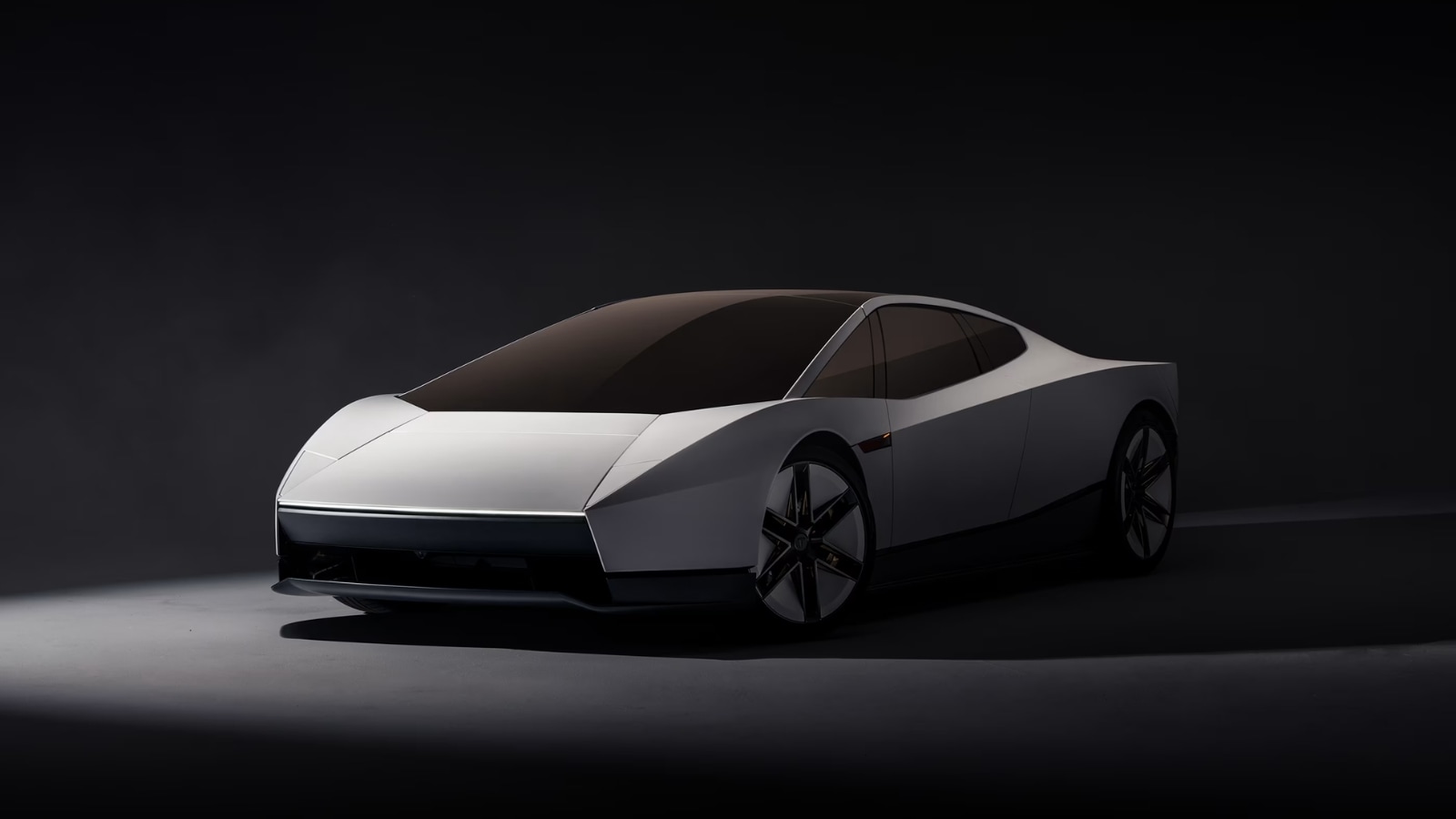
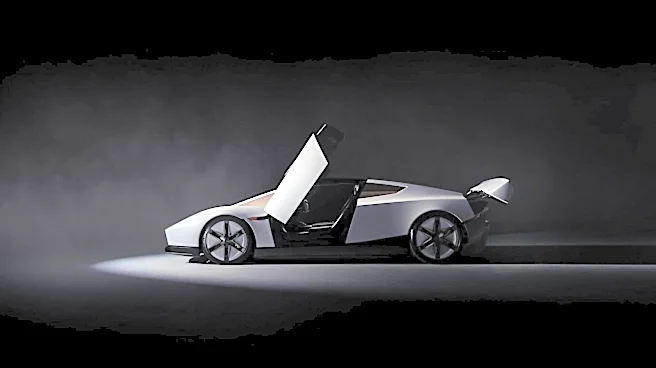
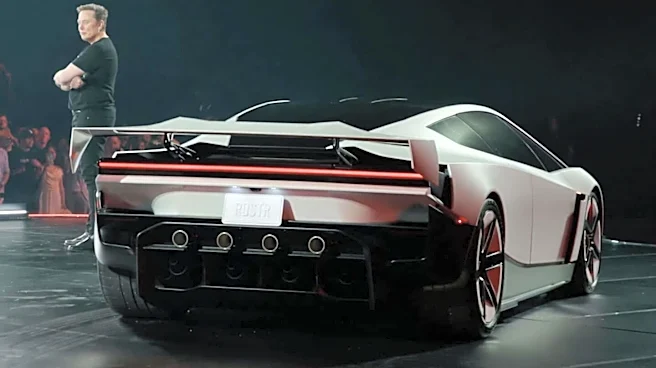
The car is white and more angular than the 2017 prototype, and it is designed to lean into aerospace aesthetics. Reporters compared the design to a Lamborghini and the Lotus Esprit from “The Spy Who Loved Me”, which Musk owns and which was on display at the event.
Tesla said the design drew on the SR-71 reconnaissance aircraft and the F-35 fighter jet. The car has a Cybertruck-style steer-by-wire system. Executives described it as an ode to manual driving, even as the company focuses more on autonomy.
A fan under the car pulls it towards the road. Tesla said this suction system can generate up to 2G of downforce, and Musk said it will help the car break track records.
In a post on X, Tesla said the car's aero features provide “the best passive downforce package of any road car”, “approaching F1 levels”, with wing actuation driven by the Optimus actuator system. The post accompanied a video of the car changing to Track Mode.
Lars Moravy, Tesla's vice president of engineering, said the car uses 10 thrusters connected to 600 litres of compressed air to lift and spin it. He said the air tank can be recharged. Another report said the company stated the system uses 250kg of compressed gas as propellant. Tesla said in a post on X that “every usable void” in the car is packed with Carbon Fiber Overwrapped Pressure Vessels (COPVs).
Musk said the car can go from zero to 60 miles per hour in under one second, and Tesla showed a video of the run. The company said it has measured times as low as 0.81 seconds, equal to 0-100kmph. Musk said the production car will do better.
Tesla said top speed is over 230 mph, and Musk said his eventual target is half the speed of sound, about 383 mph. Tesla said the range is 300 miles for all three versions.
Invite-Only Rocket
Tesla's reservation page, as it appeared after the event, lists three versions. The Performance version is “road ready”, with two seats, active aerodynamics and a “multi-mode suction system”. It requires a $50,000 deposit and has no thrusters.
The Thrust version is “race ready”, with two seats and rear-mounted cold-gas “acceleration thrusters”. It requires a $250,000 deposit and is listed as limited. Tesla said this version delivers sub-one-second 0-60 mph acceleration.
The Rocket version is “air ready” and “invite only”. It is a single-seat model with 10 cold-gas thrusters around the car and a “full flight system”. Bloomberg said it is not approved for public roads.
Tesla has not said how Rocket customers will be selected or how many it will build. Another report said all versions require a refundable $50,000 deposit within 10 days of reserving. Musk and other executives did not give target prices at the event.
Tesla quoted a base price of $200,000 nearly a decade ago. The company has suggested for years that the next Roadster could include a SpaceX option package.
Road Legality Unclear
Musk said using the thruster and fan features may not be legal in all jurisdictions, but he did not call them street legal. He said the production car will be “the actual car that's on the roads.” Tesla is unlikely to sell a flying version to the public because of cost, safety, regulation and practicality.
The stunt still draws attention and supports Tesla's efforts to be seen as a boundary-pushing, tech-forward company.
Musk has also said safety is not the main goal. “If you buy a Ferrari, safety is not the number one goal. I say, if safety is your number one goal, do not buy the Roadster,” he said on a podcast earlier this year.
Long Road Back
The original Roadster, launched in 2008, was Tesla's first product and first electric vehicle (EV). It used a Lotus Elise chassis, was discontinued in 2012 and helped change the world's view of what an EV could be. Since then, Tesla has been known for the Model Y and Model X SUVs and the Model S and Model 3 sedans.
Tesla first showed the second-generation Roadster in 2017 and said deliveries would begin in 2020. Musk said then that a four-seat Roadster would travel 620 miles (1,000 km) on a single charge, reach 60 mph in 1.9 seconds and have a top speed of 250 mph. Tesla took $50,000 deposits, and some customers paid $250,000 to reserve one of 1,000 “Founders Series” cars.
Musk delayed the car in 2020, 2021, 2023 and 2024. In late 2025, he said he wanted to reveal it by the end of that year. A week later, at the shareholder meeting where he was awarded a $1 trillion pay package, he said he was moving the date to April 1, 2026. The reveal was pushed back again, and an attempt to hold it on October 1 was delayed by severe weather.
Where It Fits
When it goes on sale, the Roadster will join a slimmed-down consumer lineup of the Model 3, the Model Y and the slow-selling Cybertruck. Tesla also makes the commercial Semi truck. It is producing the Cybercab, a two-seat robotaxi without manual controls such as a steering wheel, pedals and mirrors, which is not yet for sale to outside customers.
This year, Tesla stopped selling the Model S and Model X to make space for production of its Optimus humanoid robots.
The reveal comes as Tesla shifts from making cars for human drivers to AI-led self-driving technology and robotics. EV sales still account for most of its revenue and profit. Its auto business could use a boost after consecutive annual sales declines and criticism of a stagnant product lineup.
Musk played down the car's financial importance in 2023, calling it a “small potato situation” that would not “move the needle in a major way financially.”
Elon Musk, chief executive officer of Tesla and SpaceX, said the car is “the best of the last of the human-driven cars” and said it would be Tesla's only manually driven model in the long term. Tesla stopped producing the model more than a decade ago and first showed a next-generation version nearly nine years ago.
Roadster Takes Flight
Tesla did not stage a typical reveal. It made the Roadster fly, in a manner. The two-seat prototype is powered by cold-gas thrusters developed with SpaceX engineers. Tesla showed it driving upside down up a ramp using a fan-powered suction system.
https://t.co/KBWjjWknXe
— Elon Musk (@elonmusk) October 16, 2026
It then flipped off the ramp, did a mid-air barrel roll and landed on its wheels. It also used the thrusters to jump over the Cybercab, Cybertruck, Semi truck, Model Y and Model 3.
Musk had said the demo “might be one of the most spectacular demos ever.” “By the way, success is not guaranteed,” he said before the demonstration. He also said it would “probably work”. On stage, he said, “We need an audience to prove that it's not AI or SI.”
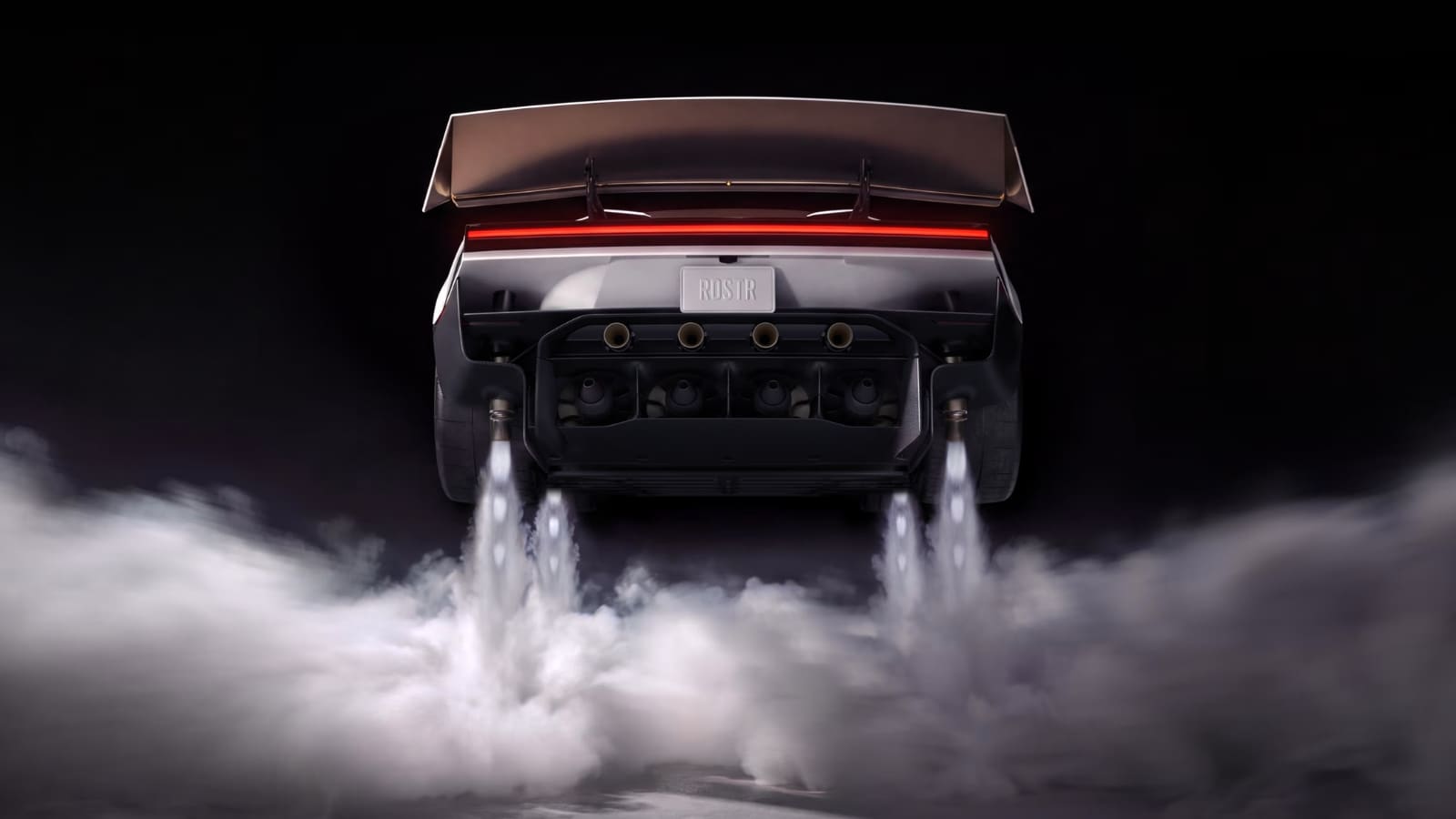
The Roadster's SpaceX-developed air thrusters firing from the rear and sides, with vapour billowing beneath the car.
He added, “You're going to see the results of what happens when you have a collaboration with the world's best car company and the world's best rocket company.” Musk said the car can “do rolls” and “crazy gymnastics”.
Design and Features
The car is white and more angular than the 2017 prototype, and it is designed to lean into aerospace aesthetics. Reporters compared the design to a Lamborghini and the Lotus Esprit from “The Spy Who Loved Me”, which Musk owns and which was on display at the event.
Turns out the future does have flying cars https://t.co/6fexPp6SXI
— Elon Musk (@elonmusk) October 16, 2026
Tesla said the design drew on the SR-71 reconnaissance aircraft and the F-35 fighter jet. The car has a Cybertruck-style steer-by-wire system. Executives described it as an ode to manual driving, even as the company focuses more on autonomy.
A fan under the car pulls it towards the road. Tesla said this suction system can generate up to 2G of downforce, and Musk said it will help the car break track records.
Real life, baby https://t.co/3QEqn18wig
— Tesla (@Tesla) October 16, 2026
In a post on X, Tesla said the car's aero features provide “the best passive downforce package of any road car”, “approaching F1 levels”, with wing actuation driven by the Optimus actuator system. The post accompanied a video of the car changing to Track Mode.
Lars Moravy, Tesla's vice president of engineering, said the car uses 10 thrusters connected to 600 litres of compressed air to lift and spin it. He said the air tank can be recharged. Another report said the company stated the system uses 250kg of compressed gas as propellant. Tesla said in a post on X that “every usable void” in the car is packed with Carbon Fiber Overwrapped Pressure Vessels (COPVs).
Tesla's new Roadster, shown from the front, has a low, angular body and a light bar across the nose.
Musk said the car can go from zero to 60 miles per hour in under one second, and Tesla showed a video of the run. The company said it has measured times as low as 0.81 seconds, equal to 0-100kmph. Musk said the production car will do better.
Tesla said top speed is over 230 mph, and Musk said his eventual target is half the speed of sound, about 383 mph. Tesla said the range is 300 miles for all three versions.
Invite-Only Rocket
Tesla's reservation page, as it appeared after the event, lists three versions. The Performance version is “road ready”, with two seats, active aerodynamics and a “multi-mode suction system”. It requires a $50,000 deposit and has no thrusters.
The Thrust version is “race ready”, with two seats and rear-mounted cold-gas “acceleration thrusters”. It requires a $250,000 deposit and is listed as limited. Tesla said this version delivers sub-one-second 0-60 mph acceleration.
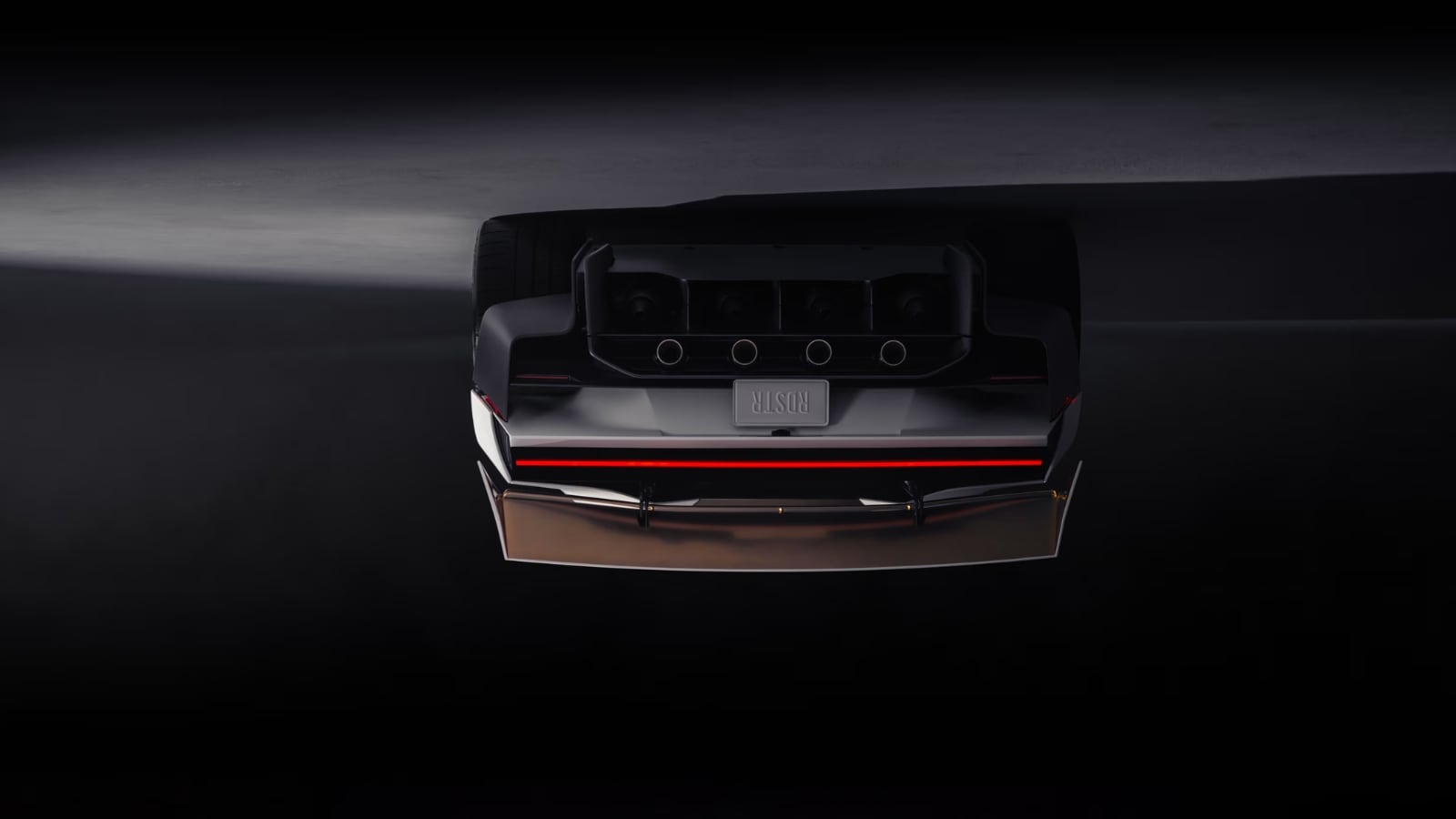
The rear of the Roadster, with four thruster nozzles above the exhaust-style outlets, a red light bar and a “ROSTR” number plate.
The Rocket version is “air ready” and “invite only”. It is a single-seat model with 10 cold-gas thrusters around the car and a “full flight system”. Bloomberg said it is not approved for public roads.
Tesla has not said how Rocket customers will be selected or how many it will build. Another report said all versions require a refundable $50,000 deposit within 10 days of reserving. Musk and other executives did not give target prices at the event.
Tesla quoted a base price of $200,000 nearly a decade ago. The company has suggested for years that the next Roadster could include a SpaceX option package.
Road Legality Unclear
Musk said using the thruster and fan features may not be legal in all jurisdictions, but he did not call them street legal. He said the production car will be “the actual car that's on the roads.” Tesla is unlikely to sell a flying version to the public because of cost, safety, regulation and practicality.
Roadster transforms in Track Mode
These aero features aren't just for looks: they provide the best passive downforce package of any road car (approaching F1 levels!) with wing actuation driven by the @Tesla_Optimus actuator system https://t.co/AqrC4qUga9
— Tesla (@Tesla) October 16, 2026
The stunt still draws attention and supports Tesla's efforts to be seen as a boundary-pushing, tech-forward company.
Musk has also said safety is not the main goal. “If you buy a Ferrari, safety is not the number one goal. I say, if safety is your number one goal, do not buy the Roadster,” he said on a podcast earlier this year.
Long Road Back
The original Roadster, launched in 2008, was Tesla's first product and first electric vehicle (EV). It used a Lotus Elise chassis, was discontinued in 2012 and helped change the world's view of what an EV could be. Since then, Tesla has been known for the Model Y and Model X SUVs and the Model S and Model 3 sedans.
Tesla first showed the second-generation Roadster in 2017 and said deliveries would begin in 2020. Musk said then that a four-seat Roadster would travel 620 miles (1,000 km) on a single charge, reach 60 mph in 1.9 seconds and have a top speed of 250 mph. Tesla took $50,000 deposits, and some customers paid $250,000 to reserve one of 1,000 “Founders Series” cars.
Musk delayed the car in 2020, 2021, 2023 and 2024. In late 2025, he said he wanted to reveal it by the end of that year. A week later, at the shareholder meeting where he was awarded a $1 trillion pay package, he said he was moving the date to April 1, 2026. The reveal was pushed back again, and an attempt to hold it on October 1 was delayed by severe weather.
Where It Fits
When it goes on sale, the Roadster will join a slimmed-down consumer lineup of the Model 3, the Model Y and the slow-selling Cybertruck. Tesla also makes the commercial Semi truck. It is producing the Cybercab, a two-seat robotaxi without manual controls such as a steering wheel, pedals and mirrors, which is not yet for sale to outside customers.
This year, Tesla stopped selling the Model S and Model X to make space for production of its Optimus humanoid robots.
The reveal comes as Tesla shifts from making cars for human drivers to AI-led self-driving technology and robotics. EV sales still account for most of its revenue and profit. Its auto business could use a boost after consecutive annual sales declines and criticism of a stagnant product lineup.
Musk played down the car's financial importance in 2023, calling it a “small potato situation” that would not “move the needle in a major way financially.”
/images/ppid_59c68470-image-179212006879613666.webp)

/images/ppid_59c68470-image-179203252344623051.webp)

/images/ppid_59c68470-image-17918776233262892.webp)
/images/ppid_59c68470-image-179185752260615666.webp)