/images/ppid_59c68470-image-178824502862576678.webp)


What is the story about?
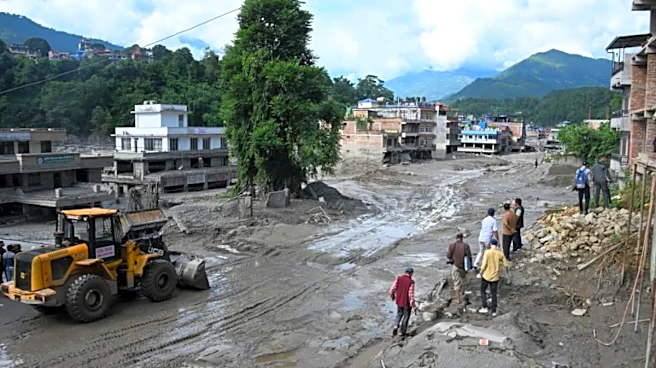
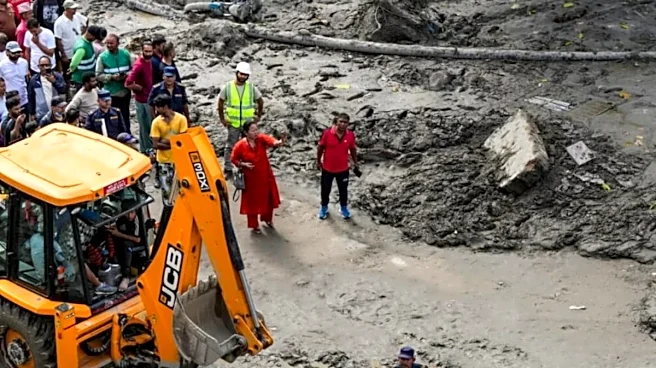
Rescue teams in Nepal have stepped up operations in some of the country's worst-hit areas, using temporary bridges and heavy machinery to reach remote locations and pull trapped workers from damaged hydropower projects nearly a week after devastating floods struck the Himalayan nation.
Around 600 people are still stranded at several hydropower facilities, which have become a key focus of the rescue operation.
Prime Minister Balendra Shah said more than 11,000 people had been rescued so far, while electricity and communication services had been restored in parts of the affected region.
The death toll has risen to at least 939, Shah said in a late-night social media post.
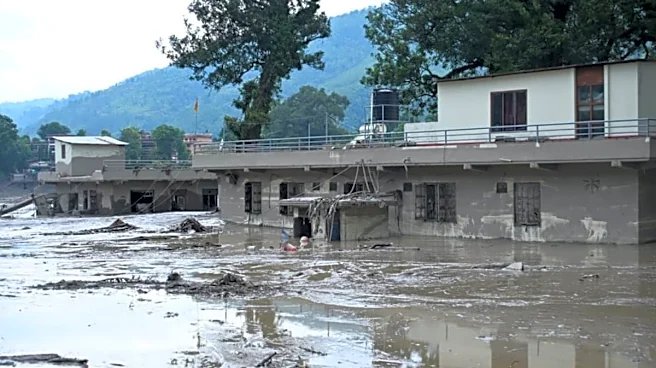
"Thousands of citizens have lost their homes, families, loved ones and property," Shah said, adding that the government would focus on helping those affected recover and return to normal life.
Road access has also been restored to Nuwakot, among the districts most severely affected by the floods, allowing rescue teams to reach stranded people and deliver relief supplies, Shah said.
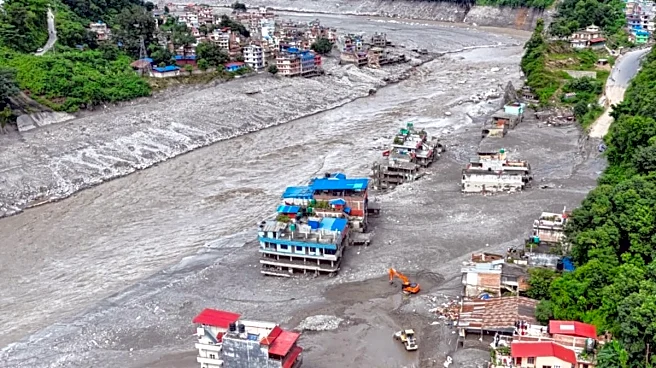
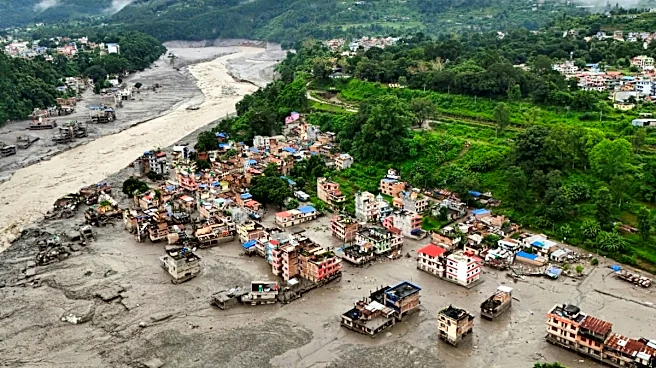
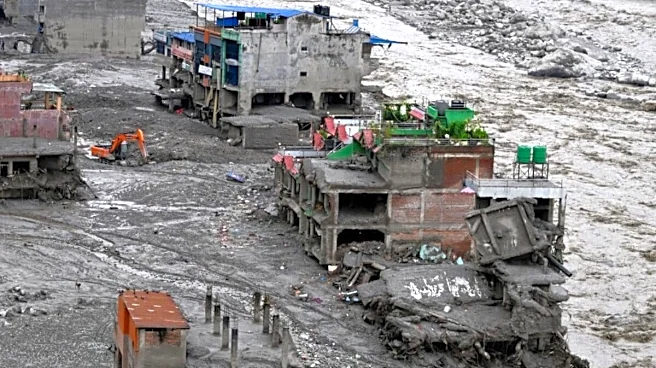
The disaster followed a glacier collapse that sent a torrent of ice, rocks and mud through Nepal's border region with China, leaving widespread destruction and presenting a major challenge to the country's six-month-old government.
In Nuwakot's Betrabati village, a search team recovered 24 bodies from a house, police official Bipin Regmi said.
"We are reaching new areas and recovering bodies," Regmi told Reuters.
Nepal has received more than $42 million in aid following the disaster, Shah said, adding that further contributions were expected. India and China have also joined rescue and relief operations, including efforts to construct Bailey bridges to connect isolated areas.
Also Read: Nepal may need up to $5 billion to rebuild after deadly flash floods
Hydropower projects in the affected region
The hydropower projects at the centre of the rescue operations include:
Upper Trishuli-1: Located on the Upper Trishuli River in Rasuwa district, which borders Tibet, the 216-MW hydroelectric project is under construction and backed by South Korean investors and the World Bank's International Finance Corporation (IFC).
Upper Trishuli-3A: The 60-MW hydroelectric project in Rasuwa is operated by the state-run Nepal Electricity Authority (NEA).
Upper Trishuli-3B: Spanning Rasuwa and Nuwakot, another badly affected district, the 37-MW project is owned by state-run Trishuli Jal Vidhyut Co Ltd.
Chilime Hydropower Project: The 22-MW project is located on the right bank of the Bhotekoshi River in Rasuwa. At least eight people are believed to be missing from the site.
Langtang Khola Hydropower Project: Located in Rasuwa, the 20-MW project has at least 41 people estimated to be missing.
Mailung Khola Hydropower Project: The project, also located in Rasuwa, has at least seven people estimated to be missing.
The project details above are based on information reported by Reuters.
Also Read: Nepal Army rescues 350 from Trishuli hydropower tunnel; 100 still trapped
Hydropower projects emerge as key rescue sites
Rescue operations have increasingly centred on Nepal's hydropower projects, where large numbers of workers were trapped following the floods.
Shah said 279 workers had been rescued from the projects so far, while authorities estimate that nearly 1,000 people had been stranded across the affected facilities.
Footage released by rescue teams showed earth-moving machines clearing large quantities of mud and rocks during nighttime operations. Soldiers were also seen using torches while searching a large excavation for an opening into a tunnel where workers could be trapped.
Also Read: Nepal hydel capacity damage estimated at 550 MW; power exports to India dip by 400 MW: Sources
Nepal has rapidly expanded its hydropower sector since the beginning of the century, seeking to use its abundant Himalayan water resources to tackle domestic electricity shortages and increase power exports to India.
The country's mountainous terrain means many hydropower facilities depend on tunnels to transport water through steep slopes. The projects use the significant difference in elevation between Himalayan rivers and powerhouses to generate electricity.
Nepal raises climate change concerns
Shah said the disaster underscored the increasing vulnerability of the Himalayan region to extreme events and called for greater international attention to the issue.
"The region must therefore remain vigilant. The time has come for us to strongly raise before the international community the disasters we are experiencing as a consequence of climate change," Shah said.
Around 600 people are still stranded at several hydropower facilities, which have become a key focus of the rescue operation.
Prime Minister Balendra Shah said more than 11,000 people had been rescued so far, while electricity and communication services had been restored in parts of the affected region.
The death toll has risen to at least 939, Shah said in a late-night social media post.
"Thousands of citizens have lost their homes, families, loved ones and property," Shah said, adding that the government would focus on helping those affected recover and return to normal life.
Road access has also been restored to Nuwakot, among the districts most severely affected by the floods, allowing rescue teams to reach stranded people and deliver relief supplies, Shah said.
The disaster followed a glacier collapse that sent a torrent of ice, rocks and mud through Nepal's border region with China, leaving widespread destruction and presenting a major challenge to the country's six-month-old government.
In Nuwakot's Betrabati village, a search team recovered 24 bodies from a house, police official Bipin Regmi said.
"We are reaching new areas and recovering bodies," Regmi told Reuters.
Nepal has received more than $42 million in aid following the disaster, Shah said, adding that further contributions were expected. India and China have also joined rescue and relief operations, including efforts to construct Bailey bridges to connect isolated areas.
Also Read: Nepal may need up to $5 billion to rebuild after deadly flash floods
Hydropower projects in the affected region
The hydropower projects at the centre of the rescue operations include:
Upper Trishuli-1: Located on the Upper Trishuli River in Rasuwa district, which borders Tibet, the 216-MW hydroelectric project is under construction and backed by South Korean investors and the World Bank's International Finance Corporation (IFC).
Upper Trishuli-3A: The 60-MW hydroelectric project in Rasuwa is operated by the state-run Nepal Electricity Authority (NEA).
Upper Trishuli-3B: Spanning Rasuwa and Nuwakot, another badly affected district, the 37-MW project is owned by state-run Trishuli Jal Vidhyut Co Ltd.
Chilime Hydropower Project: The 22-MW project is located on the right bank of the Bhotekoshi River in Rasuwa. At least eight people are believed to be missing from the site.
Langtang Khola Hydropower Project: Located in Rasuwa, the 20-MW project has at least 41 people estimated to be missing.
Mailung Khola Hydropower Project: The project, also located in Rasuwa, has at least seven people estimated to be missing.
The project details above are based on information reported by Reuters.
Also Read: Nepal Army rescues 350 from Trishuli hydropower tunnel; 100 still trapped
Hydropower projects emerge as key rescue sites
Rescue operations have increasingly centred on Nepal's hydropower projects, where large numbers of workers were trapped following the floods.
Shah said 279 workers had been rescued from the projects so far, while authorities estimate that nearly 1,000 people had been stranded across the affected facilities.
Footage released by rescue teams showed earth-moving machines clearing large quantities of mud and rocks during nighttime operations. Soldiers were also seen using torches while searching a large excavation for an opening into a tunnel where workers could be trapped.
Also Read: Nepal hydel capacity damage estimated at 550 MW; power exports to India dip by 400 MW: Sources
Nepal has rapidly expanded its hydropower sector since the beginning of the century, seeking to use its abundant Himalayan water resources to tackle domestic electricity shortages and increase power exports to India.
The country's mountainous terrain means many hydropower facilities depend on tunnels to transport water through steep slopes. The projects use the significant difference in elevation between Himalayan rivers and powerhouses to generate electricity.
Nepal raises climate change concerns
Shah said the disaster underscored the increasing vulnerability of the Himalayan region to extreme events and called for greater international attention to the issue.
"The region must therefore remain vigilant. The time has come for us to strongly raise before the international community the disasters we are experiencing as a consequence of climate change," Shah said.


/images/ppid_59c68470-image-178816004222644471.webp)
/images/ppid_59c68470-image-178814271523269358.webp)
/images/ppid_59c68470-image-178823257252915072.webp)
/images/ppid_59c68470-image-178807002755920538.webp)