/images/ppid_59c68470-image-178033507183319269.webp)

/images/ppid_59c68470-image-178032754220132736.webp)
/images/ppid_a911dc6a-image-178031368888176320.webp)
What is the story about?
The United Kingdom’s (UK) Secretary of State for Business and Trade Peter Kyle is slated to visit India on June 2 for high-level talks aimed at advancing trade ties and accelerating the implementation of the India–UK Free Trade Agreement (FTA).
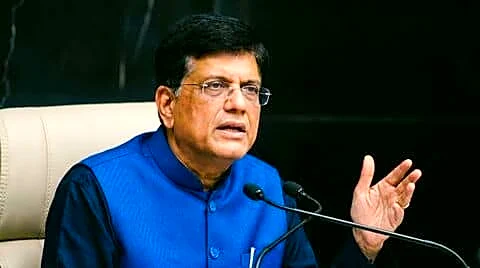
The UK’s Minister of State for Trade Policy Chris Bryant is also slated to meet India’s Commerce and Industry Minister Piyush Goyal on June 2. Government sources have said that India and the UK are looking to clarify pending issues on carbon tax and steel levy before bringing the FTA into force.
On May 15, India’s Commerce Secretary Rajesh Agrawal had said that while the FTA with the UK is very close to being operationalised, both sides are working to resolve pending sticking points. He noted that the “UK’s new steel measure wasn’t factored in by the negotiating team,” and that work is underway to address it.
The UK has decided to cut tariff-free steel import quotas by 60% from July 1, 2026, which many experts described as following the EU’s steel model by “combining safeguard restrictions with carbon-linked border taxes.” Founder of the Global Trade Research Institute (GTRI), Ajay Srivastava, said that India already faces a challenging trade environment in the EU steel market, as Indian steel exports will still bear the cost of the EU’s Carbon Border Adjustment Mechanism (CBAM) along with safeguard restrictions even after the India–EU FTA comes into force.
For the EU, he said that even shipments entering within quota limits and paying zero customs duty could still face around $38 in CBAM-related costs for every $100 of steel exported. He added that once exports exceed safeguard quotas, the EU can impose a 50% over-quota duty, pushing the combined burden of safeguard duties and CBAM costs to as high as $95 per $100 shipment. He called for negotiation of similar terms with the UK as with the EU under the FTA to ensure that the commercial value of the trade pact is not eroded.
India and the UK had signed an FTA on July 24, 2025, along with a convention to prevent double taxation. Prime Ministers Narendra Modi and Keir Starmer had termed it a key milestone, with the goal of doubling trade to $120 billion by 2030. The deal lowered average tariffs on UK products in India from 15% to 3%, while providing duty-free access for 99% of Indian exports to the UK.
The UK’s Minister of State for Trade Policy Chris Bryant is also slated to meet India’s Commerce and Industry Minister Piyush Goyal on June 2. Government sources have said that India and the UK are looking to clarify pending issues on carbon tax and steel levy before bringing the FTA into force.
On May 15, India’s Commerce Secretary Rajesh Agrawal had said that while the FTA with the UK is very close to being operationalised, both sides are working to resolve pending sticking points. He noted that the “UK’s new steel measure wasn’t factored in by the negotiating team,” and that work is underway to address it.
The UK has decided to cut tariff-free steel import quotas by 60% from July 1, 2026, which many experts described as following the EU’s steel model by “combining safeguard restrictions with carbon-linked border taxes.” Founder of the Global Trade Research Institute (GTRI), Ajay Srivastava, said that India already faces a challenging trade environment in the EU steel market, as Indian steel exports will still bear the cost of the EU’s Carbon Border Adjustment Mechanism (CBAM) along with safeguard restrictions even after the India–EU FTA comes into force.
For the EU, he said that even shipments entering within quota limits and paying zero customs duty could still face around $38 in CBAM-related costs for every $100 of steel exported. He added that once exports exceed safeguard quotas, the EU can impose a 50% over-quota duty, pushing the combined burden of safeguard duties and CBAM costs to as high as $95 per $100 shipment. He called for negotiation of similar terms with the UK as with the EU under the FTA to ensure that the commercial value of the trade pact is not eroded.
India and the UK had signed an FTA on July 24, 2025, along with a convention to prevent double taxation. Prime Ministers Narendra Modi and Keir Starmer had termed it a key milestone, with the goal of doubling trade to $120 billion by 2030. The deal lowered average tariffs on UK products in India from 15% to 3%, while providing duty-free access for 99% of Indian exports to the UK.




/images/ppid_59c68470-image-178040752572010151.webp)
/images/ppid_59c68470-image-178048255882533373.webp)
/images/ppid_a911dc6a-image-178049303467313192.webp)


/images/ppid_59c68470-image-178042002884465670.webp)