/images/ppid_59c68470-image-177512253207119725.webp)


What is the story about?
Anil Trigunayat, a former diplomat, warns that the ongoing West Asia conflict could drag on, with no clear resolution in sight and rising risks to global trade and energy flows. He highlights that uncertainty around the Strait of Hormuz and prolonged disruption could keep oil prices elevated, impacting economies worldwide.
Trigunayat adds that India faces a “double jeopardy” of higher oil prices and currency pressure, even as it diversifies energy sources. He cautions that a shift toward controlled or fee-based maritime access could raise long-term costs, making the global economic outlook more fragile.
These are edited excerpts from the interview.
Q: It doesn’t look like the war will end anytime soon. Should we see the US halting strikes and the Strait of Hormuz reopening separately?
A: This was always a feared outcome. Countries globally wanted to avoid this war. President Trump indicated they may take two to three weeks to “mop up,” but said nothing about reopening the Strait. Two possibilities remain: either boots on the ground in coastal areas, or a withdrawal with North Atlantic Treaty Organisation (NATO)/European countries stepping in.
Watch the full conversation here
For India, this region’s stability is existential, given energy dependence, $70 billion remittances, investments, and strategic ties. Rising oil prices will pressure the rupee, creating a double hit. While imports are diversifying toward Africa, Russia, and now Iran, the broader economic impact will be significant globally.
Q: Is Iran now in a position to call the shots?
A: Iran believes it is making the conflict costly for the US, Israel, and the global economy. However, the US appears stuck, with no clear exit. Shifting objectives, from nuclear to missiles to proxies, have weakened credibility. Iran, meanwhile, is not signalling a ceasefire. Even in the information war, the US is not clearly winning.
Also Watch | Iran conflict risks pushing global economy towards recession: Former diplomat Sanjay Panda
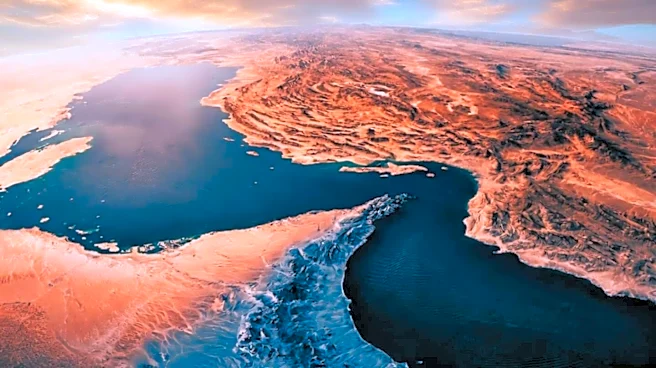
Q: What about the Strait of Hormuz and economic impact?
A: Iran may move toward a fee-based passage model, similar to other canals. While not fully closed, access could depend on neutrality or payment. This raises shipping and insurance costs. Such a system may persist, but is unsustainable long term, keeping global trade and energy markets under stress.
Catch all the latest updates from the stock market here
Trigunayat adds that India faces a “double jeopardy” of higher oil prices and currency pressure, even as it diversifies energy sources. He cautions that a shift toward controlled or fee-based maritime access could raise long-term costs, making the global economic outlook more fragile.
These are edited excerpts from the interview.
Q: It doesn’t look like the war will end anytime soon. Should we see the US halting strikes and the Strait of Hormuz reopening separately?
A: This was always a feared outcome. Countries globally wanted to avoid this war. President Trump indicated they may take two to three weeks to “mop up,” but said nothing about reopening the Strait. Two possibilities remain: either boots on the ground in coastal areas, or a withdrawal with North Atlantic Treaty Organisation (NATO)/European countries stepping in.
Watch the full conversation here
For India, this region’s stability is existential, given energy dependence, $70 billion remittances, investments, and strategic ties. Rising oil prices will pressure the rupee, creating a double hit. While imports are diversifying toward Africa, Russia, and now Iran, the broader economic impact will be significant globally.
Q: Is Iran now in a position to call the shots?
A: Iran believes it is making the conflict costly for the US, Israel, and the global economy. However, the US appears stuck, with no clear exit. Shifting objectives, from nuclear to missiles to proxies, have weakened credibility. Iran, meanwhile, is not signalling a ceasefire. Even in the information war, the US is not clearly winning.
Also Watch | Iran conflict risks pushing global economy towards recession: Former diplomat Sanjay Panda
Q: What about the Strait of Hormuz and economic impact?
A: Iran may move toward a fee-based passage model, similar to other canals. While not fully closed, access could depend on neutrality or payment. This raises shipping and insurance costs. Such a system may persist, but is unsustainable long term, keeping global trade and energy markets under stress.
Catch all the latest updates from the stock market here
/images/ppid_a911dc6a-image-177523062468193791.webp)



/images/ppid_a911dc6a-image-177512922689236957.webp)
/images/ppid_a911dc6a-image-177519424853845840.webp)
/images/ppid_a911dc6a-image-177513963602059817.webp)
/images/ppid_a911dc6a-image-177513706488830291.webp)
/images/ppid_a911dc6a-image-177513443544245613.webp)
/images/ppid_a911dc6a-image-177513702974180721.webp)