/images/ppid_59c68470-image-17707175370479328.webp)



/images/ppid_59c68470-image-177071514613853445.webp)
What is the story about?
India has been ranked 91st out of 182 countries and territories on the Corruption Perceptions Index (CPI) 2025, with a score of 39.
According to the global NGO Transparency International's latest Corruption Perceptions Index (CPI) 2025 released on Tuesday, February 10, there has been a slow growth in anti-corruption progress in Asia Pacific as many countries witnessed public anger in the previous year.
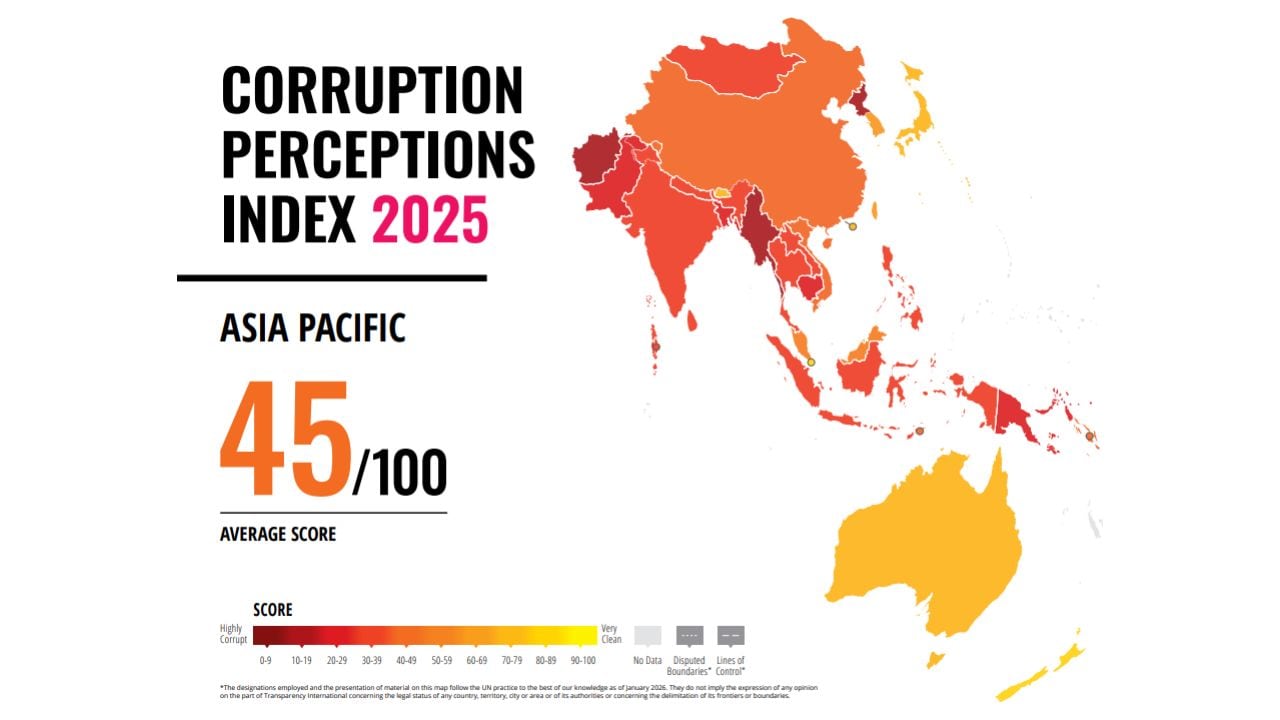
The Berlin-based anti-corruption watchdog said the Asia Pacific region recorded an average score of 45 out of 100, indicating that corruption levels have remained largely unchanged over the past decade.
Widespread frustration over weak governance and limited accountability triggered protests across several countries in 2025, particularly among younger populations, the Transparency International’s CPI 2025 report said.
In the Philippines, which scored 32 and ranked at 120, public anger intensified over allegations that funds were siphoned off from a fake flood relief project.
Read more: About 120 Oppn MPs moves notice to remove Lok Sabha Speaker for disallowing Rahul Gandhi to speak in House
In Indonesia, that scored 34 and ranked 109th, anti-government protests turned violent, resulting in deaths and injuries, while in Nepal (also scoring 34 and ranking at 109th, mass demonstrations led to the fall of the government amid growing dissatisfaction with corruption and restrictions on social media.
"In many countries across Asia Pacific, good governance is being undermined by weak law enforcement, unaccountable leadership and opacity in political funding," Ilham Mohamed, Asia Pacific Adviser of Transparency International said in a statement.
"With young people demanding better, leaders must act now to curb corruption and strengthen democracy. Meaningful reforms can rebuild public trust and show those in power are finally listening," he added.
Regional trends and global rankings
Transparency International reported that some countries, including Maldives (ranked at 91st), Vietnam (81st) and Timor Leste (73rd), have shown statistically significant improvements since 2012 due to institutional reforms and efforts to tackle petty corruption.
However, fragile states such as Afghanistan and Myanmar--both ranked at 169th with a score of 16--and North Korea (172nd) continued to rank among the lowest globally because of restricted civic space and weak judicial independence.
Read more: I-PAC raids: SC adjourns to Feb 18 ED's plea against 'interference' by Mamata Banerjee
Globally, Denmark topped the index with a score of 89, followed by Finland (score of 88) and Singapore (84). New Zealand and Norway shared fourth place with scores of 81.
At the bottom of the list were Somalia and South Sudan, both scoring 9.
According to the report, a majority of Asia Pacific nations scored below the global average of 42, including India (39), Bangladesh (score: 24, rank: 150th) and Indonesia. Pakistan ranked 136th with a score of 28.
According to the global NGO Transparency International's latest Corruption Perceptions Index (CPI) 2025 released on Tuesday, February 10, there has been a slow growth in anti-corruption progress in Asia Pacific as many countries witnessed public anger in the previous year.
The Berlin-based anti-corruption watchdog said the Asia Pacific region recorded an average score of 45 out of 100, indicating that corruption levels have remained largely unchanged over the past decade.
Widespread frustration over weak governance and limited accountability triggered protests across several countries in 2025, particularly among younger populations, the Transparency International’s CPI 2025 report said.
In the Philippines, which scored 32 and ranked at 120, public anger intensified over allegations that funds were siphoned off from a fake flood relief project.
Read more: About 120 Oppn MPs moves notice to remove Lok Sabha Speaker for disallowing Rahul Gandhi to speak in House
In Indonesia, that scored 34 and ranked 109th, anti-government protests turned violent, resulting in deaths and injuries, while in Nepal (also scoring 34 and ranking at 109th, mass demonstrations led to the fall of the government amid growing dissatisfaction with corruption and restrictions on social media.
"In many countries across Asia Pacific, good governance is being undermined by weak law enforcement, unaccountable leadership and opacity in political funding," Ilham Mohamed, Asia Pacific Adviser of Transparency International said in a statement.
"With young people demanding better, leaders must act now to curb corruption and strengthen democracy. Meaningful reforms can rebuild public trust and show those in power are finally listening," he added.
Regional trends and global rankings
Transparency International reported that some countries, including Maldives (ranked at 91st), Vietnam (81st) and Timor Leste (73rd), have shown statistically significant improvements since 2012 due to institutional reforms and efforts to tackle petty corruption.
However, fragile states such as Afghanistan and Myanmar--both ranked at 169th with a score of 16--and North Korea (172nd) continued to rank among the lowest globally because of restricted civic space and weak judicial independence.
Read more: I-PAC raids: SC adjourns to Feb 18 ED's plea against 'interference' by Mamata Banerjee
Globally, Denmark topped the index with a score of 89, followed by Finland (score of 88) and Singapore (84). New Zealand and Norway shared fourth place with scores of 81.
At the bottom of the list were Somalia and South Sudan, both scoring 9.
According to the report, a majority of Asia Pacific nations scored below the global average of 42, including India (39), Bangladesh (score: 24, rank: 150th) and Indonesia. Pakistan ranked 136th with a score of 28.
/images/ppid_a911dc6a-image-177071655366637065.webp)