/images/ppid_59c68470-image-177518502836755866.webp)

/images/ppid_a911dc6a-image-177497842712714047.webp)

/images/ppid_a911dc6a-image-177492643134732273.webp)
What is the story about?
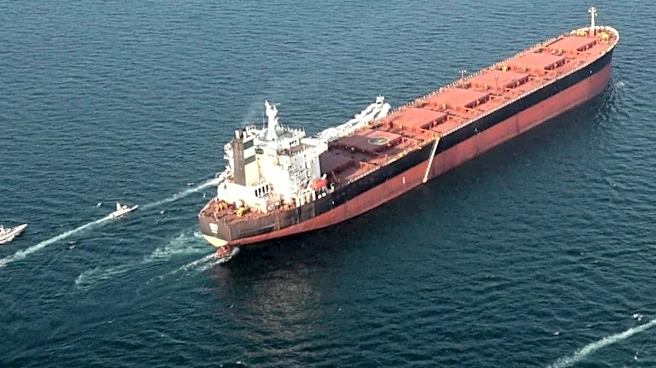
Iran has said it is preparing a proposal to monitor ship movements through the Strait of Hormuz, one of the world’s most strategically important maritime routes for global oil shipments.
Iranian Deputy Foreign Minister Kazem Gharibabadi said that Tehran is currently finalising the draft protocol and discussions with Oman would begin after the proposal receives internal approval, News18 reported citing Iranian state-run news agency IRNA.
"We are currently finalising the drafting of this protocol,” Gharibabadi said, adding that formal negotiations with Oman would commence once the internal process is completed, as per the report.
The proposed framework is reportedly aimed at overseeing vessel transit and improving coordination between the two countries to ensure smoother passage for ships using the narrow waterway that connects the Persian Gulf to international waters.
Proposal aims to supervise maritime traffic
The plan is intended to monitor and coordinate ship movements through the Strait of Hormuz, which is a critical corridor for global energy supplies.
Also Read: Iran US War Live Updates
Gharibabadi told IRNA that tanker traffic through the route "should be supervised and coordinated" with Iran and Oman.
"Of course, these requirements will not mean restrictions, but rather to facilitate and ensure safe passage and provide better services to ships that pass through this route," Gharibabadi was quoted as saying.
However, the diplomat justified the move stating that Tehran is taking this action due to the war.
"Naturally, when we face an act of aggression, navigation encounters serious problems, and this is the result of the aggressive act," Gharibabadi said, as per news agency The Associated Press (AP).
"We are currently at war and cannot expect pre-war rules to govern wartime conditions," he added.
Oman has not yet publicly acknowledged the proposed arrangement.
War-linked disruption and global concerns
The development comes as the war continues to escalate in the West Asia region.
The Strait of Hormuz has been closed since March 2, after the Iranian Revolutionary Guards Corps (IRGC) issued a warning that any ships passing through the waterway will be attacked.
Also Read: Trump restructures broad metals tariffs but keeps 50% rate
The move was in retaliation to joint US and Israeli strikes against Iran on February 28 that started the war.
The closure has since disrupted maritime movement and raised concerns over global energy supply. The uncertainty surrounding the route has pushed up oil prices and unsettled financial markets.
The Strait of Hormuz passes through both Iranian and Omani territorial waters but is widely regarded as an international waterway where vessels should be able to move freely.
Iranian Deputy Foreign Minister Kazem Gharibabadi said that Tehran is currently finalising the draft protocol and discussions with Oman would begin after the proposal receives internal approval, News18 reported citing Iranian state-run news agency IRNA.
"We are currently finalising the drafting of this protocol,” Gharibabadi said, adding that formal negotiations with Oman would commence once the internal process is completed, as per the report.
The proposed framework is reportedly aimed at overseeing vessel transit and improving coordination between the two countries to ensure smoother passage for ships using the narrow waterway that connects the Persian Gulf to international waters.
Proposal aims to supervise maritime traffic
The plan is intended to monitor and coordinate ship movements through the Strait of Hormuz, which is a critical corridor for global energy supplies.
Also Read: Iran US War Live Updates
Gharibabadi told IRNA that tanker traffic through the route "should be supervised and coordinated" with Iran and Oman.
"Of course, these requirements will not mean restrictions, but rather to facilitate and ensure safe passage and provide better services to ships that pass through this route," Gharibabadi was quoted as saying.
However, the diplomat justified the move stating that Tehran is taking this action due to the war.
"Naturally, when we face an act of aggression, navigation encounters serious problems, and this is the result of the aggressive act," Gharibabadi said, as per news agency The Associated Press (AP).
"We are currently at war and cannot expect pre-war rules to govern wartime conditions," he added.
Oman has not yet publicly acknowledged the proposed arrangement.
War-linked disruption and global concerns
The development comes as the war continues to escalate in the West Asia region.
The Strait of Hormuz has been closed since March 2, after the Iranian Revolutionary Guards Corps (IRGC) issued a warning that any ships passing through the waterway will be attacked.
Also Read: Trump restructures broad metals tariffs but keeps 50% rate
The move was in retaliation to joint US and Israeli strikes against Iran on February 28 that started the war.
The closure has since disrupted maritime movement and raised concerns over global energy supply. The uncertainty surrounding the route has pushed up oil prices and unsettled financial markets.
The Strait of Hormuz passes through both Iranian and Omani territorial waters but is widely regarded as an international waterway where vessels should be able to move freely.




/images/ppid_59c68470-image-177515260770899803.webp)
/images/ppid_a911dc6a-image-177512922689236957.webp)

/images/ppid_59c68470-image-177493255919331334.webp)