/images/ppid_59c68470-image-177590002842259551.webp)

What is the story about?
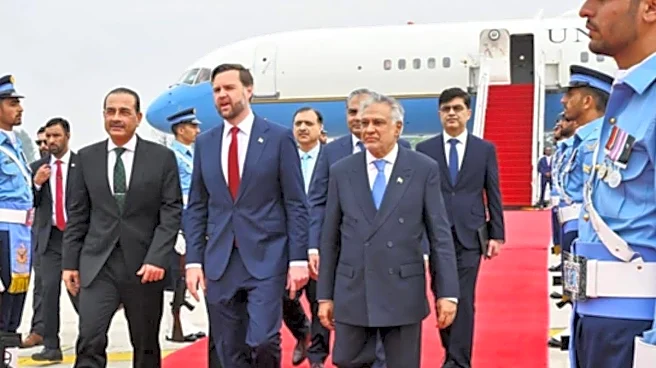
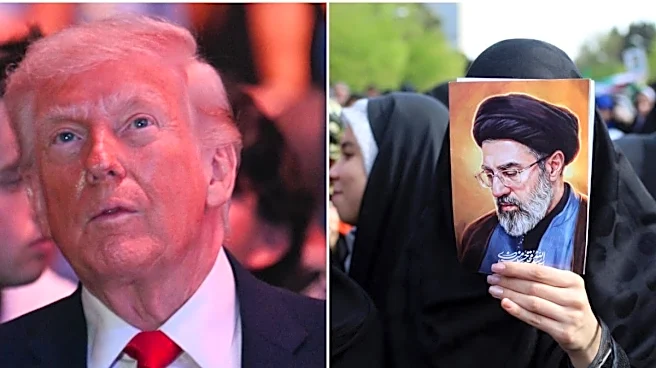
The much-anticipated peace talks between the United States and Iran in Islamabad have drawn global attention, with experts warning that negotiations will be complex and prolonged despite strong pressure on both sides to avoid further conflict.
Deep Pal, Director-Geopolitics & Policy at Koan Advisory Group pointed out that while both countries have come to the table, their demands remain far apart, making a quick resolution unlikely.
He emphasised that beyond formal demands, three key issues will shape the negotiations — domestic political pressures, control over the Strait of Hormuz, and the future of global energy supplies.
He noted that both sides will be under pressure to show gains at home, especially with elections looming in the US and ongoing economic hardship in Iran. At the same time, control over shipping routes and energy prices remains central, given the disruption to global oil and gas markets.
Read Here | US intelligence indicates China preparing weapons shipment to Iran, CNN reports
Sanjay Pulipaka, Chairperson of Politeia Research Foundation said the talks are particularly difficult because neither side has emerged as a clear winner. “There is no clear victor… so therefore the negotiations are going to be very difficult,” he said.
Pulipaka explained that both sides are entering negotiations with their own strengths — the US claims military and strategic gains, while Iran highlights its survival and continued control over key choke points like the Strait of Hormuz. This balance makes compromise harder.
He also highlighted that while the talks appear bilateral, they are effectively multi-layered. The US must consider allies such as Israel and Gulf nations, while Iran has its own regional partners, making the negotiation process more complicated.
Another key dimension, according to Pulipaka, is perception management. Iran has actively shaped global opinion through symbolic messaging and by shifting focus toward issues like control of shipping routes, strengthening its negotiating position.
Hamid Almashriqi Khan, speaking from Pakistan, described the talks as a major diplomatic moment, with Islamabad emerging as a key mediator. He said both sides now recognise the cost of conflict and the need for dialogue. “They both have suffered the war… and they both have understood that the war is not going to be the solution,” he said.
Khan added that while expectations are high, the talks are unlikely to deliver immediate results and could take weeks to conclude. He expects some flexibility from Iran on nuclear issues, but not on its missile programme, which it views as a critical deterrent.
For full interview, watch accompanying video
Catch all the live updates from the US-Iran War
Deep Pal, Director-Geopolitics & Policy at Koan Advisory Group pointed out that while both countries have come to the table, their demands remain far apart, making a quick resolution unlikely.
He emphasised that beyond formal demands, three key issues will shape the negotiations — domestic political pressures, control over the Strait of Hormuz, and the future of global energy supplies.
He noted that both sides will be under pressure to show gains at home, especially with elections looming in the US and ongoing economic hardship in Iran. At the same time, control over shipping routes and energy prices remains central, given the disruption to global oil and gas markets.
Read Here | US intelligence indicates China preparing weapons shipment to Iran, CNN reports
Sanjay Pulipaka, Chairperson of Politeia Research Foundation said the talks are particularly difficult because neither side has emerged as a clear winner. “There is no clear victor… so therefore the negotiations are going to be very difficult,” he said.
Pulipaka explained that both sides are entering negotiations with their own strengths — the US claims military and strategic gains, while Iran highlights its survival and continued control over key choke points like the Strait of Hormuz. This balance makes compromise harder.
He also highlighted that while the talks appear bilateral, they are effectively multi-layered. The US must consider allies such as Israel and Gulf nations, while Iran has its own regional partners, making the negotiation process more complicated.
Another key dimension, according to Pulipaka, is perception management. Iran has actively shaped global opinion through symbolic messaging and by shifting focus toward issues like control of shipping routes, strengthening its negotiating position.
Hamid Almashriqi Khan, speaking from Pakistan, described the talks as a major diplomatic moment, with Islamabad emerging as a key mediator. He said both sides now recognise the cost of conflict and the need for dialogue. “They both have suffered the war… and they both have understood that the war is not going to be the solution,” he said.
Khan added that while expectations are high, the talks are unlikely to deliver immediate results and could take weeks to conclude. He expects some flexibility from Iran on nuclear issues, but not on its missile programme, which it views as a critical deterrent.
For full interview, watch accompanying video
Catch all the live updates from the US-Iran War


/images/ppid_59c68470-image-177596003201986973.webp)
/images/ppid_59c68470-image-177584505670191727.webp)
/images/ppid_59c68470-image-177593253194077026.webp)