
What is the story about?
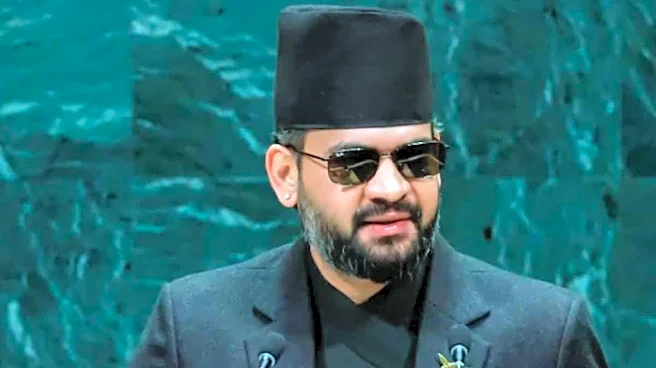
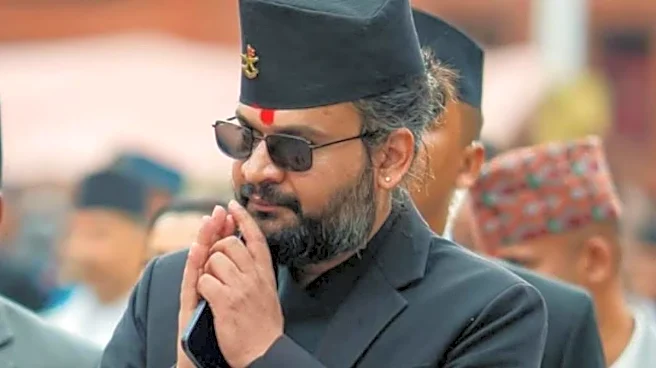
Nepal Prime Minister Balendra Shah’s visit to India was closely watched. A young leader with a Nepal-first approach, Shah has signalled a break from the old political establishment through his actions at home. His choice of India for his first bilateral visit since taking office also drew attention to what it could mean for Nepal’s foreign policy and, particularly, its relationship with New Delhi.
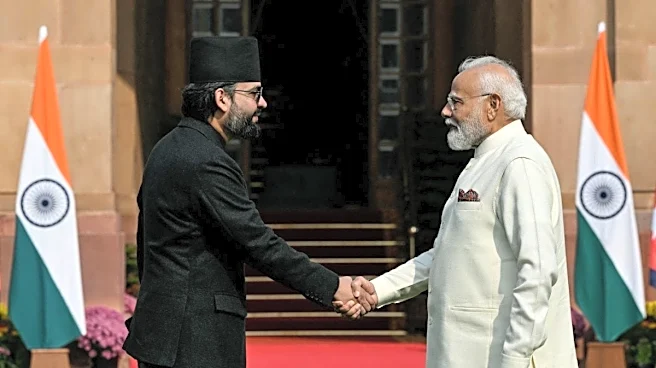
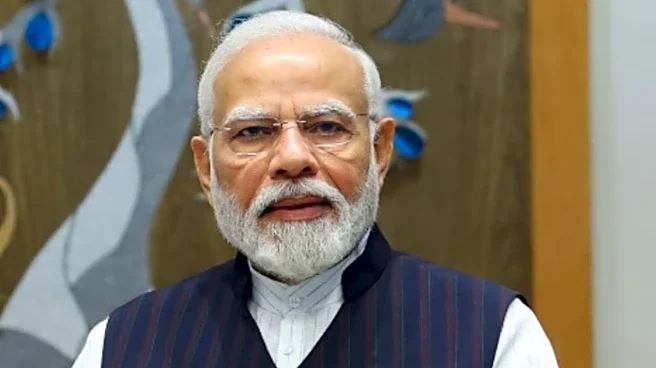
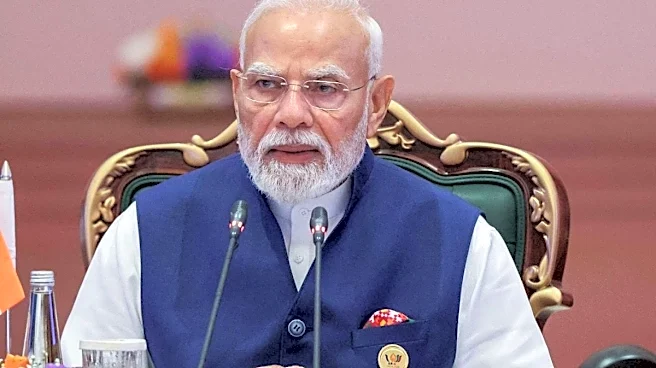
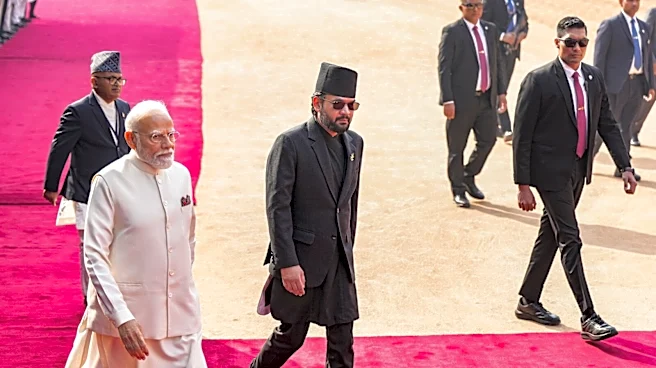
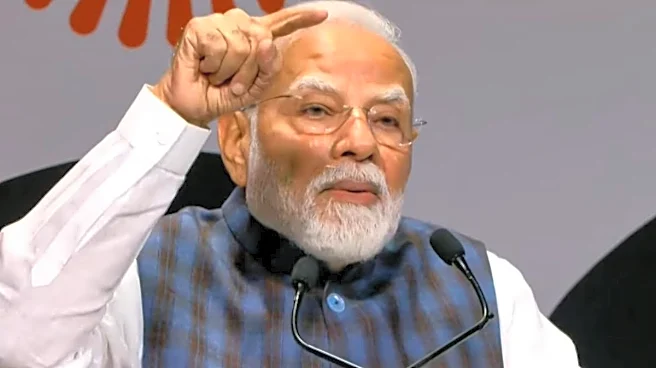
After nearly two hours of talks, Prime Minister Narendra Modi and Shah stood together at Delhi’s Hyderabad House, dressed in white and black, respectively, and announced a series of initiatives aimed at taking bilateral ties to “new heights”.
India announced a ₹15,000-crore development assistance package for Nepal’s reconstruction and long-term development. The two leaders also virtually inaugurated and laid the foundation stones for five infrastructure and energy projects and witnessed the signing of eight agreements before delivering statements.
The package, announced on Monday, is India’s largest financial assistance commitment to Nepal. Under the joint vision document, Viksit Bharat and Samunnat Nepal: Re-imagining the Partnership, it comprises ₹3,500 crore in grants for post-disaster reconstruction and new infrastructure projects, and an ₹11,500-crore line of credit for the energy sector.
“Specific projects as well as modalities for the provision of development assistance will be finalized through mutual consultations,” the document said.
The announcement comes after devastating flash floods hit Nepal in August, killing thousands. Nepalese authorities have estimated rebuilding costs at about $4.8 billion. India’s grant assistance of around $400 million will go towards reconstruction.
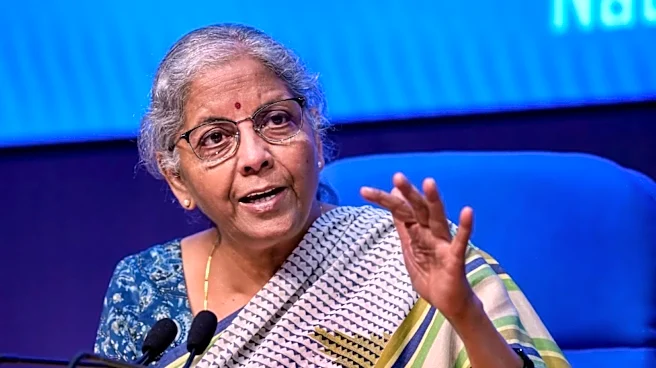
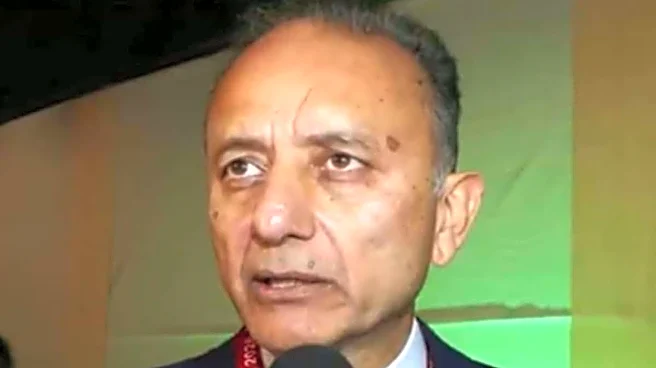
The new line of credit is separate from the one India extended to Nepal in 2015 after an earthquake, Foreign Secretary Vikram Misri said at a press briefing. India had then offered a $750-million credit line, of which $550 million has been used so far, he said.
Unlike the earlier credit line, which was denominated in dollars, the new ₹11,500-crore facility will be denominated in Indian rupees and will be used almost entirely for energy projects, Misri said.
Projects financed through the credit line will be selected by a bilateral high-level mechanism. The terms will first be negotiated by officials from both countries, while the mechanism will screen and monitor the projects.
The panel will be co-chaired by Nepal’s foreign secretary and India’s ambassador to Kathmandu, Misri said.
Boundary issues to be addressed under new framework
The two leaders also discussed longstanding boundary disputes. Misri said the mechanisms dealing with the issue had made “very good and very smooth progress in recent years”. Foreign secretaries will take the discussions forward, drawing on inputs from the various bilateral groups.
The leaders have directed their foreign secretaries to continue the work, Misri said.
He also said the Eminent Persons Group (EPG) report, submitted in 2018, was now a matter of the past, with the new joint vision document providing a forward-looking framework for the relationship.
“We are not looking at the past, we are looking to the future,” Misri said, adding that the boundary issue would be addressed in a “forward-looking, constructive, and progressive” manner.
The EPG was set up in July 2016 to review the full range of bilateral ties, including the 1950 Treaty of Peace and Friendship and outstanding boundary issues. The eight-member group was given two years to make recommendations. It completed its report in 2018, but the document was never formally submitted.
The report was significant because it sought to address sensitive issues, including the border dispute and a review of the friendship treaty. Misri’s remarks suggest the new joint vision document will replace the EPG report as the framework for discussions. The process for resolving the issues, however, remains unclear.
India and Nepal look to expand connectivity
Aviation: Civil aviation remains a priority for Nepal, which has sought greater access to Indian airspace. Limited entry routes and restrictions on flight altitudes have constrained operations, particularly at newer airports such as Bhairahawa and Pokhara. Nepal has also argued that restrictions on international entry points contribute to congestion.
While the two sides did not announce any changes to flight altitudes or entry points, they agreed to make the existing one-way B345 Kathmandu-Bhairahawa-Lucknow route bidirectional.
“Technical consultations will be held to finalize the modalities in this regard and to address other civil aviation proposals from both sides currently under discussion,” the joint statement said.
Ports: India announced a new transit route for Nepalese cargo through Deendayal Port at Kandla, Gujarat. Access to Paradip Port on the east coast is also being considered and could be opened after some infrastructure work is completed.
The move would give Nepal another route for its transit trade through India and expand access to ports on the country's eastern coast.
Railways: The two leaders flagged off the Sarayu-Kamala Express between Ayodhya and Janakpur, a service expected to improve passenger connectivity and promote religious tourism along the Ramayana circuit. They also agreed to explore links for Buddhist and Shiv-Shakti tourism circuits.
For longer-term connectivity, they announced the completion of the final location survey for the proposed electrified broad-gauge railway between Raxaul and Kathmandu.
They also agreed to work on Nepal’s East-West Railway, prioritising the Bardibas-Nijgadh section and the Birgunj-Nijgadh link, with the aim of creating a rail network that can operate seamlessly across the border. The joint vision also calls for speeding up work on the remaining sections of the Jayanagar-Bardibas and Jogbani-Biratnagar railway lines.
Other connectivity projects
Modi and Shah virtually inaugurated a motorable bridge over the Mahakali River linking Dharchula in India with Darchula in Nepal, improving access to western Nepal.
They also laid the foundation stone for a new integrated check post at Banbasa and reviewed progress on check posts being built at Bhairahawa, Sunauli and Dodhara-Chandani.
The leaders dedicated Phase II of the Motihari-Amlekhgunj petroleum pipeline to Nepal and laid the foundation stone for a petroleum terminal in Jhapa. They called for work to begin soon on the planned Siliguri-Jhapa pipeline and agreed to explore a gas pipeline between the two countries.
They also virtually laid the foundation stone for the 669-MW Lower Arun hydroelectric project in eastern Nepal. Located in the Sankhuwasabha and Bhojpur districts along the Arun River, downstream of the existing Arun-3 project, it is being developed by India’s SJVN and is a major project in bilateral hydropower cooperation.
The connectivity agenda also covered cross-border payments. Building on the existing link between India’s UPI and Nepal’s national payment system, the two sides agreed to speed up the rollout of retail payments across the border.
They also agreed to cooperate on integrated infrastructure planning through platforms such as PM Gati Shakti, which Nepal could adapt to its own development priorities.
India to support Nepal’s startup ecosystem
India also committed to setting up a startup incubator, an innovation hub and an offshore campus of the Indian Institute of Technology in Nepal. Misri said IIT Kanpur was being considered for the campus.
Agriculture, education, healthcare and other areas of cooperation also featured in discussions between the leaders and in the joint vision document.