







New Delhi, Jan 13 (PTI) As Kashmir awaits a fresh spell of snowfall, Delhi saw its coldest January morning in three years on Tuesday and Chandigarh its chilliest night in nine years. With cold waves intensifying
in Rajasthan, Punjab, Haryana and Jharkhand, winter's unforgiving chills have deepened its grip over India.
People stepped out in thick clothes, scarves and mufflers drawn close to their faces. While some warmed their hands near small bonfires, street vendors sat next to their carts, sipping piping hot tea.
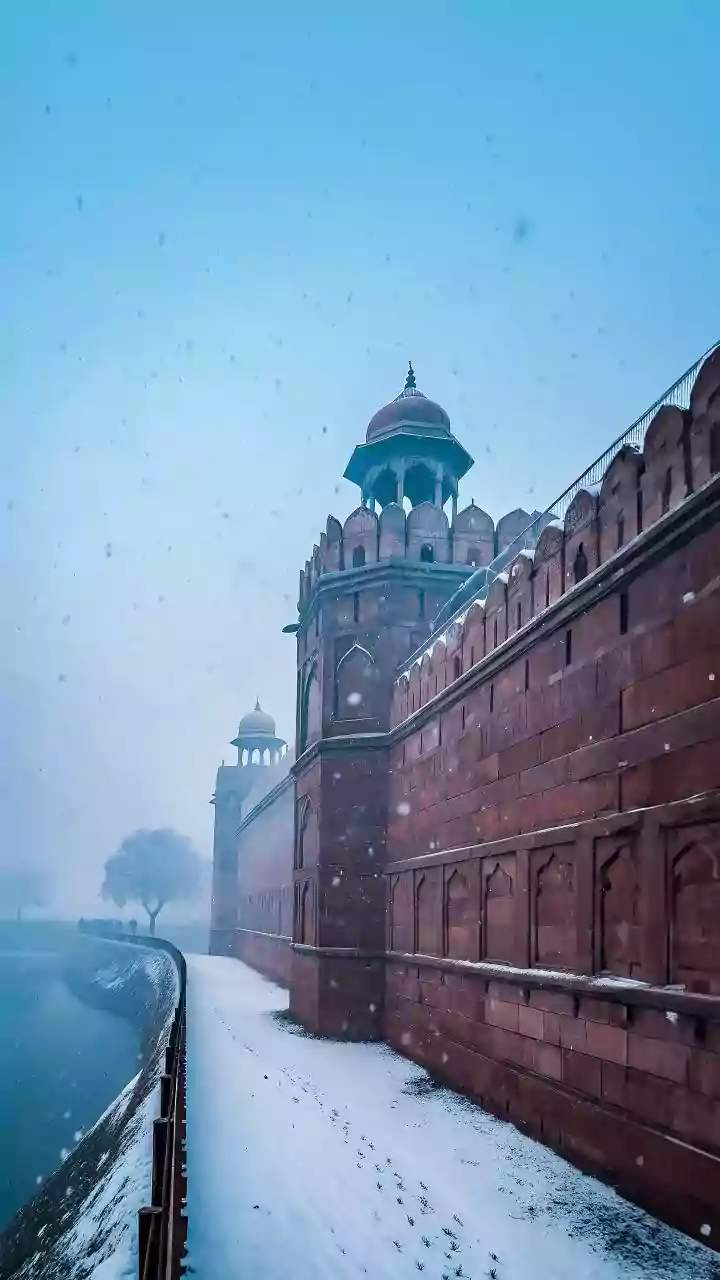
Delhi recorded its coldest January morning in three years on Tuesday as the minimum temperature dropped to 3 degrees Celsius. The city recorded a low of 1.4 degrees Celsius on January 16, 2023.
Safdarjung -- the city's primary observatory -- recorded a low of 3 degrees Celsius, 4.4 notches below normal, Palam 4 degrees, Lodhi Road 3 degrees, the Ridge 4.4 degrees and Ayanagar 3.2 degrees Celsius.
According to the India Meteorological Department (IMD), cold wave conditions are declared when minimum temperatures fall 4.5 to 6.4 degrees below normal.
Meanwhile, Delhi's air quality deteriorated to the 'very poor' category with the Air Quality Index (AQI) settling at 337, according to Central Pollution Control Board (CPCB) data.
As Kashmir is currently in the "Chilla-i-Kalan" -- a 40-day period of extreme cold that began on December 21 and ends on January 30 -- a western disturbance is expected to hit the valley from January 16, raising hopes for a fresh spell of light to moderate snowfall.
According to the meteorological department, a weak western disturbance is likely to affect the weather system in the region on Friday, followed by a stronger system three days later.
Meanwhile, cold wave conditions intensified across the valley as minimum temperatures dropped on Monday night. Srinagar recorded a low of minus 4.9 degrees Celsius on Monday night, down from minus 2.4 degrees Celsius the previous night, the official said.
Sonamarg in Ganderbal district was the coldest place in the valley at minus 7.0 degrees Celsius. Pahalgam, a base camp for the annual Amarnath Yatra, recorded minus 6.2 degrees Celsius. In north Kashmir, the ski resort of Gulmarg saw the mercury settle at minus 3.5 degrees Celsius.
Other places like Qazigund recorded a low of minus 5.0 degrees Celsius, while Kokernag and Kupwara registered minus 1.6 and minus 5.8 degrees Celsius respectively.
While the higher reaches have received snow this winter, the plains continue to face a prolonged dry spell.
The IMD has forecast that the weather is likely to remain dry but cloudy till January 21.
Punjab reeled under intense cold conditions on Tuesday, with Ballowal Saunkhri in SBS Nagar recording 0 degrees Celsius, while fog reduced visibility during morning hours at many places in the two states.
Their common capital Chandigarh recorded a minimum of 2.8 degrees Celsius, four degrees below normal and the lowest in nine years.
A weather department official told PTI that Chandigarh had recorded a minimum temperature of 2.4 degrees Celsius on January 11, 2017 and 2.1 degrees Celsius on January 24, 2016.
Severe cold gripped Amritsar during the day which recorded a high of 8.1 degrees Celsius, nine notches below normal limits.
Meanwhile, minimum temperatures also hovered below normal at most places.
Bathinda recorded 1.6 degrees, four notches below normal limits, while Ludhiana, Patiala and Amritsar recorded respective minimums of 2.6 degrees, 3 degrees and 4.1 degrees Celsius, which were down by three notches, four notches and one notch, respectively.
Faridkot and Hoshiarpur were also under the grip of severe cold, recording respective lows of 2 degrees and 2.6 degrees Celsius.
In Haryana, Hisar and Narnaul reeled under biting chill, recording respective lows of 1.5 degrees and 1.8 degrees Celsius, down by five and three notches against normal, respectively.
Gurugram, which had on Monday recorded a low of 0.6 degrees Celsius, on Tuesday registered a minimum of 3.3 degrees Celsius.
Karnal recorded a minimum of 2 degrees, down four notches against normal, Rohtak 3.8 degrees, Ambala 4.2 degrees while Faridabad registered a low of 4.3 degrees Celsius.
Meanwhile, as cold-day conditions also persisted, the maximum temperatures on Tuesday also hovered below normal limits.
Chandigarh recorded a maximum of 15.2 degrees, three notches below normal against normal limits.
Ludhiana recorded a high of 13.4 degrees, down four notches against normal while Patiala recorded a high of 13.6 degrees, five below normal.
Karnal reeled under severe cold during the day recording a high of 10 degrees Celsius, down eight notches below normal limits. Narnaul recorded a maximum of 15.2 degrees, five below normal.
Gurugram recorded a high of 20.2 degrees Celsius.
In Rajasthan, severe cold conditions were recorded in several parts over the past 24 hours, with mercury dropping to freezing 2 degrees Celsius in Karauli, the MeT department said on Tuesday.
While weather remained dry across the state, cold wave conditions were recorded at isolated places. Eastern Rajasthan witnessed light to moderate fog at several locations, with no immediate relief in sight, it said.
Minimum temperatures dipped sharply, with Dausa recording 3.3 degrees, Ganganagar 3.6 degrees, Fatehpur 4.3 degrees, Nagaur 4.4 degrees, Mount Abu 5.1 degrees and Pilani 5.8 degrees Celsius, the Met office said.
In most parts of the state, minimum temperatures remained below 10 degrees Celsius and cold wave conditions are likely to persist over the coming days, it said.
In Jharkhand, coldwave conditions gripped several parts on Tuesday as the mercury dropped below 10 degrees Celsius in 13 districts of the state, the IMD said.
Gumla recorded the lowest temperature in the state at 2.3 degrees Celsius, followed by Khunti at 4.2 degrees, and Daltonganj in Palamu at 5.6 degrees, it said.
"North-westerly to northerly wind continues to prevail in the tropospheric level, causing the cold wave conditions," said Abhishek Anand, the deputy director of the meteorological centre in Ranchi.
Ranchi recorded a low of 7.5 degrees Celsius, Chaibasa 9.3 degrees, and Jamshedpur 10 degrees.
In West Bengal, the prevailing cold conditions waned marginally on Tuesday with the minimum temperature rising by a couple of notches across the region, the IMD said.
There will not be any large change in minimum temperatures across the districts over the next seven days, it said.
Shallow to moderate fog is likely over the districts during morning hours, even as dry weather would prevail, the IMD said.
The day temperatures are, however, likely to be below normal by two to three notches for the next five days across Gangetic West Bengal, it said.
The hill tourist town of Darjeeling was much warmer at night, at 7.4 degrees Celsius, as compared to 3-4 degrees Celsius a couple of days ago.
The upper reaches of the Darjeeling district recorded the lowest minimum in the hills, at 3.4 degrees Celsius.
Coochbehar was the coldest place in the state's plains at 8.6 degrees Celsius.
The other places in the state that recorded significantly low minimum temperatures are Bankura (9.4), Jalpaiguri (9.5), Sriniketan (9.7) and Kalyani (9.7).
Kolkata recorded a minimum temperature of 13 degrees Celsius, the IMD said, forecasting shallow fog in the morning hours on Wednesday. PTI TEAM NB NB
NB